
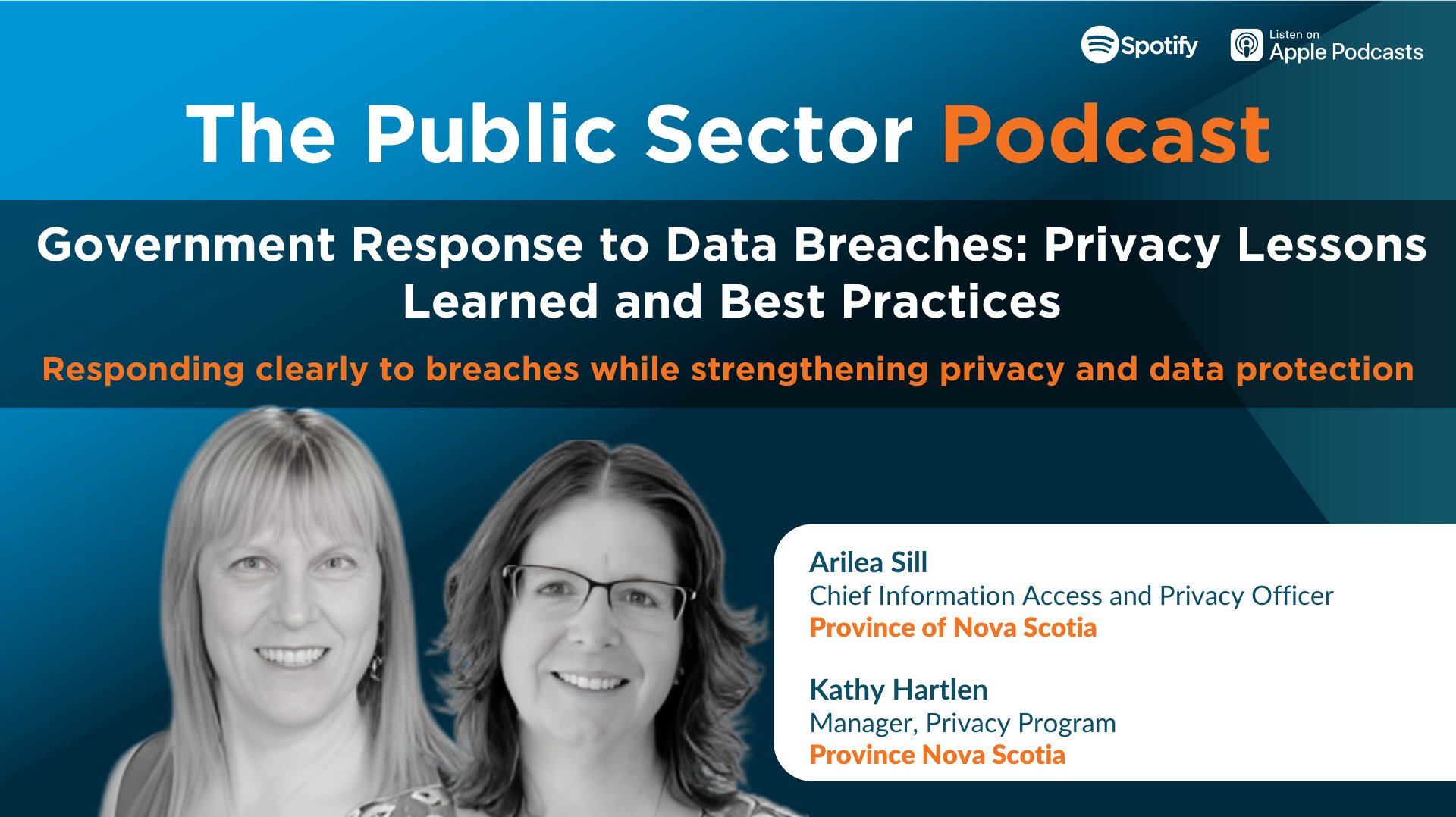
Episode Overview
In this episode, we sit down with Arilea Sill, Chief Information Access and Privacy Officer, Province of Nova Scotia and Kathy Hartlen, Manager, Privacy Program, Province Nova Scotia for a candid and practical discussion on privacy breach response in government, drawing on real-world experience from Nova Scotia. The conversation explores what actually happens when breaches occur—from minor, everyday incidents to large-scale, multi-department events—and why preparedness, speed and clarity are essential to protecting citizens and maintaining public trust.
Using examples including child protection records, large vendor-related breaches and education system incidents, the episode highlights the human, financial and reputational impacts of privacy failures—and why governments must treat breach response as a certainty, not a hypothetical.
Key Themes
The episode focuses on moving beyond breach protocols as “documents on paper” and turning them into actionable playbooks that can be activated immediately. It emphasises decision-making under pressure, cross-agency coordination, and the importance of communication, governance and clear accountability when things go wrong.
What You’ll Learn
1) The Real Impact of Privacy Breaches
How breaches affect citizens through emotional distress, financial loss, reputational damage and erosion of trust—and why government breaches carry a higher public expectation than private sector incidents.
2) Why Public Trust Is Fragile
How even a single breach can undermine confidence in government’s ability to protect personal information, triggering scrutiny from media, legislatures and oversight bodies.
3) The Four Core Stages of Breach Response
Why containment, impact assessment, notification and investigation must happen in parallel, not sequentially—and how to manage them effectively under time pressure.
4) The Importance of Clear Decision Rights
Why breach response depends on knowing exactly who is empowered to act—especially after hours—and how unclear authority can delay critical decisions.
5) Making Protocols Practical
How Nova Scotia updated its privacy breach protocol with flowcharts, defined roles and escalation pathways to support real-world execution, not just compliance.
6) The Role of Communication
Why timely, transparent and detailed notification letters matter—and how poor communication can worsen public reaction and confusion.
7) Managing Large-Scale, Complex Breaches
How analytics teams, cybersecurity processes and cross-government coordination help manage “mosaic risk” when data from multiple sources compounds harm.
8) From Incident to Improvement
Why post-breach investigations, reports and lessons learned are essential to building a repeatable playbook—because it’s not if another breach happens, but when.
9) Prevention Starts Early
The importance of privacy impact assessments, minimising data collection and retention, aligning privacy with security controls, and embedding expectations into vendor contracts.
Key Takeaways
Privacy breaches are inevitable—preparedness is the differentiator
Breach response must be fast, coordinated and clearly governed
Protocols must be practical, tested and role-specific
Communication is as critical as containment
Strong privacy practices reduce harm before breaches occur
Lessons learned should feed directly into future readiness
Why You Should Listen
This episode is essential for privacy officers, CIOs, cybersecurity leaders, risk managers and public sector executives responsible for protecting citizen data. It offers a grounded, experience-based look at what effective breach response really requires—and how governments can strengthen resilience before the next incident occurs.









Help your peers
Share what you've learned with fellow public servants