
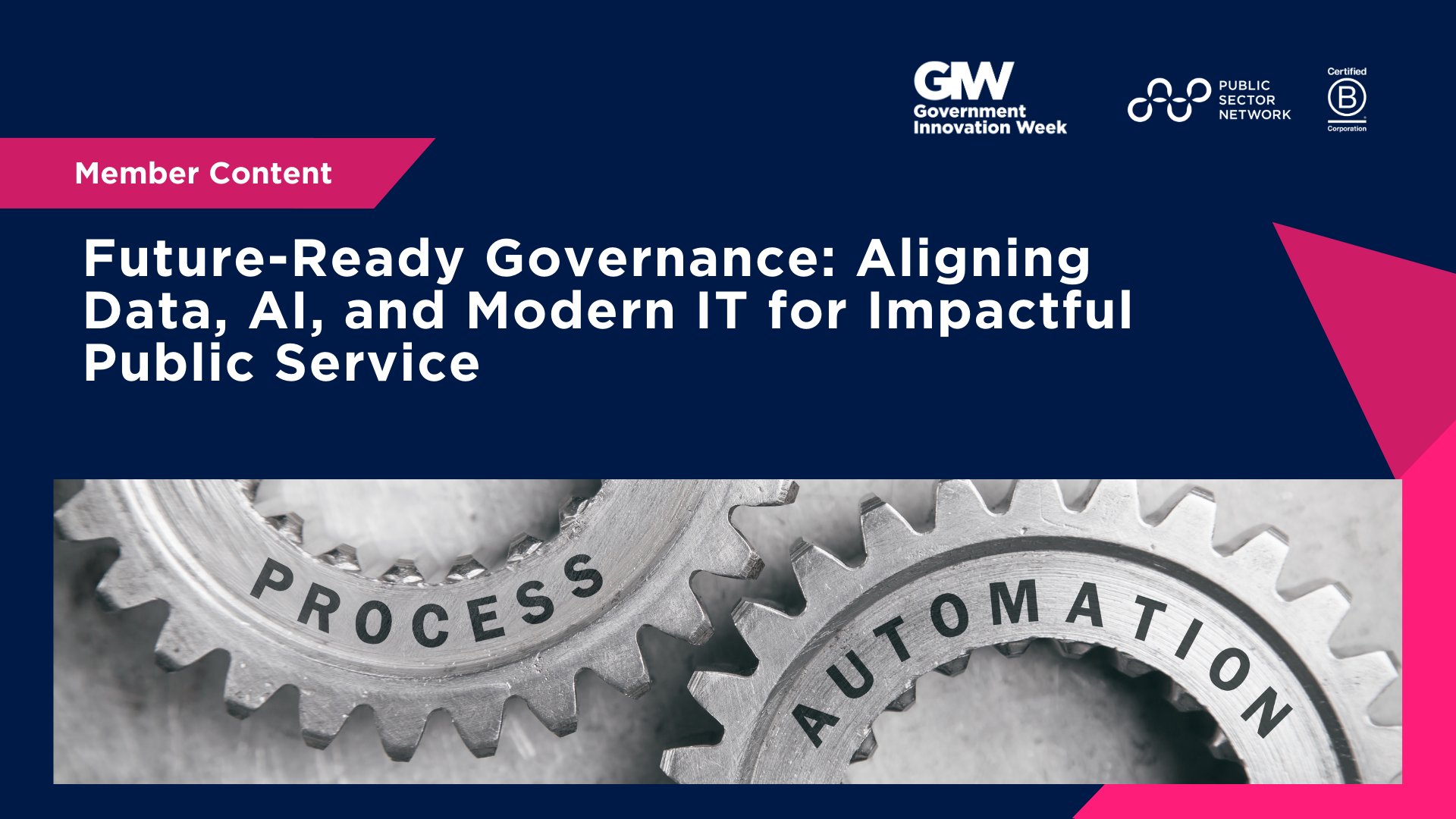
As the calendar turns, the buzz around artificial intelligence, automation, and digital transformation grows louder. Yet, for public sector leaders tasked with delivering tangible value, the year ahead is less about chasing shiny new tools and more about building the bedrock required to use them responsibly.
This was the resounding message from seasoned state leaders at the recent Government Innovation Showcase Texas. In a pivotal panel, “Future-Ready Governance: Aligning Data, AI and Modern IT for Impactful Public Service,” Dr. Carol Ojeleye of the Texas Historical Commission and Noor Saud Abdulaziz of the Texas Higher Education Coordinating Board, moderated by Bill Greeves of SAP, cut through the hype to outline the practical, foundational work that will define successful agencies in 2025 and beyond.
Here are the six key trends they identified for the year ahead.
Trend 1: The Unavoidable Imperative: Master Data Governance First
The panel’s most urgent consensus was that without clean, organized, and well-governed data, advanced initiatives will fail. “It all starts with your data before you can even get there,” stated Dr. Carol Ojeleye. “You have to get your data governance together.” Abdulaziz echoed this, noting that many agencies remain in a “strategic phase,” focusing not on AI deployment but on creating a robust data management framework. The trend for 2025 is a strategic shift from defensive data governance (focused on compliance and risk) to an offensive strategy that actively improves customer service, policy outcomes, and efficiency.
Trend 2: The Return to Basics: Process Mapping as a Critical Tech Enabler
A surprising but essential trend is the resurgence of a fundamental practice: process documentation. “We don’t have proper documentation of our processes in government,” Abdulaziz highlighted, noting that institutional knowledge often walks out the door. “If someone leaves, it’s a disaster.” Before any automation can be considered, agencies must map high-level and detailed workflows, including approvals and controls. In 2025, this foundational step will be recognized not as bureaucratic overhead, but as the essential blueprint for any successful digital transformation.
Trend 3: AI’s First Frontier: Internal Operational Efficiency
Forget public-facing chatbots for now. The most immediate and valuable AI use cases are internal. Dr. Ojeleye listed a suite of operational applications: “From a marketing and public relations, you could use it to craft messaging… from finance and accounting, it can help with budgeting and invoice payments.” The focus for 2025 is on using AI to alleviate administrative burdens, screen applications, manage resources like historical artifacts, and optimize back-office functions—delivering quick wins and building internal competence before public deployment.
Trend 4: The New Vendor Partnership: Outcome-Based and Capacity-Building
The era of vendors selling pre-packaged “solutions” is fading. The new model is outcome-based partnership. “We need to own the policy. We need to own the process,” asserted Abdulaziz. Dr. Ojeleye agreed, advising vendors to “hear what we need… before you try to upsell me.” The 2025 trend is toward collaborations where government defines the problem and the desired public value, and industry partners help build the solution while transferring knowledge and building long-term internal capacity.
Trend 5: Governance is Not a One-Time Checkbox: It’s a Continuous Cycle
“AI is great, but it needs checks and balances,” warned Dr. Ojeleye, emphasizing the need for oversight committees and continuous public trust-building. Transparency, standardized definitions, and accessible reporting are non-negotiable. Abdulaziz added that accountability must be baked into systems through multiple data checks and stakeholder feedback loops. In 2025, leading agencies will institutionalize ongoing oversight—periodic audits, algorithm reviews, and public feedback mechanisms—making ethical governance a living process.
Trend 6: Invest in Literacy and Manage the Human Side of Change
Both panelists underscored that technology transformation is, first, a human endeavor. “We’re dealing with staff who have been there for years… and constituents who need to be brought along,” said Dr. Ojeleye. Abdulaziz’s final advice was direct: “Educate yourself and help your team… be proactive, not reactive.” The critical trend for 2025 is major investment in data and AI literacy at all levels of the organization, coupled with deliberate change management strategies that address fear, build skills, and align initiatives with core mission and values.
The Path Forward for 2025
The journey to future-ready governance isn’t about a single technological leap. As the Texas leaders made clear, it’s a deliberate march—beginning with the unglamorous but vital work of organizing data, documenting processes, and educating people. By focusing on these foundational trends in 2025, public sector organizations can build the resilience, trust, and clarity needed to harness technology not as a fleeting trend, but as a lasting tool for public good.
Article Note: We have integrated these insights to create a strategic outlook for the year ahead in public sector technology.



Help your peers
Share what you've learned with fellow public servants