As health systems become more digital, the challenge is no longer just adopting new technology. It is building the foundations, governance and capability to use it well at scale. In this interview, Shaun Walsh, Executive Director, Digital Health, Department of Health, reflects on the leadership pressures shaping digital health in Western Australia, from AI and quantum computing to data quality, investment decisions and the need for stronger coordination across the system.
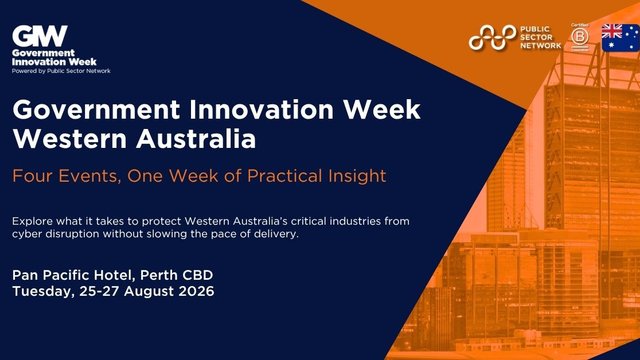
Shaun will be speaking at Government Innovation Showcase Western Australia 2026 on Tuesday, 25 August 2026, where he joins a panel focused on scaling digital health across WA, including telehealth, interoperability, workforce capability and patient-centred digital experiences. He is also part of Digital Leadership Day Western Australia 2026 on Wednesday, 26 August 2026, joining a session on leading at the intersection of tech and people, with a focus on AI adoption, skills, trust and clarity.
Explore the events:
Government Innovation Showcase (25 August): Overview | Agenda | Register
Digital Leadership Day (26 August): Overview | Agenda | Register
Public Sector Network:
What are the biggest leadership challenges you are seeing right now that involve both technology and people?
Shaun Walsh:
In health, technology has always had a strong presence through clinical systems, medical equipment and operational tools. What has changed is that digital is no longer sitting off to the side as a corporate service function. It is now embedded across the business.
That creates a new leadership challenge. Agencies need to support innovation and growth in business areas, while still maintaining architectural standards, interoperability and secure connection across the system. At the same time, AI has accelerated rapidly since late 2022, and that has made sustainable development, governance and organisational readiness much more pressing.
For Shaun, the real task now is preparing the organisation structurally for the exponential growth in digital capability that is likely over the next decade.
Public Sector Network:
How do you assess the need for skills and trust as new technologies like AI and quantum emerge?
Shaun Walsh:
It starts with frameworks, standards and governance. In Shaun’s view, the key issue is not just the technology itself, but how it is applied in a way that is cyber safe, ethically sound and genuinely delivers efficiency and return on investment.
That means setting the organisation up to embrace innovation while still maintaining control. It also means working closely with vendors, especially as more tools come with embedded AI capability by default. Health agencies need to understand how those capabilities are being used, what data they rely on, what changes vendors are making, and how those changes affect compliance, reporting and contractual obligations.
Shaun points to the growing need for stronger expectations at both state and national level, particularly in health, where digital and medical technologies increasingly overlap.
Hear Shaun Walsh at Government Innovation Showcase WA 2026 in the digital health panel discussion, which will explore scaling digital health across WA, data-driven care, interoperability, workforce readiness and patient-centred digital experiences. He will also speak at Digital Leadership Day WA 2026 in the panel “Leadership of the Intersection Between Tech + People: Overcoming the Real Barriers to AI Adoption – Skills, Trust and Clarity.”
Public Sector Network:
How are you thinking about return on investment when it comes to digital health and emerging technologies?
Shaun Walsh:
WA Health uses a digital strategy, digital roadmap and a digital maturity capability assessment to create a base-level view of where the organisation is today and where it needs to get to. Investments are then aligned to that strategy and measured against capability uplift over time.
But Shaun is clear that ROI in health is not always straightforward. Some benefits are tied to system improvement, safety and better patient experience, even when they introduce new ongoing costs.
He uses ambient AI scribes as an example. They can improve patient engagement and reduce clinician burden by allowing staff to focus more fully on the consultation rather than note-taking. But they also introduce new licensing, data consumption and operating costs that did not exist before. In other words, the tool may improve service quality while still increasing the bottom line.
That is why WA Health uses a digital investment framework to prioritise against strategic goals, clinical risk, patient safety, cyber threats and ministerial priorities, rather than relying on a narrow financial measure alone.
Public Sector Network:
Is AI over-hyped, or are you already seeing real value?
Shaun Walsh:
Shaun does not see AI as over-hyped. In his view, the benefits are already visible in both corporate and clinical settings.
On the corporate side, tools such as Copilot, ChatGPT and Claude are already improving speed and usefulness. In the clinical space, AI can support radiologists, improve patient safety and help identify issues that might otherwise have been missed.
He acknowledges that these improvements can still create cost pressures. Better identification and faster treatment can increase demand and expenditure. But in the broader context of community outcomes and health system improvement, he sees that as a worthwhile trade-off.
Looking further ahead, Shaun believes the real opportunity lies in combining stronger data sets, AI and eventually quantum computing to support far more advanced forms of diagnosis, prevention and personalised care.
Public Sector Network:
So is this really a foundations game right now?
Shaun Walsh:
Yes. Shaun sees the current period as one of implementation and preparation. The benefits ahead are significant, but agencies first need to get their data right, ensure interoperability between systems, strengthen cyber protections, and build the infrastructure and governance needed to support future innovation.
He points to the importance of trusted, macro-level data sets and national infrastructure thinking. In his words, digital capability should be treated like national infrastructure, no different in strategic importance from roads, ports or rail.
That means coordinated architecture, stronger sovereign capability, and a shared understanding of where systems need to be in the future, rather than fragmented investment driven by short-term demand.
Public Sector Network:
How important is coordination across departments and jurisdictions?
Shaun Walsh:
It is becoming more important, particularly in health. Shaun notes that AI adoption moved very quickly, and coordination has had to catch up. In response, national and state-level health leaders are now identifying shared frameworks, governance arrangements and learning models so agencies do not all build the same tools separately in parallel.
He sees progress here, but also says it can improve. Coordination takes time and resources, and much of that work still happens on top of existing roles. Even so, he believes it is essential if governments want a more consolidated, sustainable and scalable approach to AI, cyber, licensing and data costs.
Public Sector Network:
What do you hope attendees take away from your sessions at GIW WA?
Shaun Walsh:
For Shaun, the core message is that digital transformation is a maturity journey built across people, process and technology. Organisations need a clear view of their current state, an agreed vision for the future, and a roadmap that connects investment decisions to the capabilities they need next.
That also means being honest about what old capabilities may need to be let go, especially when resources are finite. If leaders understand what future service delivery needs to look like, they are in a far stronger position to prioritise investment and build the right digital foundations to support it.
Join Shaun Walsh at GIW WA 2026 to hear more about advancing digital health across WA and leading through the people, capability and trust challenges shaping the next phase of digital and AI adoption in government. His sessions sit across both the Innovation Showcase and Digital Leadership Day, making him one of the key voices connecting digital health delivery with broader leadership and workforce questions.
Government Innovation Showcase (25 August): Overview | Agenda | Register
Digital Leadership Day (26 August): Overview | Agenda | Register














Help your peers
Share what you've learned with fellow public servants