
Episode Overview
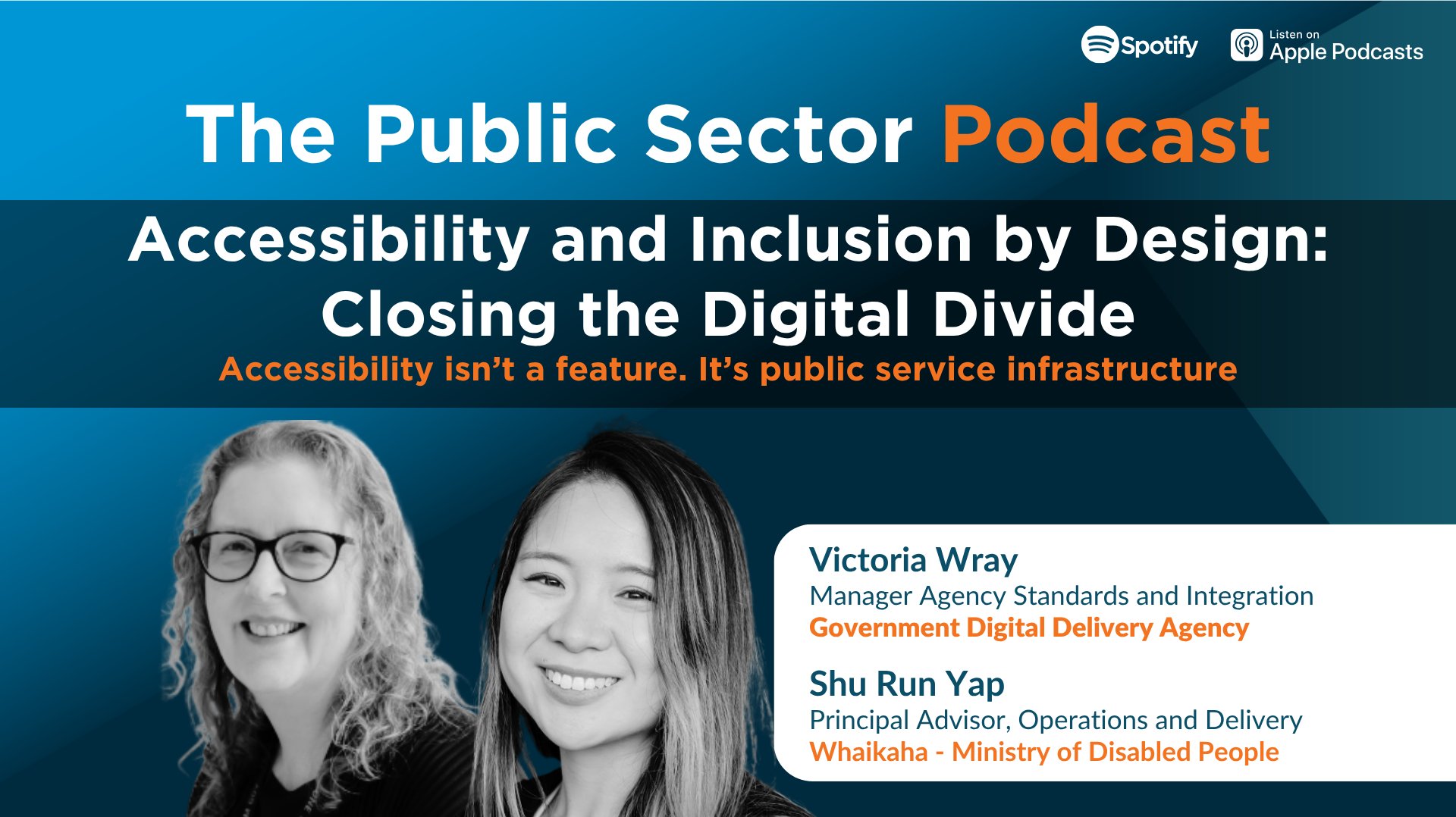
This episode marks a timely milestone: 20 years since New Zealand signed the UN Convention on the Rights of Persons with Disabilities (UNCRPD) (and, as noted in the conversation, 20 years since the New Zealand Sign Language Act). Set against that moment, Victoria Wray, Manager Agency Standards and Integration, Government Digital Delivery Agency and Shu Run Yap, Principal Advisor, Operations and Delivery, Whaikaha - Ministry of Disabled People focus on accessibility and inclusion by design—and what it will take to genuinely close the digital divide as New Zealand transitions from older web standards to a broader digital accessibility standard.
Two perspectives guide the conversation: the “why” (community, lived experience, and strategy) and the “how” (standards, integration, and system-wide implementation). The central message is clear: accessibility must be built into the architecture of service delivery, not bolted on at the end.
Key Themes
A central theme is treating accessibility as core public service infrastructure—not a procurement checkbox. The episode challenges the idea of designing for an “average citizen” and instead highlights how accessibility needs change across life circumstances, age, and context. A second theme is choice: truly inclusive government services must support multiple channels, with digital and non-digital pathways treated as equally first-class.
The conversation also highlights practical enablers of scale: leadership, procurement, structured content (“HTML first”), and making feedback easier through clearer channels and accessibility statements. Finally, it tackles the growing role of AI—both its potential to help and the risk of algorithmic bias further marginalising disabled communities if safeguards and co-design aren’t in place.
What You’ll Learn
1) Why This Moment Matters (20 Years On)
Why the UNCRPD milestone is a prompt to move from intent to implementation—and what “closing the digital divide” really requires.
2) Accessibility as Public Service Infrastructure
Why accessibility needs to be foundational (not “10% on a procurement template”) and why designing for “average users” fails.
3) Choice and Channel Equity
How inclusive services should offer choice (digital and human support) with equivalent outcomes, not “better if you use the app”.
4) The Shift to a New Digital Accessibility Standard
What’s changing as New Zealand moves beyond legacy web standards toward a broader standard covering apps, documents, and more—and why consultation feedback matters.
5) What Agencies Should Prioritise (Even with Legacy Constraints)
Why there isn’t a single silver bullet, and how leadership, procurement, and content fundamentals (like structured content) drive progress.
6) Feedback-Driven Innovation That Starts with Need
Why the best innovations begin with the problem and the people affected—not the technology (including AI).
7) Making Feedback Easier to Give
Why accessibility statements and clear contact channels matter, and how they help organisations learn and improve faster.
8) AI + Accessibility: Safeguards That Keep Services Equitable
How to reduce bias risk by involving impacted communities early, governance frameworks, and testing AI assistants against human-reviewed outcomes.
9) Avoiding Fragmented Citizen Experiences Across Agencies
How system levers like central procurement, shared design systems, and common standards can help agencies move together.
10) Leading With Transparency and Cross-Agency Collaboration
Why telling communities early, engaging consistently, and avoiding “over-surveying” are essential to trust and adoption.
Key Takeaways
- Accessibility must be designed in from the start, not retrofitted
- There is no “average user”—needs change across life stages and circumstances
- True inclusion means choice, with digital and non-digital channels treated as equals
- The new standard expands beyond websites to apps, documents, and broader digital products
- Feedback mechanisms must be easy to find and use—accessibility statements help
- AI can help, but only with safeguards to prevent bias and exclusion
- Cross-agency coordination (procurement, design systems, shared standards) reduces fragmentation
- Transparency builds trust: tell communities early, involve them often, and align efforts across government
Why You Should Listen
This episode is for public sector leaders, service designers, content designers, digital delivery teams, policy and procurement teams, accessibility specialists, and anyone building digital services in New Zealand. It offers both the strategic “why” and the practical “how” for making accessibility a foundational feature of digital government—so transformation doesn’t leave disadvantaged communities behind.
Memorable Line of Thinking
Accessibility isn’t an add-on or a compliance checkbox—it’s core infrastructure, and the pathway to closing the digital divide is building inclusive services with communities, not for them.





Help your peers
Share what you've learned with fellow public servants