
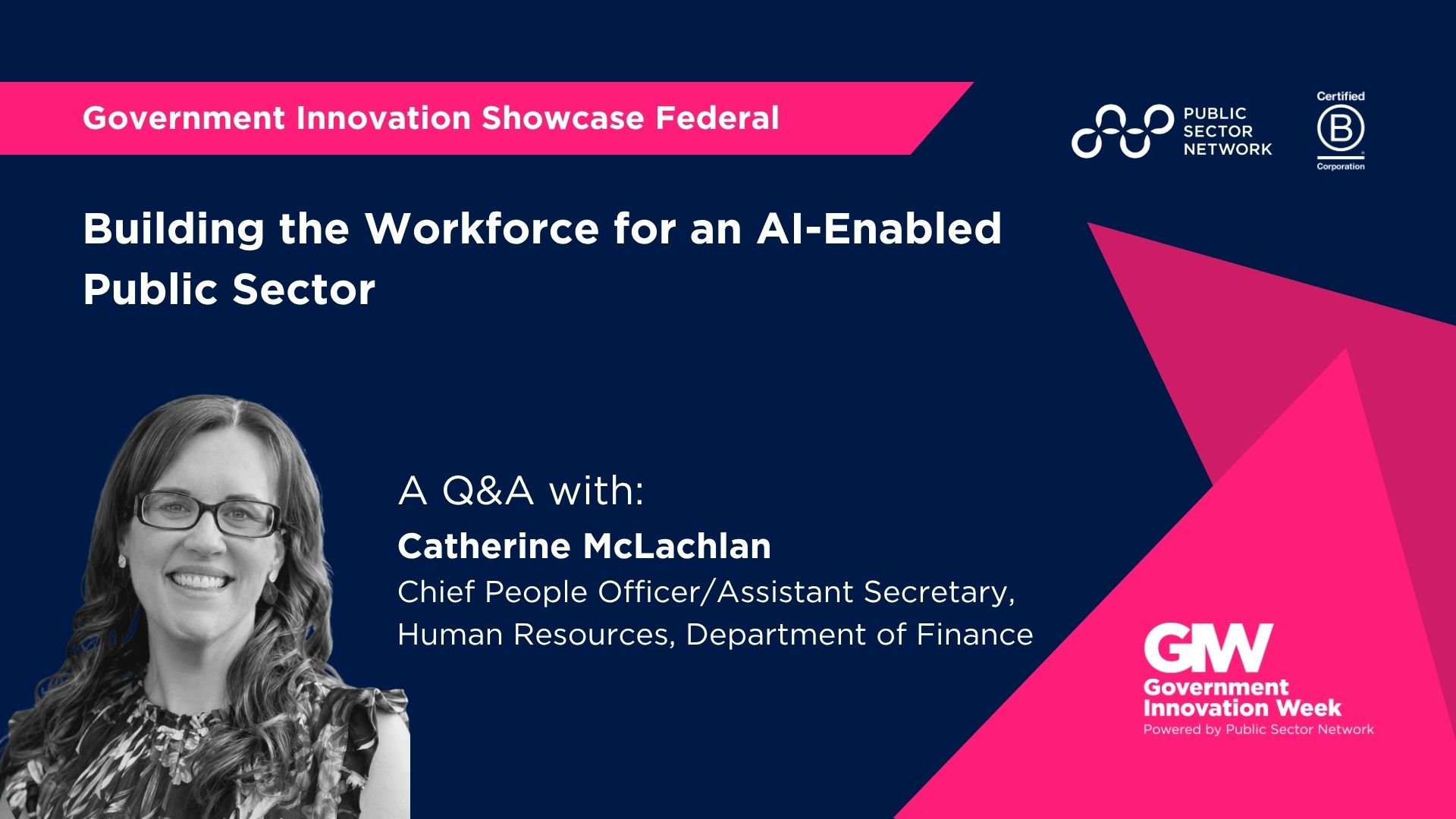
As AI and automation become more embedded across government, workforce transformation is increasingly about more than technical capability.
Public servants will need to understand how to work confidently with emerging technologies, while continuing to apply the judgement, critical thinking, adaptability and human skills that effective public service depends on.
That challenge sits at the centre of the work of Catherine McLachlan, Chief People Officer/Assistant Secretary, Human Resources, Department of Finance.
Ahead of Government Innovation Showcase Federal 2026, Public Sector Network spoke with Catherine about the skills an AI-enabled public sector will need, how leaders can bring people through workforce transformation, the changing role of HR in work design, and what government can do to strengthen recruitment, retention and capability over the years ahead.
Catherine will continue the discussion in the Executive Panel: “Building Capability for a Changing Workforce: Skills, AI and the Future of Work”, taking place from 3:20 PM to 3:50 PM on Thursday, 22 October. She will be joined by Simon Booth, Executive Director, Jobs and Skills Australia, Jo Talbot, First Assistant Commissioner, Workforce, Tribunals and Inclusion, Australian Public Service Commission, and Shannan Quain, Chief People Officer, Australian Digital Health Agency.
Explore the event: Government Innovation Showcase Federal overview | Register for the event
Q&A with Catherine McLachlan
Public Sector Network: As CPO at the Department of Finance, how are you thinking about the workforce capabilities government will need most as AI and automation become more embedded in public sector work?
Catherine McLachlan:
As AI and automation become more embedded in the work of our sector, the most important workforce capabilities will be a combination of technical literacy and human skills.
Public servants will need to understand how to use, interrogate and govern AI responsibly, while still applying critical thinking, judgement, problem-solving and ethical decision-making.
Equally important will be adaptability and a commitment to continuous learning, as technology will continue to evolve faster than traditional workforce models.
Our focus should be on building a workforce that can confidently work alongside AI to improve service delivery and policy outcomes so we can keep pace with technological change and remain effective in how we deliver for government and the community.
Public Sector Network: You have spent two decades working across people management, organisational strategy and workplace culture. How has that experience shaped your view of what makes workforce transformation succeed in government?
Catherine McLachlan:
Over two decades working across people, strategy and culture, I've learned that workforce transformation succeeds when it is led with purpose and grounded in people.
Clear leadership, meaningful engagement and effective communication are critical, but so is creating a shared understanding of why transformation is needed.
The most successful transformations balance a clear direction with flexibility, invest in capability building, and actively involve employees in shaping the future state.
Ultimately, people are far more likely to embrace change when they understand its value and feel supported through the transition.
Public Sector Network: Beyond technical capability, what human or leadership skills do you think will become most important in an AI-enabled public sector between now and 2030?
Catherine McLachlan:
While technical capability will be increasingly important, leadership in an AI-enabled public sector will rely even more heavily on human skills.
Emotional intelligence, strategic thinking, ethical judgement and the ability to lead through ambiguity will be essential.
Leaders will need to balance immediate priorities with longer-term workforce planning, foster trust in the use of AI, and help teams navigate ongoing change.
The ability to build connection, inspire confidence and maintain a strong focus on wellbeing will be just as important as understanding the technology.
Public Sector Network: AI is already reshaping roles, tasks and ways of working. How can HR leaders redesign work to improve productivity while maintaining employee trust, engagement and wellbeing?
Catherine McLachlan:
HR leaders have an important role in ensuring AI enhances work rather than simply automates it.
This means redesigning roles to remove repetitive tasks, freeing employees to focus on higher-value activities that require judgement, creativity and collaboration, and investing in reskilling and career pathways.
Digital professionals are important enablers, and CPOs need to be in the centre to ensure people, capability and work design are considered from the outset.
Maintaining trust will require transparency about how AI is being used, meaningful consultation with employees, and clear safeguards around ethics, privacy and fairness.
When implemented thoughtfully, AI can improve both productivity and employee experience.
Central agencies also play an important role in building workforce capability by setting a common direction, sharing best practice and helping agencies learn from one another.
This was reflected in the APS AI Plan, launched in November 2025, which focuses on three pillars: people, trust and tools.
Finance, together with the APSC and DTA, is helping translate this into action through shared approaches to AI literacy, workforce planning and capability development.
The appointment of Chief AI Officers across agencies also reinforces that successful workforce transformation is not just about technology, but about people, capability and work design.
Public Sector Network: Recruitment and retention remain major challenges across the public sector. What changes to workforce pathways, mobility or talent development could help government compete for the skills it needs?
Catherine McLachlan:
To attract and retain the skills the sector needs, we need to rethink traditional workforce pathways, as traditional pathways are not going to solve for the workforce challenges of the future.
This includes creating more flexible entry points through graduate programs, apprenticeships, internships and targeted recruitment initiatives, while also making it easier for employees to move between agencies and sectors throughout their careers.
Equally important is investing in continuous learning and career development so employees can see clear opportunities for growth.
People are more likely to stay when they can build meaningful careers while continuing to develop new skills.
Public Sector Network: Why are events like Government Innovation Week valuable for bringing public sector leaders together to share experiences, learn from one another and strengthen capability across government?
Catherine McLachlan:
Events like Government Innovation Week are valuable because they bring together leaders from across the public sector to share ideas, learn from each other's experiences and build connections that extend beyond individual agencies.
They create opportunities to showcase innovation in practice, discuss common challenges and identify collective solutions.
In a rapidly changing environment, forums like these help strengthen capability across government and foster a culture of continuous improvement and collaboration.
Building Capability for a Changing Workforce
The themes Catherine raises will be explored further at Government Innovation Showcase Federal 2026 in the executive panel:
Building Capability for a Changing Workforce: Skills, AI and the Future of Work
The session will examine how the public sector is adapting workforce strategies as technology reshapes roles, tasks and ways of working.
Discussion will focus on:
- the most important skills priorities for an AI-enabled public sector
- workforce pathways, recruitment and reskilling through 2026–2030
- how AI is changing task design and ways of working
- finding the right balance between human expertise and machine-enabled tasks
- improving talent attraction and retention
- strengthening collaboration across agencies to address common capability challenges
The panel takes place at 3:20 PM on Thursday, 22 October as part of the Government Innovation Showcase Federal program.
AI changes the skills mix, not the importance of people
A consistent theme throughout Catherine's responses is that an AI-enabled workforce will require both stronger technology capability and stronger human capability.
Technical literacy will matter, but so will judgement, emotional intelligence, adaptability, ethical decision-making and the ability to work through ambiguity.
That has implications for more than training.
It affects how roles are designed, how people enter and move through the APS, how leaders communicate change, and how agencies create career pathways that encourage people to stay and continue developing.
It also means HR and workforce leaders need to be involved early in AI transformation rather than brought in after technology decisions have already been made.
From technology adoption to workforce transformation
The broader Government Innovation Showcase Federal 2026 program reflects that shift.
Across the day, government leaders and practitioners will examine AI adoption, digital services, technology and data integration, productivity and workforce capability, with four dedicated tracks covering Digital Services, CX and AI Innovation, Technology, Data and AI Integration, AI Enhanced Productivity, and ACT Digital Futures.
The event creates an opportunity for agencies to compare practical experiences, understand what is working elsewhere in government and bring together the technology, people, governance and service-delivery perspectives required for sustainable transformation.
As Catherine notes, the pace of change makes that collaboration increasingly important. No single agency is approaching workforce transformation in isolation, and many are facing the same questions about capability, adoption, trust and the changing nature of work.
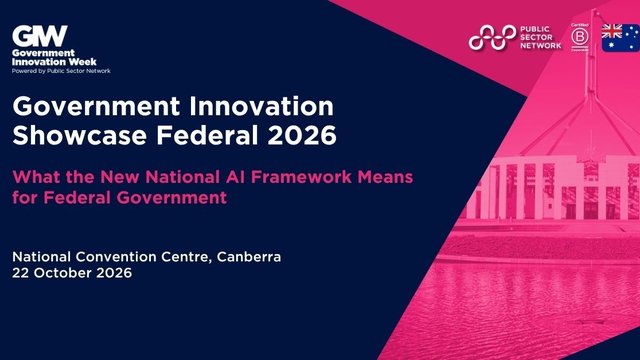
Government Innovation Showcase Federal 2026 takes place on Thursday, 22 October 2026 in Canberra.
Registration is complimentary for eligible government attendees and Public Sector Network members.
Explore the event: Government Innovation Showcase Federal overview | Register for the event





Help your peers
Share what you've learned with fellow public servants