Digital transformation only matters if people can feel the difference.
For Dr Christina Igasto, Director-General, Digital Canberra, ACT Government, that means making government services easier to access, easier to use and more trusted.
Ahead of Government Innovation Showcase Federal 2026, Public Sector Network spoke with Christina about translating digital strategy into real outcomes, creating seamless services, building trust around AI and data, improving digital inclusion and working across jurisdictions to simplify the way people and businesses interact with government.
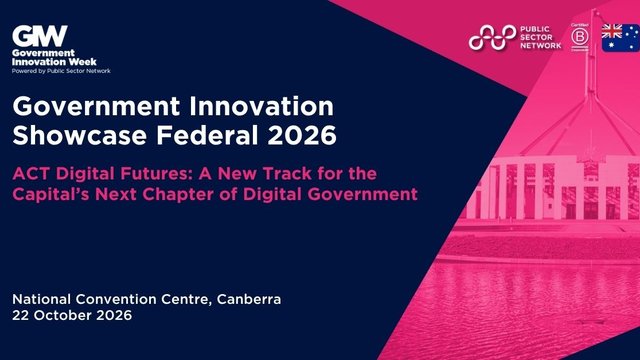
Christina will continue the conversation at the Showcase in the ACT Digital Futures fireside chat “From strategy to Impact: Delivering a Digital ACT for Communities, Government and Industry.”
Facilitated by Simon Quarrell, Deputy Chief Executive Officer, Digital Investment Advice and Sourcing, Digital Transformation Agency, the session will explore the ACT Digital Strategy, community-centred services, digital inclusion, responsible AI and the role of government in shaping Canberra's digital future.
Explore the event: Government Innovation Showcase Federal overview | Register for the event
Q&A with Dr Christina Igasto
Public Sector Network: As Director-General of Digital Canberra, what are your biggest priorities for turning the ACT's digital strategy into tangible outcomes for communities, government and industry?
Dr Christina Igasto:
My priorities as Director-General for Digital Canberra are to make government services easier to access, easier to use and trusted.
It's quite simple.
As digital agency leaders across ACT Government, our role is then to enable government agencies to provide services to the community by using different technology services.
The priorities are delivering better digital services, looking at our cybersecurity, understanding what capability uplift we need to do, and what skills and confidence the ACT Public Service needs.
Responsible AI and data are priorities as well.
Then we're also looking at our investments so we make smart investments that generate benefits for the community, businesses and industries across ACT Government and Canberra.
For us, it's really important that it is not about the technology.
It's actually about the outcome that we are providing through using digital services to the community and businesses.
Public Sector Network: What does a genuinely seamless, community-centred government experience look like, and where do you see the greatest opportunities to simplify the way Canberrans interact with government?
Dr Christina Igasto:
Seamless community services are at the centre of our priorities and the vision that we have.
When people interact with government, they don't think about networks, data centres, technology or enterprise architecture. They don't even think about navigating government departments.
They are thinking about moments where they want to renew their driver's licence or rego, enrol their kids in school, start a business or access clinical or health services.
Those are the things people think about, and that's our challenge and our opportunity: to seamlessly provide that to community members.
That creates some significant opportunities.
One is to have a front door where you can actually interact digitally. Digital identity becomes very key in that concept as well.
Then you have consent-based data sharing supporting that.
You also have an opportunity to tell government once about yourself, and then we should have those services available across all the interactions you have with government so we know who you are and what you've already told us.
When you're interacting with government, it should feel like you're just interacting with government.
You don't need to see how many agencies sit behind that.
It should just be a seamless experience, and that's our priority as well.
Public Sector Network: Data and AI are creating new possibilities for more responsive and personalised services. How can government harness those opportunities while maintaining transparency, privacy and public trust?
Dr Christina Igasto:
ACT Government is taking a responsible approach to AI.
We have significant governance around policies and an assurance framework, as well as an advisory board, supporting that responsible concept of AI.
The opportunity probably sits in three different areas.
One is community-facing, where the community can easily access services and get the response that they need.
The second is supporting the people providing services over the counter in a service centre to find information quickly and improve that customer experience if you have a walk-in experience.
The third is supporting government employees to have the data that they need to support decision-making and other considerations they might have to support the community member sitting in front of them.
Within that, it becomes really important to have a number of guardrails.
That includes trust, privacy preservation, transparency and ethics.
For us, it's also really important to have a human in the loop. Human judgement is essential in our AI services.
Even though I've been a researcher in AI for many years, I strongly believe AI won't replace people.
I do think it will augment some of the work that we do and support some of the decisions we make, but it should still be human-centred when we use AI.
Public Sector Network: Digital inclusion is an important part of delivering better services. How can government ensure greater digitalisation improves accessibility without leaving people behind?
Dr Christina Igasto:
The key there is not leaving anyone behind.
Digital inclusion is more than technology.
We start with understanding what the community needs are.
Services should be accessible, easy to use, understandable and perceivable, regardless of people's preferences.
We should use plain language. We can have community support models so that people feel culturally safe when they're using digital services as well.
But we also need to recognise that not all Canberrans can, or wish to, use digital services or digital channels.
There should be options for assisted digital, similar to going to an airport and having someone assist you through that digital pathway.
There should also be options where you can access services through a phone call or face-to-face service.
We also need outreach programs where necessary.
We saw a lot of that particularly during COVID and other significant events, such as disasters, where you also need outreach models to support the community.
Public Sector Network: Canberra operates at the intersection of Territory and Federal Government. What opportunities do you see for greater cross-jurisdictional collaboration to create simpler and more connected services for people and businesses?
Dr Christina Igasto:
Canberra has a unique opportunity because of our proximity to the Federal Government and ACT Government.
The people who exist in Canberra belong to those two different jurisdictions, if you like.
So it's an opportunity to really connect services, reduce duplication and improve how we're sharing information and designing services.
We collaborate a lot with the Commonwealth and Federal Government.
It's important that we have the capabilities I talked about before: trusted ways of working and consent-based information sharing.
Ideally, digital identity is at the core so we know who the person behind those services is, and then they can tell us once.
One excellent example is the birth of a child.
We collaborated with Services Australia on a pilot project involving ACT Government and the other jurisdictions. ACT Government started the pilot together with Services Australia to create an opportunity where, when you have a baby, you tell government once about the different things you need, and then you can be enrolled into the Federal, local or Territory Government services that are relevant.
Ideally, that means people get more time to spend with their new baby rather than doing a lot of the administration that's required today.
Another aspect of Canberra is that, as we're building future infrastructure for digital business and the economy, we're working together with the Federal Government when it comes to building data centres in Canberra and considering what they can look like.
We're following national standards while also working through the ACT Government framework to support potential data centre development and the digital economy.
Public Sector Network: Looking ahead, what would success look like for a truly digital ACT, and what foundations need to be put in place now to achieve that vision?
Dr Christina Igasto:
A digital ACT is not so much about the technology that we deploy.
Those capabilities are needed, but for me success looks like connected services that are inclusive, trusted, easy to use and secure.
We should be measured on the community outcome, not the number of technologies that we deploy.
That said, to deliver those services we need an uplift in our digital services.
We need to look at how we're managing our data and how we are constantly looking at cybersecurity.
Interoperability is also important. That's a technical word, but it means being able to integrate systems so they can talk to each other in a good way and the experience seems seamless.
Then there's trusted digital identity and workforce capability.
Those are the building blocks that are constantly required.
Technology is evolving so quickly.
When we make investments, we need to think about how we invest smartly so we can adapt as community requirements and technology evolve.
That's the challenge, but that's also the opportunity.
For me, I'll know that we're being successful in the ACT and in Digital Canberra when Canberrans don't need to think about government, technology or data.
It just simply works.
If you're in Canberra, it's simpler to use the services. If you're a business, there's less complexity to start or operate your business.
Government can make decisions based on connected services, and the people who work and interact with government have the tools, skill sets and opportunities to interact seamlessly.
That would be the success measure for me: as a member of the community, government is just easy and simple to interact with.
Public Sector Network: Why do you think it's important for government employees to come together at events like Government Innovation Week to collaborate and learn from one another?
Dr Christina Igasto:
There are so many things, but one of the things I think is very important is networking and building and expanding your network.
Even though I've been working in digital for almost my entire career, I still need to tap into people, ask people and learn from other people.
There are things we're challenged by where I can reach out to members of my network or go to these events and engage with those questions.
I think that's the biggest benefit: the learning, the interaction and building and expanding your networks.
One thing I think we should all be encouraged to do when we go to these events is really ask the questions and engage.
The questions you are thinking about, someone else is also thinking about.
So don't be afraid to ask those questions.
From Strategy to Impact
Christina's interview reflects the focus of her upcoming ACT Digital Futures fireside chat:
From strategy to Impact: Delivering a Digital ACT for Communities, Government and Industry
Taking place from 11:40 AM to 12:00 PM on Thursday, 22 October, the session will examine how digital strategy can translate into practical improvements in the way people and businesses interact with government.
Christina will be joined by facilitator Simon Quarrell, Deputy Chief Executive Officer, Digital Investment Advice and Sourcing, Digital Transformation Agency.
The conversation will explore:
- ACT Digital Strategy priorities and progress
- creating seamless, community-centred services
- building trust through data, accessibility and digital inclusion
- the role of government in shaping Canberra's digital future
- working across jurisdictions to deliver exemplary digital services for people and businesses
The fireside opens the substantive program within the dedicated ACT Digital Futures track at Government Innovation Showcase Federal.
When good digital government becomes invisible
One of the strongest ideas in Christina's interview is that success should not be measured by the volume of technology government deploys.
It should be measured by whether government becomes simpler to deal with.
For citizens, that could mean telling government information once rather than repeating it across multiple agencies.
For businesses, it could mean less complexity when starting or operating.
For public servants, it could mean having better access to connected data and the right tools to support decisions.
And for people who do not want or cannot use digital channels, it means ensuring face-to-face, phone, assisted digital and outreach options remain available.
That shifts digital transformation away from technology for its own sake and towards a much more practical question: does this make the experience of government better?
Part of Government Innovation Showcase Federal 2026
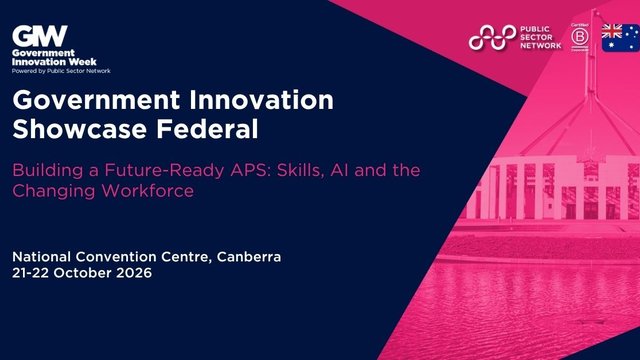
The ACT Digital Futures track forms part of the wider Government Innovation Showcase Federal 2026, taking place in Canberra on Thursday, 22 October.
Across the day, senior government leaders and practitioners will examine how AI, data, digital services, technology, productivity and workforce capability are reshaping public service delivery.
The Showcase includes dedicated tracks spanning digital services and customer experience, technology and data integration, AI-enhanced productivity and ACT Digital Futures, giving attendees the opportunity to move between the areas most relevant to their role.
For ACT Government employees, the ACT Digital Futures stream provides a dedicated forum for Territory priorities while connecting those discussions to the broader transformation taking place across Australian government.
As Christina puts it, the value of bringing people together is not simply hearing what others are doing. It is building the relationships and networks that help government teams solve common problems long after the event itself.
Government Innovation Showcase Federal 2026 takes place on Thursday, 22 October 2026 in Canberra.
Registration is complimentary for eligible government and public sector attendees.
Explore the event: Government Innovation Showcase Federal overview | Register for the event





Help your peers
Share what you've learned with fellow public servants