

Recently, we hosted a webinar on where Canada's Federal Government is investing in technology. One practical message stood out: helping organizations become AI-ready matters more than simply offering them more AI.
Federal government finance leader and industry experts talked about funding priorities, shared technology, data sovereignty and procurement, but the recurring question was practical: what needs to be in place for technology investment to improve public services?
Joining the conversation were:
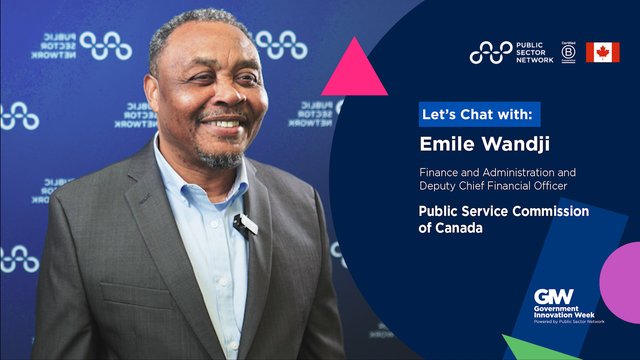
- Emile Wandji, Director General, Finance and Administration and Deputy Chief Financial Officer, Public Service Commission of Canada
- Isabelle Tanguay, Senior Lead Strategist, Partner Relations, Faculty of Medicine, University of Ottawa
- Gordon Hunter, CSO & Country Manager, Carahsoft Canada Inc.
1. The opportunity is in shared capabilities, not more disconnected systems
The discussion highlighted a shift away from departments building separate versions of the same tools, towards shared capabilities that reduce duplication and help public servants deliver services faster.
Digital Transformation Canada, launched on 3 September 2026, was discussed as part of that shift. Its three published priorities are to scale shared solutions across government, equip public servants with modern, secure tools, and use federal purchasing power to help Canadian digital and AI companies test, scale and commercialize new technologies.
For vendors, the implication is that solving one team’s immediate problem is not enough. A solution also needs to connect with existing systems and offer a credible path to adoption across departments.
The useful question is not only “What does your product do?” It is “What will government no longer need to build or maintain separately if this works?”
2. AI readiness is a substantial part of the work
The conversation returned to some fundamental questions:
- Can we trust the data we are using?
- Is information properly governed?
- Is the cloud environment ready?
- Are security, privacy and identity foundations strong enough?
These are not side issues to resolve after an AI pilot. They shape whether the pilot can become something useful and sustainable.
AI emerged in the discussion as a catalyst for modernization, rather than another technology to deploy in isolation. That means looking at platforms, integration, data and governance together.
My takeaway: some of the most valuable work around AI will be the less visible work that makes it usable. Better information management might not make the most dramatic announcement, but it can determine whether the investment delivers anything meaningful.
3. Sovereignty and accountability need to be designed in
Data sovereignty was a recurring concern, particularly where government holds sensitive personal information.
The discussion also went beyond where data sits, highlighting the need for guardrails from the beginning. That includes compliance with automated decision-making rules, effective French and English functionality, and human accountability for final decisions.
For vendors, this means arriving prepared to explain how the solution handles data, supports oversight and meets the organization’s requirements. Those questions should not be left for the final stage of procurement.
4. Procurement engagement starts before the RFP
A practical takeaway from the discussion was to understand your own differentiators and engage early.
Before a formal procurement begins, there is an opportunity to help officials understand what industry can deliver and how different approaches might address their needs.
Once an RFP is issued, the rules change. Engagement needs to move through the formal channels, including the question-and-answer process.
The conversation also covered unsolicited proposals, which are rarely accepted outright but may help government understand available capabilities before it defines a future requirement.
The lesson is to be useful before requirements are finalized, then participate carefully and constructively within the published process.
5. Speed and good governance are not opposing goals
There is pressure to move quickly on AI. There is also a responsibility to protect information, maintain service quality and make decisions people can trust.
A closing theme from the discussion was that speed and good governance need to work together.
That is a useful challenge for government and industry alike. Governance needs to support responsible progress, while delivery plans need to account for the foundations that make progress possible.
A clear problem, a defined outcome and a realistic path to scale are stronger starting points than adopting technology simply because it is available.
What this means for industry
My reading of the conversation is that the strongest proposition is “we understand the service problem, the operating constraints and the conditions that need to be in place for this to work.”
This requires preparation: reading government’s published priorities, understanding the procurement landscape and finding partners where additional expertise is needed.
Canada’s technology investment conversation is about AI, but it is also about the foundations of better public service. The opportunity is to connect the two.
What're some next steps
Meet Emile Wandji, Director General, Finance and Administration and Deputy Chief Financial Officer, Public Service Commission of Canada and more federal government leaders at Government Innovation Week Federal on Feburary 23-24, 2027 in Ottawa.














Help your peers
Share what you've learned with fellow public servants