

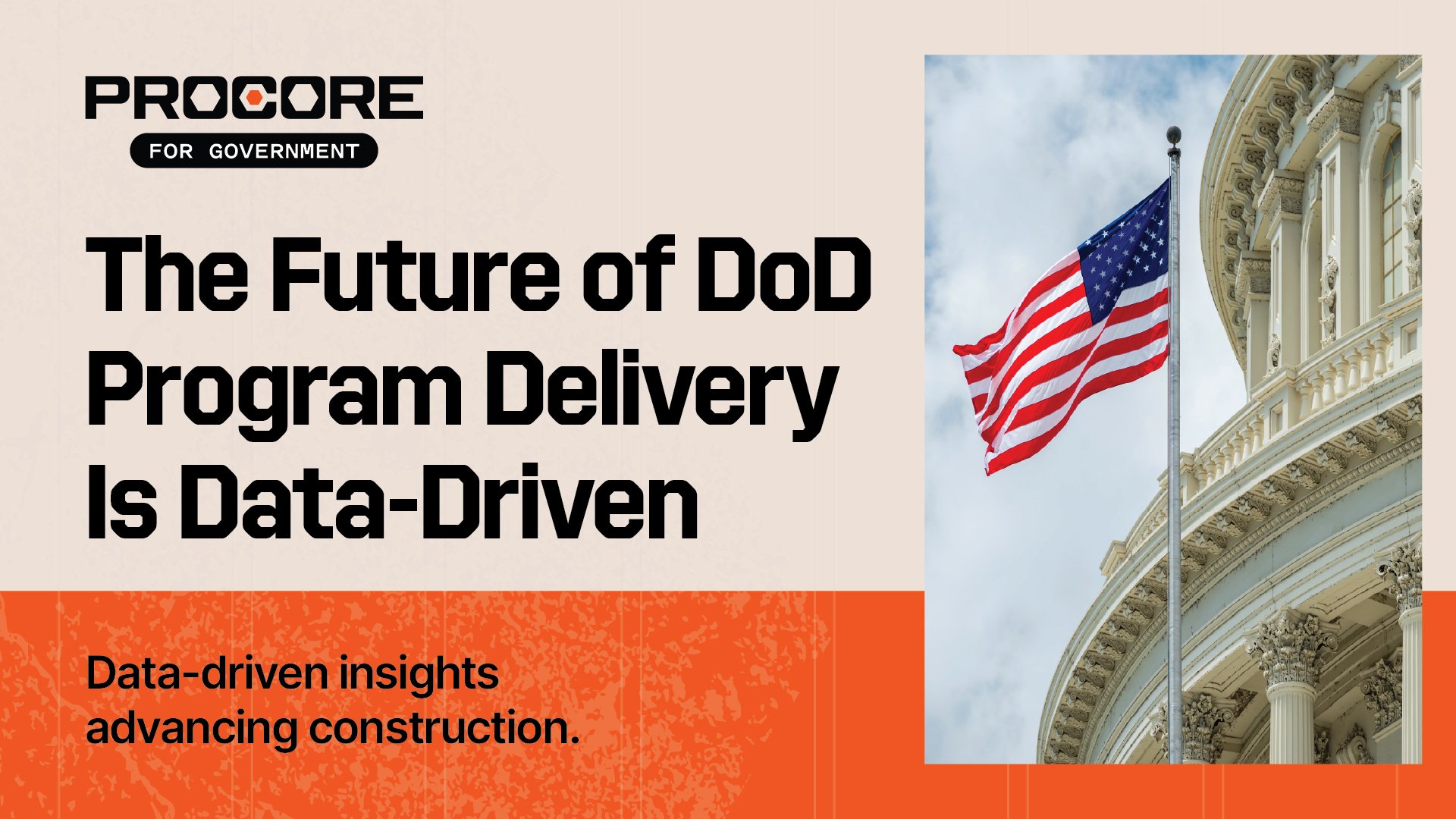
Across the Department of Defense, capital program leaders are facing a fundamental shift in expectations. It is no longer enough to obligate funds on time. Increasingly, success is measured by how effectively those funds translate into operational capability, delivered on schedule, within budget, and fully aligned to mission outcomes.
This shift is exposing a growing disconnect between how programs are funded and how they are delivered.
The Hidden Risk in Today’s Delivery Model
DoD capital programs are operating under mounting pressure:
Compressed obligation timelines
Increased audit scrutiny and oversight
Rising project complexity across distributed stakeholders
Expanding infrastructure demands tied to readiness and resilience
Yet, despite these pressures, many programs still rely on fragmented systems, spreadsheets, legacy tools, and disconnected contractor platforms to manage delivery. The result is a lack of unified visibility across the program lifecycle.
Leaders often do not see issues until it is too late - cost overruns surface after budgets are locked, schedule delays emerge after milestones slip, and scope changes become visible only when they impact outcomes.
And when oversight bodies demand answers, assembling a defensible, audit-ready narrative becomes a manual, time-intensive effort. In this environment, the greatest risk is no longer under-obligation, it is under-delivery.
From Fragmentation to a Defensible System of Record
To regain control, DoD organizations must first address the foundation of project delivery: how data is captured, managed, and shared.
A modern system of record is not simply a repository for documents. It is a centralized, authoritative environment where all stakeholders, owners, construction managers, contractors, and inspectors operate from the same data. This shift delivers immediate impact in three critical areas:
Audit readiness: Time-stamped, traceable records reduce the burden of audits, FOIA requests, and compliance reporting
Data ownership: Agencies retain control of project data rather than relying on contractor-held systems
Standardization: Consistent workflows reduce variability across programs and improve execution discipline
For DoD leaders, this is about more than efficiency. It is about establishing a defensible foundation for oversight, accountability, and control. But in today’s environment, a system of record alone is no longer sufficient.
The Next Evolution: From System of Record to System of Intelligence
As capital programs scale and complexity increases, the ability to simply capture data is not enough. What leaders need is the ability to act on that data in real time. This is where the evolution to a system of intelligence and collaboration becomes critical. By connecting workflows and aggregating data across the project lifecycle, DoD organizations can move from reactive to proactive delivery.
This enables:
Early risk identification: Detecting cost and schedule variances before they impact mission outcomes
Faster decision-making: Replacing retrospective reporting with real-time insight
Seamless collaboration: Aligning stakeholders across commands, contractors, and geographies
Instead of asking “What went wrong?” after the fact, leaders can continuously answer the question about “What is happening now, and what needs to change?”
Connecting Project Delivery to Mission Outcomes
For senior DoD stakeholders, whether overseeing facilities, real property, or capital programs, the implications are significant. Project delivery is no longer a back-office function. It is a direct contributor to mission readiness. When delivery systems are fragmented:
Decision-making slows
Risk increases
Accountability weakens
But when delivery is powered by connected, real-time data:
Leaders gain confidence in program performance
Oversight becomes proactive rather than reactive
Outcomes align more closely to mission priorities
This is especially critical as the DoD manages billions in infrastructure investments aimed at enhancing readiness, resilience, and modernization.
Looking Ahead: Building the Foundation for Intelligent Infrastructure
The future of DoD project delivery will be defined by how effectively organizations leverage their data. With a connected data foundation in place, new capabilities begin to emerge. In fact, most lifecycle cost and value is realized after construction, making the quality and accessibility of project data critical long after project closeout. The organizations that succeed will be those that treat project data not as an output, but as a strategic asset.
A New Standard for Delivery
For DoD capital program leaders, the path forward is clear: The challenge is no longer simply delivering projects it is delivering outcomes that directly support mission readiness, under increasing scrutiny, complexity, and scale. That requires a shift:
From fragmented tools to connected platforms
From static reporting to real-time intelligence
From obligation metrics to mission-aligned outcomes
Because in today’s environment, success is not defined by how quickly funds are spent, but by how effectively they are translated into operational capability.

Published by
About our partner
Procore
Procore helps public sector entities and their contractors manage and build construction projects through a secure, unified platform.Built for the industry, Procore’s unified technology platform drives efficiency and mitigates risk through AI & data-driven insights and decision making. Over three million projects have run on Procore across 150+ countries. For more information, visit https://www.procore.com/government.
Learn more






Help your peers
Share what you've learned with fellow public servants