
For councils navigating financial pressure, workforce constraints and growing community expectations, change is no longer a project with a clear end date. It is part of everyday leadership.
At Mitchell Shire Council, that challenge is particularly pronounced. Rapid growth is reshaping parts of the municipality, while established rural towns continue to need services, investment and support.
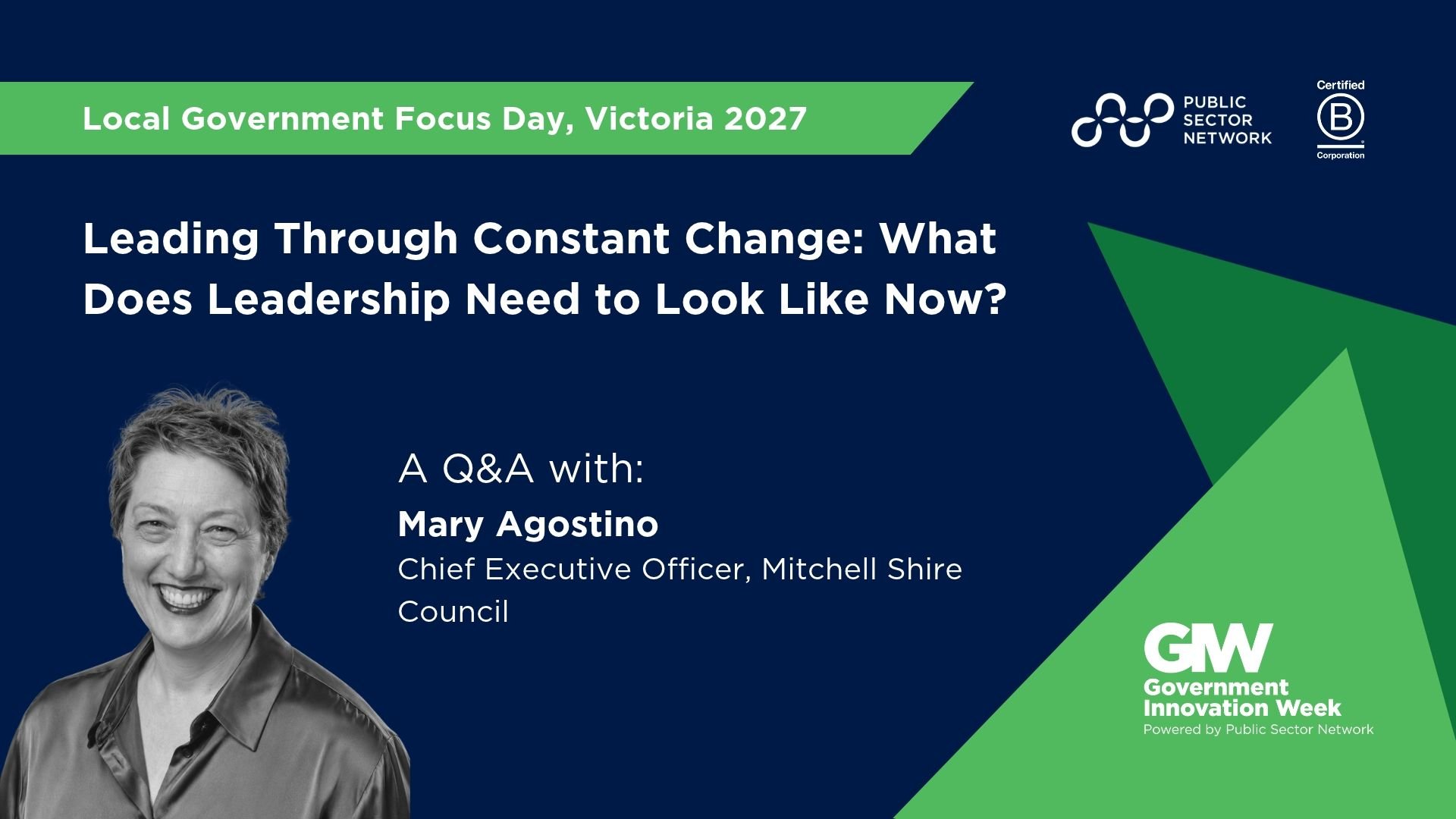
For Mary Agostino, Chief Executive Officer, Mitchell Shire Council, the starting point is not technology or organisational structure. It is a question: what will make the biggest difference to the community?
Ahead of her upcoming session on leading through constant change at Local Government Focus Day Victoria on 17 March 2027, we spoke with Mary about setting priorities, bringing people through reform and asking whether today’s council is equipped for tomorrow’s community.
Explore the event: https://publicsectornetwork.com/events/government-innovation-week-victoria-2027-melbourne-2027/local-government-focus-day-victoria-melbourne-2027/overview/
Complimentary registration for government: https://psnevents.eventsair.com/local-government-focus-day-victoria-2027/government-sso/Site/Register
What are the biggest changes you are seeing at Mitchell Shire, and how are they shaping the work of your people?
Mary Agostino: The changes at Mitchell Shire are huge. We have gone from a “sleepy hollow” with lovely little towns to having two of our towns form part of metropolitan Melbourne’s housing expansion.
We have the challenge of supporting our rural areas while also planning for a new population coming into the shire.
Financial sustainability is a major challenge for us and for the sector. We have been operating in a rate-capped environment for nine years, while the costs of materials and contractors have increased. In a growth area, you also have to deliver new service hubs, sporting facilities and basic infrastructure.
Some of the grant opportunities that supported our delivery have also reduced. So there are challenges on multiple levels: sector-wide financial pressures, alongside the particular demands of growth.
When financial pressure, reform and technology change arrive together, how do you decide what to focus on first?
Mary: In a growth area like Mitchell, everything feels urgent. I have to step back and recognise that if everything is urgent, sometimes that creates chaos.
You have to ask: “What is going to make the biggest difference to the community?” That is where you focus your energy.
I use three priorities: the growth agenda, financial sustainability and community. Those are the lenses my managers and I use to prioritise our efforts.
I have worked on restructuring the organisation to focus on the council plan and those priorities. We are also undertaking service reviews to ensure our services are flexible for the community, financially sustainable and able to respond to growth.
Workforce capacity and capability are important too. I cannot add people in every area where they are needed, so I have to target the areas that will make the most difference and set us up for the future.
How are you turning those priorities into decisions about resources and future capability?
Mary: Strategic planning is one example. We have precinct structure plans that need attention and a growth agenda that needs resources. That means there are other areas where we have to step back, regardless of how needed those resources might feel.
I spent time with every manager and asked: “Over the next five years, what is your strategic view of your department? What do you need to succeed, and what do you need to succeed for the community?”
Every manager presented, and we brought that into a working document so the executive could prioritise using those three lenses.
We are also looking at what is good to do but does not necessarily need to continue, and how we can redistribute resources to what really matters. We have always been lean, so it is a balancing act.
Technology is part of that conversation, but it is the enabler. We do not start with technology. We start with the community and what we need to achieve, then ask how technology can support that.
How do you maintain staff trust when difficult decisions need to be made?
Mary: Transparency is a really important way to maintain trust.
When I became CEO and went through restructuring the organisation, the “why” had to be clear to staff. We had a council plan, and we needed to be set up to deliver it.
You need to explain why you are doing something rather than impose it. You follow a good process and communicate a lot.
We held sessions, used newsletters and staff briefings, and allowed any question. We also asked staff whether there was a better way and what ideas they had.
We received 200 responses, went through every single one and made adjustments.
People may not always agree, but they have to believe in what you are trying to achieve. That is key.
How do you keep an organisation agile without overloading people?
Mary: Change here is constant. It is not the council to come and work for if you want to stand still. But I have to be very mindful of not overloading the organisation.
That means focusing our energy on the priorities, making them clear and working through a change process.
We also have to be agile. When opportunities present themselves, we may need to reshape and realign. Sometimes I would love to rip the Band-Aid off and say, “That is where we are headed; jump on board.” But sometimes I have to take a few steps back.
People need to feel safe. It is okay to feel uncomfortable, and roles do change, but you do not want people leaving because they are uncertain about their place in the organisation.
We have long-term employees who are fantastic corporate citizens. You do not want to lose those skills and experience through overload.
Change fatigue does not always mean people do not want to change. Sometimes they are overloaded, or they do not understand whether it is change for change’s sake.
The agility of our staff amazes me. They have allowed me to take them on a journey, and I am forever grateful for that.
What is one question you hope attendees take back to their councils?
Mary: When you walked into local government, you inherited services and models. Are those still serving the community best now? Are they setting your organisation and your community up for success?
If the answer is no, you need to look again at your organisation.
We should also keep working with each other. Through the Longwood fires, Murrindindi, Strathbogie and Mitchell worked together, using our resources and the support of the Municipal Association of Victoria.
We are looking at shared procurement and shared resources. There is a lot we can do together as a sector.
When you get back to the office, ask: “Are we set up for success? Are we set up for the community’s success? And how can we work together as a sector?”
Continue the conversation at Local Government Focus Day Victoria
Mary’s message puts community outcomes at the centre of organisational change: be clear about priorities, explain the reasons behind decisions and keep questioning whether existing ways of working still meet community needs.
These challenges will be part of the conversation at Local Government Focus Day Victoria on 17 March 2027, within Government Innovation Week Victoria, 15–18 March.
The event will bring council leaders and peers together to explore practical approaches to financial sustainability, service delivery, digital capability and community trust.
Hear more from Mary Agostino and connect with peers facing similar challenges. Explore Local Government Focus Day and the Government Innovation Week Victoria 2027 program.





Help your peers
Share what you've learned with fellow public servants