
Episode Overview
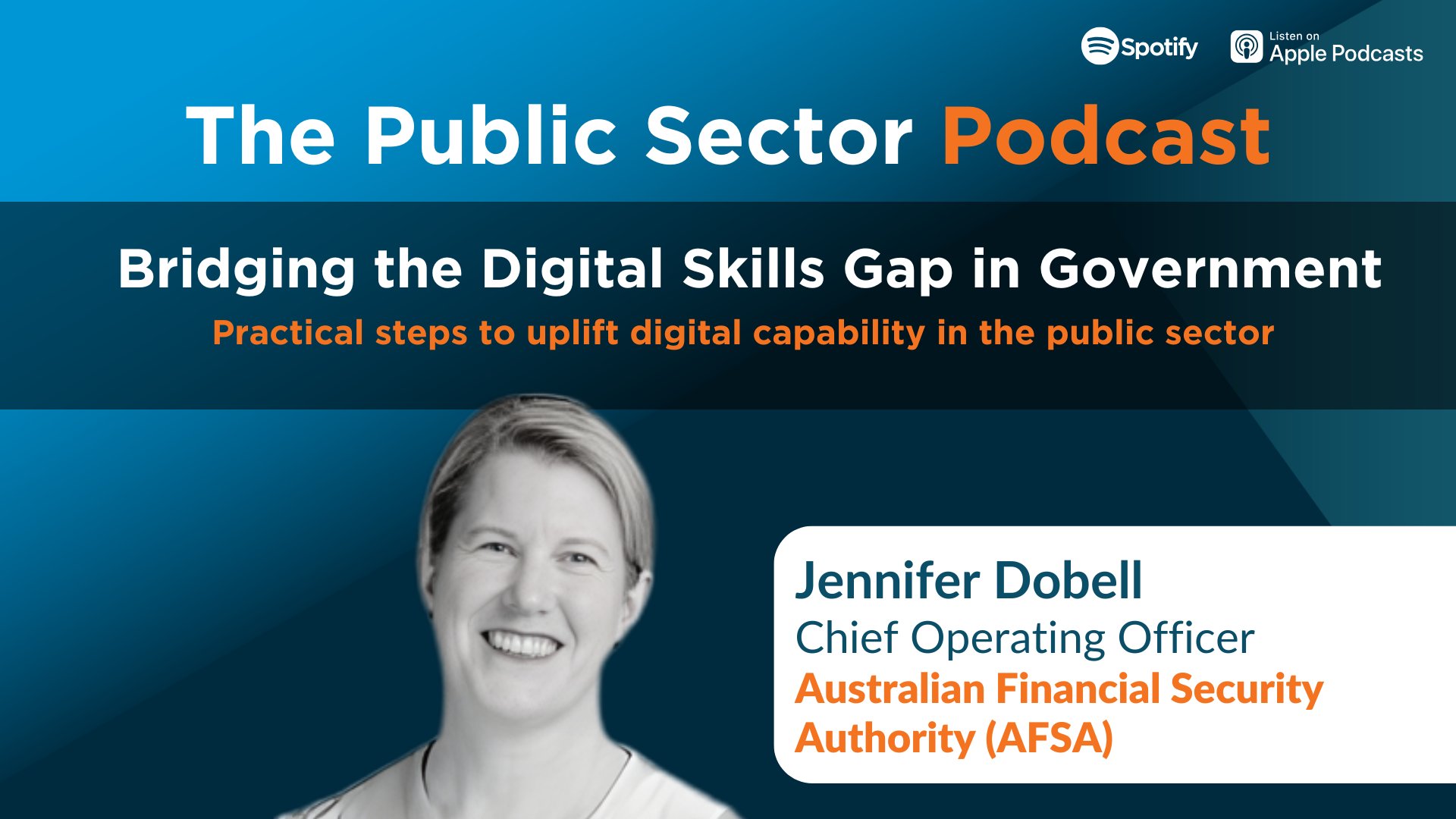
In this episode, we’re joined by Jennifer Dobell, Chief Operating Officer at the Australian Financial Security Authority (AFSA), for a practical and refreshingly honest discussion on how government agencies can close the digital skills gap. Drawing on her experience leading some of Australia’s largest workforce strategies — including COVID JobSeeker, Digital Victoria, and Victoria’s statewide Health Workforce Strategy — Jennifer shares what it really takes to build a tech-capable public sector workforce in an environment defined by legacy systems, slow procurement, tight budgets, and growing pressure to “do something with AI.”
Jennifer breaks down the realities of linking organisational strategy, tech strategy, and workforce strategy in the right order, offering highly actionable tips for agencies struggling to modernise while maintaining critical legacy platforms. With candid reflections, real case studies, and lessons learned across multiple jurisdictions, she demystifies how government leaders can uplift capability, build business–tech alignment, and design workforce plans that actually work in the public sector context.
What You’ll Learn
1. How to Build a Practical Workforce Strategy in Government
Why your organisational strategy must come first — followed by tech strategy — before any meaningful workforce planning can occur.
2. The Truth About Legacy Systems & Transformation Timelines
Why every government agency underestimates time, cost, and complexity (and why your legacy platforms will still be around in 2–3 years).
3. Bridging the Digital Skills Gap
How to identify your real capability needs, prioritise critical roles, and cross-skill teams using realistic, government-friendly approaches.
4. Improving Business–Tech Collaboration
Why service design, accessibility, and user experience capabilities are essential to closing the gap between what the business wants and what technology can deliver.
5. How to Position Your Tech Agenda for Funding
What government decision-makers actually look for, how to frame proposals, and why tech investment often makes leaders nervous.
Key Insights & Takeaways
Be realistic — everything in government takes twice as long as you think.
Legacy systems still matter. They carry the biggest operational risk and require dedicated capability, not just shiny new hires.
Organisational strategy → Tech strategy → Workforce strategy. Follow the sequence.
Invest in service design and accessibility. It’s the missing link in most agencies.
Data governance and cyber resilience are non-negotiables, especially for agencies handling sensitive information.
Modernisation requires agility. Plan for two years, keep everything beyond that intentionally flexible.
Buying delivery capability requires strong contract management. Without it, vendors will lead — and you’ll pay for it.
Build for what’s real today, not hypothetical future states.
Why You Should Listen
This episode is essential for public sector leaders, HR teams, CIOs, and anyone navigating government digital transformation. Jennifer offers a rare, practical playbook for how to plan and prioritise in environments constrained by legacy tech, limited funding, and constant pressure to innovate. If you’re looking for honest, experience-based guidance on building a modern tech workforce in government, this conversation delivers clarity, strategy, and plenty of lessons learned.




Help your peers
Share what you've learned with fellow public servants