
WA’s Digital Government Pulse: Automation, Innovation, and the Talent Tension
As digital transformation reshapes Australia’s public sector, Western Australia is navigating a unique mix of priorities and challenges that set it apart from national trends. Recent polling results provide a comparative snapshot of WA’s digital agenda, highlighting where the state is pushing ahead of its peers and where potential gaps are emerging.
The findings reveal a strong emphasis on automation and digital service expansion, signalling WA’s ambition to modernise rapidly and deliver more efficient, citizen-centric services. At the same time, heightened concern with cybersecurity and technological disruption underscores the state’s awareness of the risks and opportunities posed by a fast-changing digital landscape.
Yet the polling also shows softer focus on workforce upskilling and inter-agency collaboration, suggesting a potential imbalance between technology-led transformation and the people and partnerships needed to sustain it. Budget constraints and change management pressures loom large as barriers, while talent strategies remain underdeveloped despite widespread acknowledgement of the challenge.
This analysis unpacks WA’s results across key dimensions—from priorities and barriers to challenges, workforce strategies, and citizen expectations—providing insights into how the state can build on its momentum while addressing critical blind spots.
WA’s Digital Push: Automation Surges Ahead, But Is Workforce Readiness Being Left Behind?
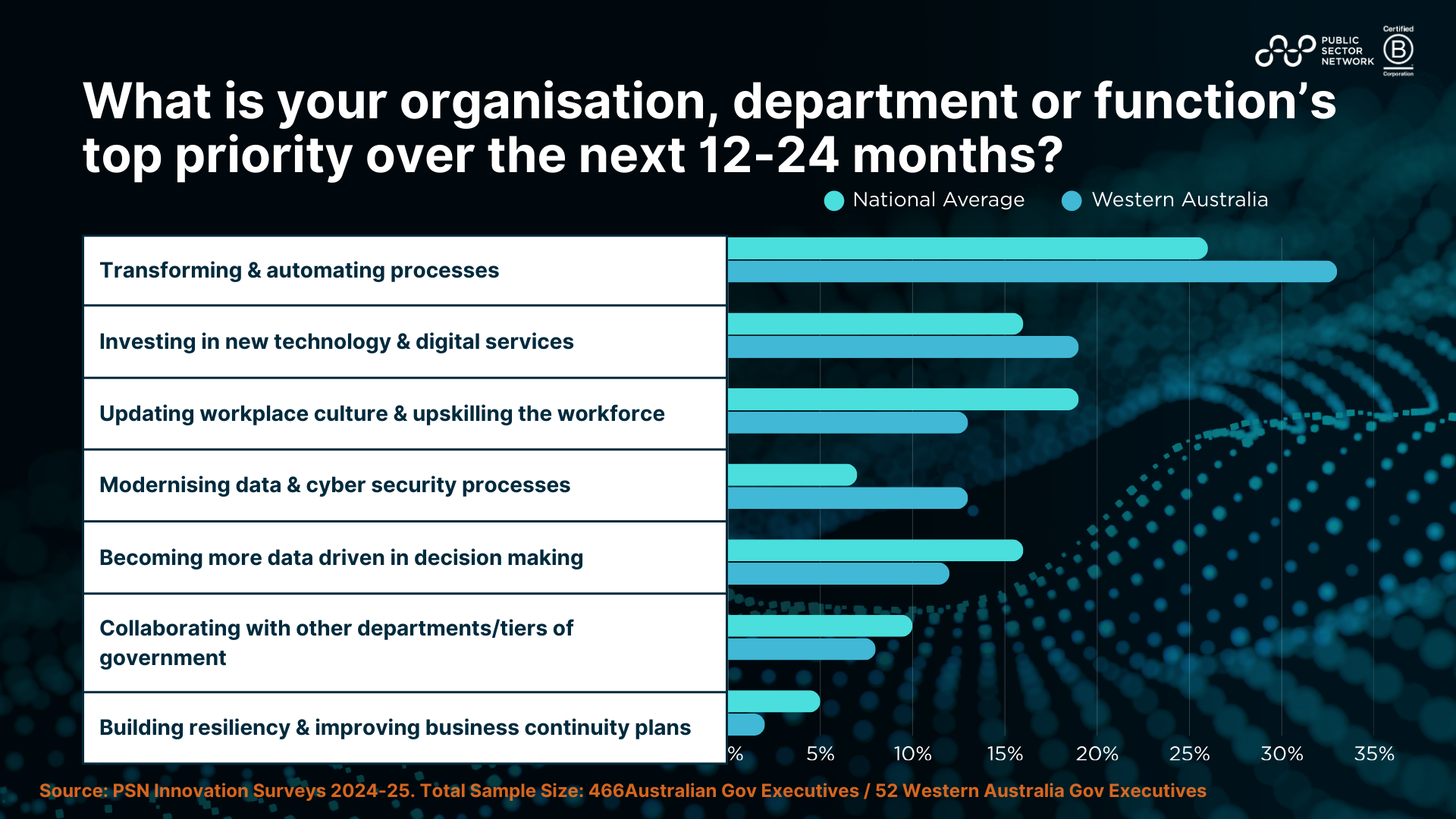 Transforming and automating processes was clearly identified as the Western Australian Government’s leading priority (33%), outpacing the national average (26%). This elevated emphasis reflects WA’s strong push toward process modernisation, signalling recognition of the opportunities presented by digital platforms and AI-driven automation to improve efficiency, reduce service delivery costs, and meet citizen expectations.
One of the most striking differences in the results lies in the modernisation of data and cyber security processes. WA placed a significantly higher priority here (13%) than the national average (7%). This points to a heightened regional focus on securing digital foundations, strengthening trust in government systems, and building resilience against rising cyber threats — a trend consistent with global digital government priorities.
By contrast, WA organisations placed less emphasis on workplace culture transformation and workforce upskilling (13%) compared to the national figure (19%). This relative underinvestment in human capability development could signal a gap in readiness for digital transformation, particularly at a time when skills in areas such as AI, data literacy, and change management are critical enablers of success.
Collaboration across departments and tiers of government also fell slightly below the national trend (8% versus 10%), indicating an opportunity for stronger cross-government partnerships to accelerate system-wide transformation. Meanwhile, resilience and business continuity planning remained a very low priority in WA (2%), well below the national average (5%).
Overcoming Barriers: WA Focuses on Resourcing and Change to Drive Innovation
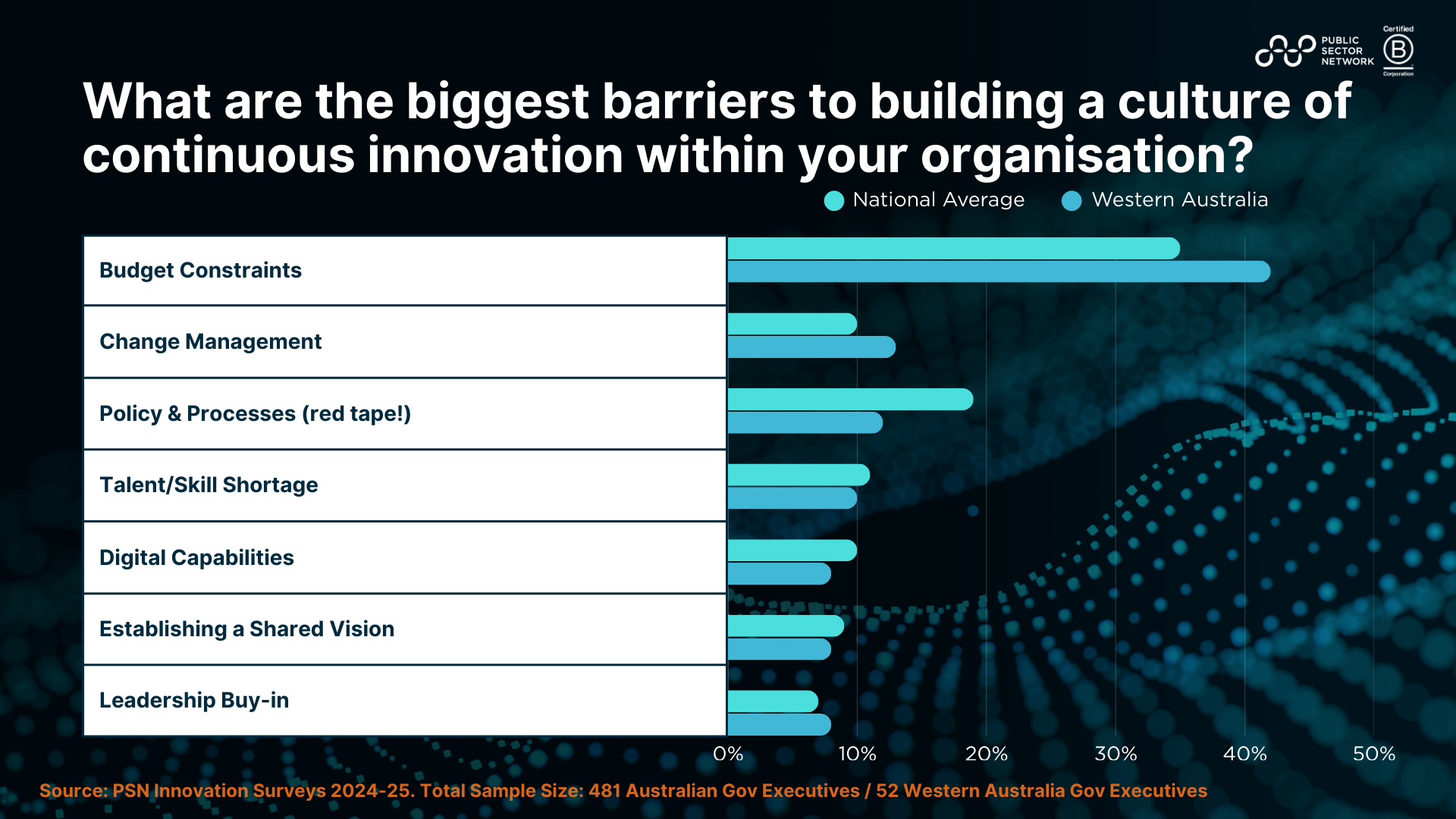 Budget constraints emerged as the most significant barrier for the Western Australian Government in building a culture of continuous innovation, cited by 42% of respondents compared with 35% nationally. This stronger weighting highlights a pronounced concern within WA about the adequacy of resources to fund innovation, signalling that financial pressures may be constraining the scale and speed of digital transformation initiatives.
Change management was also seen as a relatively larger obstacle in WA (13% versus 10% nationally). This suggests that leaders and practitioners in WA perceive organisational adaptability, staff buy-in, and cultural readiness as areas requiring greater focus if innovation is to be embedded more effectively across government agencies.
Conversely, WA respondents were much less likely to identify policy and process constraints as a barrier (12%) compared with the national average (19%). This indicates that red tape may be viewed as a comparatively less pressing impediment in the state, potentially reflecting a perception of stronger policy agility or fewer procedural bottlenecks relative to other jurisdictions.
Other factors, such as talent and skills shortages, digital capability gaps, establishing a shared vision, and leadership buy-in, registered close to national levels, with only marginal differences. This suggests WA’s challenges in these areas are broadly consistent with the wider public sector landscape.
WA’s Public Sector Outlook: Navigating Tech Change While Balancing Economic and Workforce Needs
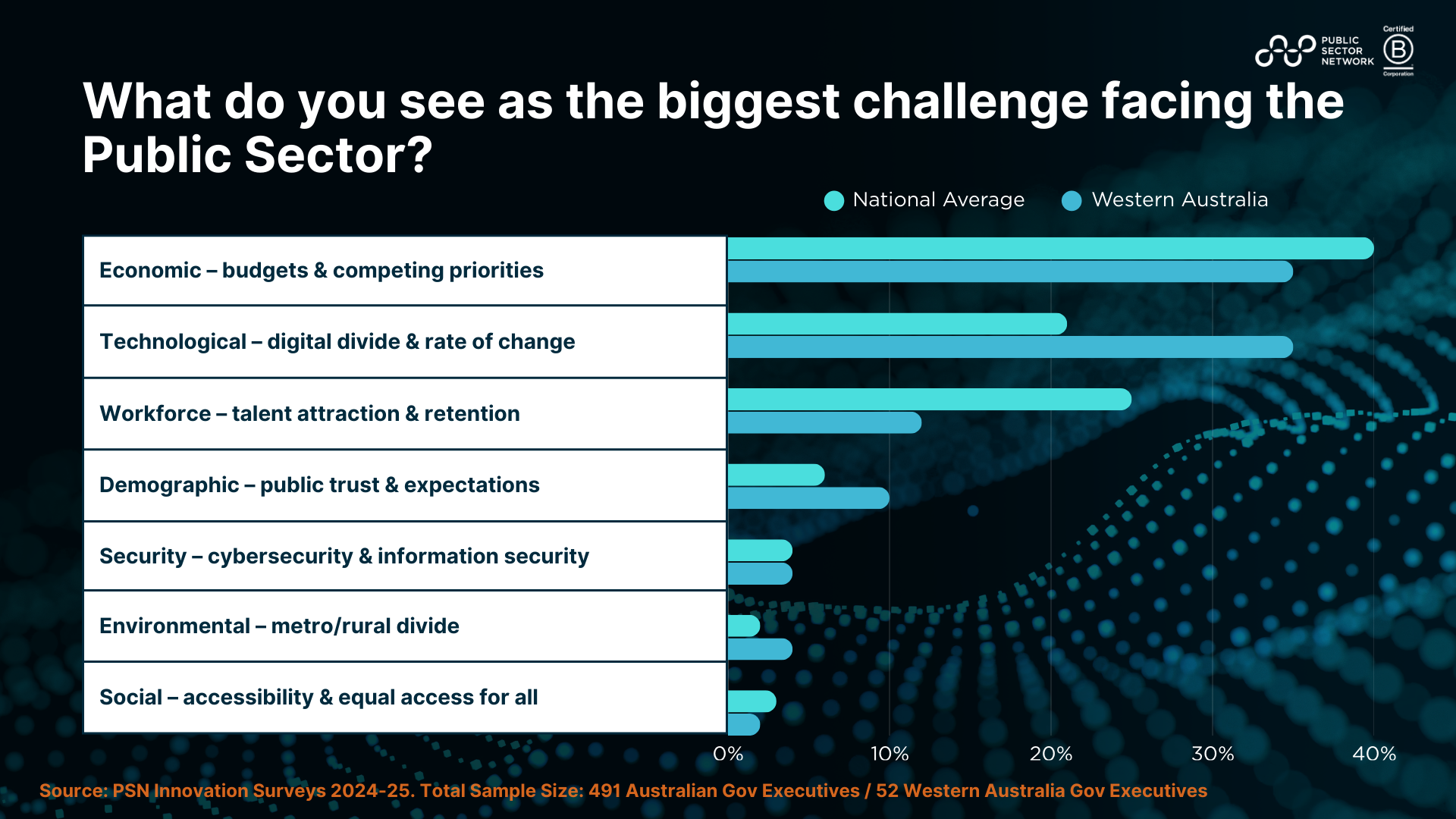 Western Australian respondents identified technological challenges — particularly the digital divide and the rapid rate of change — as their most pressing issue (35%), far surpassing the national average (21%). This points to a strong regional recognition of the disruptive pace of technological evolution and the critical importance of bridging access and capability gaps to ensure equitable and effective public service delivery.
By contrast, economic pressures such as budgets and competing priorities, while still the leading challenge nationally (40%), were seen as less dominant in WA (35%). This divergence suggests that WA agencies may feel relatively less constrained by financial pressures compared with peers in other jurisdictions, and instead are more sharply focused on navigating the technological transformation agenda.
The most striking difference, however, lies in workforce challenges. Only 12% of WA respondents flagged talent attraction and retention as a top concern, compared with 25% nationally. This may indicate greater confidence in workforce stability within WA’s public sector, but could also risk underestimating the importance of skills development and recruitment in sustaining digital government maturity, particularly as demand for data, cyber security, and AI expertise intensifies.
Other areas showed smaller but notable differences. Demographic challenges — linked to public trust and rising expectations — were emphasised more in WA (10%) than nationally (6%), reflecting awareness of the growing need to strengthen citizen confidence in government services.
WA’s Workforce Agenda: Building Pathways, Aligning Values, and Expanding Talent Strategies
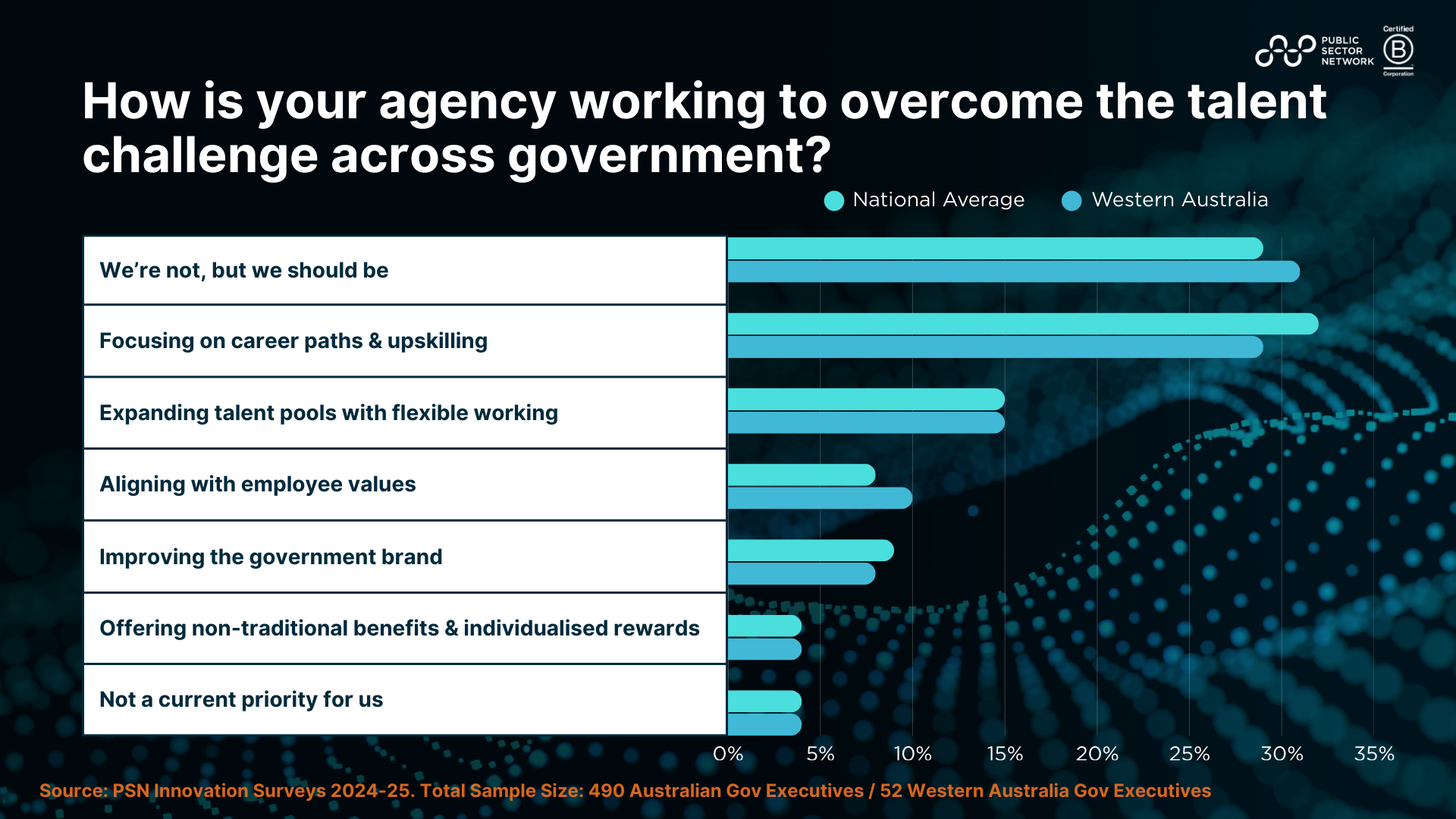 Western Australian agencies broadly mirrored national trends in how they are tackling the public sector talent challenge. The largest cohort indicated acknowledgement without substantive action, with 31% reporting “we’re not, but we should be,” closely aligned with the national average (29%). This reflects an ongoing system-wide struggle to translate recognition of the workforce challenge into tangible, coordinated strategies for capability development and retention.
Focusing on career pathways and upskilling remains the most widely adopted strategy, though WA placed slightly less emphasis here (29%) compared with the national average (32%). This minimal gap suggests a similar momentum in WA toward structured workforce development, even as skills in digital, cyber security, and data remain critical enablers of transformation.
WA respondents also placed somewhat greater importance on aligning with employee values (10% versus 8% nationally), indicating recognition that cultural and generational expectations are increasingly shaping workforce engagement. Meanwhile, efforts to improve the government brand (8%), expand talent pools through flexible working (15%), and offer non-traditional benefits (4%) were consistent with national figures, highlighting broad alignment in secondary strategies across jurisdictions.
Meeting Expectations: WA Prioritises Digital Service Expansion Alongside Collaboration and Data
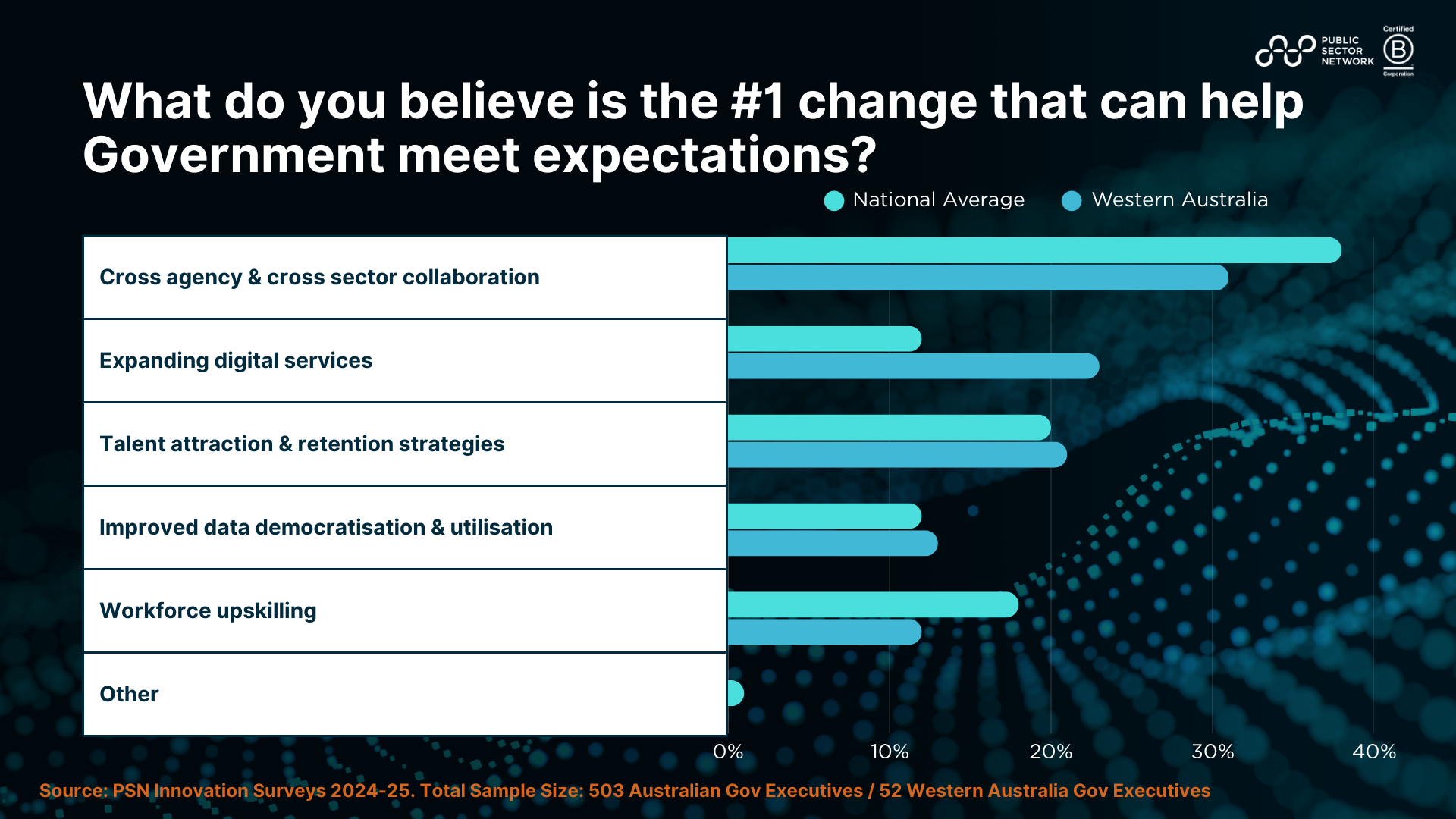 For Western Australian respondents, expanding digital services emerged as the most distinctive priority (23%), nearly double the national average (12%). This highlights a strong regional conviction that scaling digital access, platforms, and citizen-facing services is the key lever to meeting rising public expectations. It also reflects alignment with global digital government trends emphasising service modernisation as a driver of trust, efficiency, and citizen satisfaction.
Cross-agency and cross-sector collaboration remained the top choice nationally (38%), but was weighted lower in WA (31%). While still seen as important, this suggests WA may be more focused on accelerating digital service delivery than on systemic partnership approaches, potentially limiting opportunities to address challenges that span departmental and jurisdictional boundaries.
WA respondents were also less likely to prioritise workforce upskilling (12%) compared with the national figure (18%). This echoes other WA polling results showing a relative underemphasis on workforce transformation, despite its critical role in enabling digital adoption and sustaining innovation. By contrast, talent attraction and retention strategies were slightly more prioritised in WA (21%) than nationally (20%), suggesting some awareness of the need to strengthen workforce pipelines even if upskilling has been less emphasised.
Improved data democratisation and utilisation was largely aligned between WA (13%) and the national average (12%), pointing to broad recognition of the role of accessible, high-quality data in shaping more responsive and accountable government services.
WA’s Digital Government Pulse: Harnessing Tech Momentum and Building Sustainable Partnerships
Western Australia’s polling results paint a picture of a public sector determined to lead on digital service delivery and automation, with strong recognition of both the opportunities and risks of technological change. This emphasis places WA at the forefront of service modernisation, aligning with global trends in digital government.
However, the results also point to vulnerabilities. Workforce upskilling and cultural transformation remain underprioritised, even as demand for digital skills accelerates. Collaboration across agencies and sectors marginally lag behind the national average (which is also lagging global government best-practice), potentially limiting the ability to address shared challenges systemically. Budget constraints and change management pressures continue to weigh heavily, compounding the difficulty of turning digital ambition into sustainable outcomes.
By investing more strategically in workforce development, strengthening cross-government collaboration, and embedding data-driven decision-making into everyday practice, WA can ensure its digital transformation is both ambitious and resilient.
Ultimately, the state stands at a crossroads: double down on technology alone, or balance its agenda with the people, skills, and partnerships that will ensure digital maturity in the long run. The path WA chooses will define whether its digital government ambitions deliver lasting transformation for citizens and the public sector alike.







Help your peers
Share what you've learned with fellow public servants