
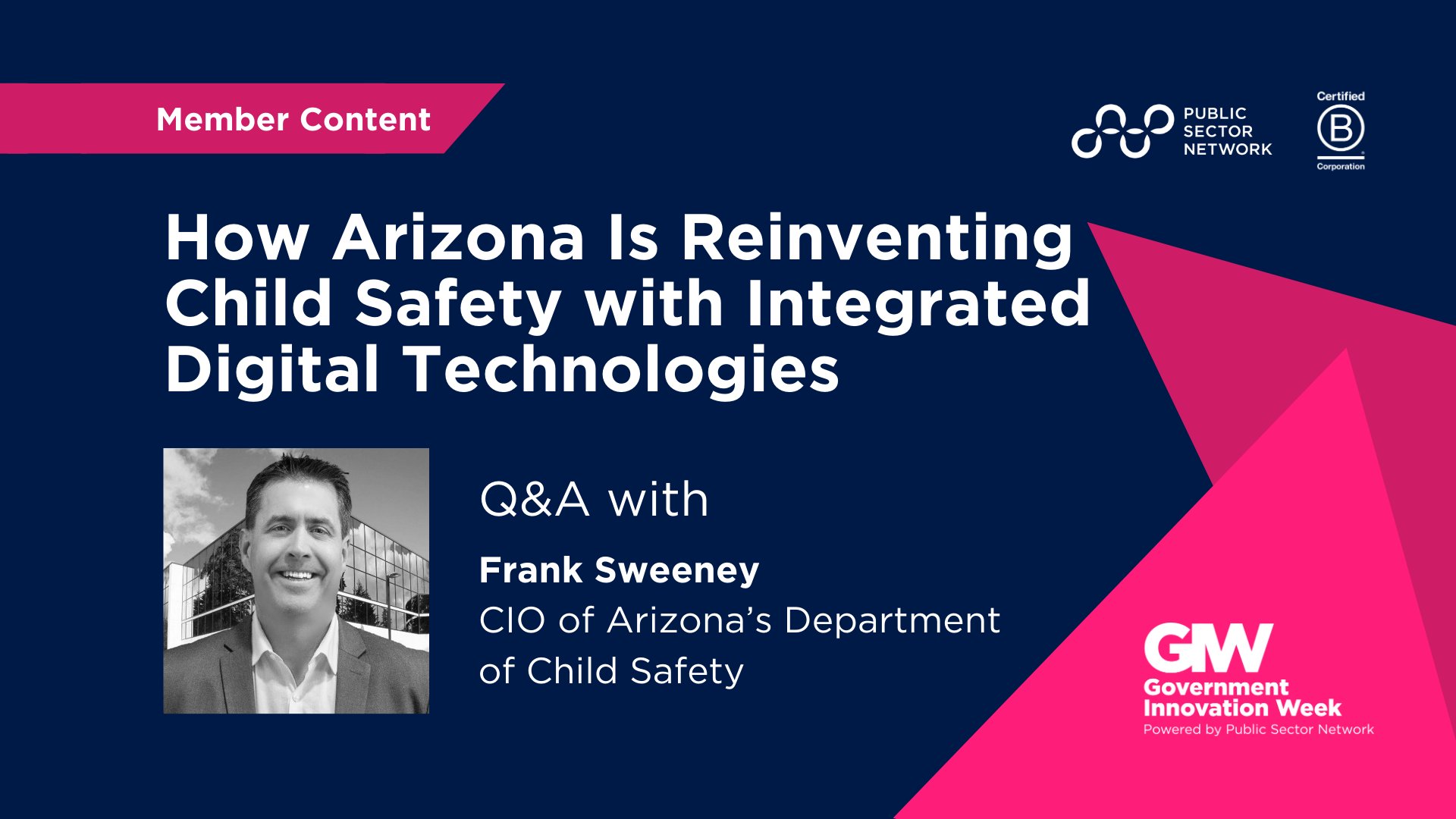
Amanda Garcia, Conference Producer at the Public Network Sector was delighted to sit down with Frank Sweeney, CIO of Arizona’s Department of Child Safety (DCS), ahead of his panel session at the Government Innovation Showcase Arizona this upcoming October in Phoenix. In the upcoming panel session 'Empowering Arizona's Future with Integrated Digital Technologies,' he'll share how the state is reimagining child welfare through innovation.
In an era where digital transformation isn’t just an advantage—but a necessity—AI has emerged as the game-changer. So, we asked Frank Sweeney, Arizona’s trailblazing CIO: How is his team turning this potential into real-world impact for vulnerable families?
Amanda: What role does AI play in enhancing decision-making for the Department of Child Safety?
Frank: For us, AI is about giving people the right information at the right time. Our staff deals with heavy caseloads and high stakes, they don’t need more noise, they need clarity. We use AI to surface what matters most, red flags in case narratives, legally sensitive info that needs to be redacted, and relevant policies without having to dig. It's not flashy, but it helps our folks make decisions faster and with more confidence. That’s a win for families and for our teams.
Amanda: What has been the most transformative digital technology your agency has adopted, and how did it change the way you deliver services?
Frank: Our Comprehensive Child Welfare Information System (CCWIS), hands down. It’s not just a system, it’s how we run child safety in Arizona. But the real transformation came when we started layering in practical tools around it. We built AI into disclosure reviews, case search, and policy lookup. It’s taken hours of manual work off the table. Our people are no longer buried in the system, they can actually use it to serve families. That’s the shift. From system-centered to human-centered.
Amanda: How can integrated digital technologies (like AI and automation) break down silos between agencies to improve service delivery for citizens?
Frank: We’ve learned that integration isn’t just technical, it’s relational. But once you build trust and a common data language, things move. We’ve connected with Medicaid, behavioral health, education, and others to get a fuller picture of what a child is experiencing. That means better handoffs, fewer gaps, and services that show up before things fall apart. The technology is just the enabler. The real magic is in how it helps us show up as one system, not ten disconnected ones.
Amanda: What lessons can other states learn from your department in driving a dynamic digital transformation without disrupting critical services?
Frank: Start small and solve something real. That’s been our approach. We didn’t try to build a spaceship, we just looked at where people were spending too much time and not enough of it was helping kids. Then we fixed those things first. It built trust, gave us momentum, and made it easier to take on bigger changes. You don’t need to boil the ocean, just fix what’s broken, prove it works, and keep going.
Amanda: What trends do you see shaping the next generation of public sector jobs in a more automated and AI-enabled environment, and how can reskilling and upskilling efforts keep pace with this transition
We’re going to need fewer form-fillers and more problem-solvers. The repetitive stuff, that’s going away. But people who can interpret data, apply judgment, and connect with others, they’re going to be even more valuable. At DCS, we’re already thinking about how to train staff on the tech they’ll be using, not just how to navigate it. You can’t separate the human from the digital anymore, they go hand in hand.
Frank Sweeney’s approach proves that transformative change doesn’t require flashy tech—just smart solutions to real problems. By putting caseworkers first (with AI that reduces burdens), building trust across agencies, and focusing on "fixing what’s broken," Arizona’s DCS offers a blueprint for modernizing government without losing sight of its mission: protecting families.
Stay tuned as we hear more from him, and his peers on 'Empowering Arizona's Future with Integrated Digital Technologies' at the upcoming Government Innovation Showcase Arizona - where innovation means impact.





Help your peers
Share what you've learned with fellow public servants