
Episode Overview
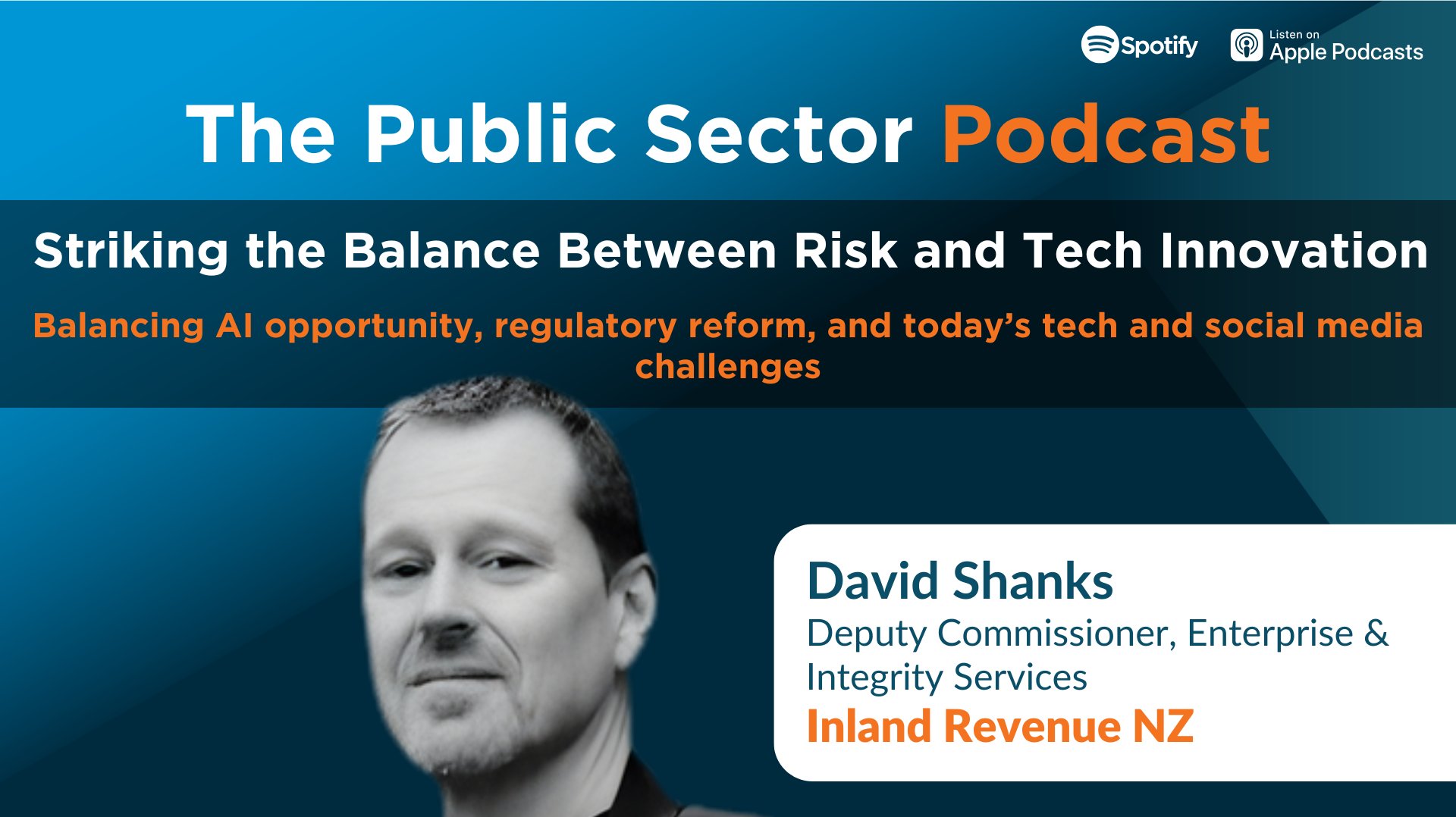
In this episode, David Shanks, Deputy Commissioner of Enterprise and Integrated Integrity Services at Inland Revenue New Zealand, delivers a thoughtful and grounded keynote on one of the public sector’s toughest challenges: how to strike the right balance between technology innovation and risk—particularly as AI accelerates faster than regulation can keep pace.
Drawing on decades of experience across government, regulation and digital policy, David reflects on the competing narratives surrounding emerging technology: the promise of better services, productivity and innovation, alongside real risks related to privacy, security, mental health and societal harm. Rather than framing this as a binary choice, he argues that public sector leaders must learn to walk a tightrope—moving forward deliberately, but responsibly.
Key Themes
David explores why governments cannot simply opt out of technological change, even when the risks are unclear or uncomfortable. Through a series of personal and professional stories, he illustrates how innovation, regulation and harm mitigation must evolve together—and why early detection, lived experience and adaptability are critical to getting the balance right.
What You’ll Learn
1) The AI Fork in the Road
Why emerging technologies like AI present both utopian potential and dystopian risk—and why history suggests governments will need to navigate somewhere in between.
2) Why "Slowing Down" Isn't an Option
Insights from David’s early exposure to advanced computing research show how geopolitical, military and commercial forces make technological progress inevitable—whether governments feel ready or not.
3) The Limits of Human-Centered Regulation
From his time as New Zealand’s Chief Censor, David explains how traditional, analogue regulatory systems struggle to keep up with digital platforms operating at global scale and speed.
4) When Technology Contains Its Own Solutions
A case study on streaming regulation shows how understanding platform architecture and data can unlock smarter, faster regulatory responses—if policy and legislation allow it.
5) AI, Loneliness, and Unintended Harm
David shares a confronting example of early AI “companionship” tools and how reinforcement-based systems can unintentionally contribute to radicalisation, particularly among young people.
6) Early Warning Signals Matter
Why some of the most important signals about emerging tech risk don’t come from dashboards or reports—but from everyday life, conversations with children, and frontline experiences.
7) Regulation Will Always Lag - So What Now?
A candid discussion on why laws and regulation rarely keep pace with technology, and why governments may need to rethink how policy frameworks are designed in an era of exponential change.
Key Takeaways
AI and digital technologies offer enormous public value—but also real and growing risks
Governments are already on the “tightrope”; opting out is not realistic
Early detection, listening and lived experience are essential risk indicators
Regulation must evolve, but it will always lag—requiring smarter, more adaptive approaches
With great technological power comes a responsibility to act early and thoughtfully
Why You Should Listen
This episode is essential for public sector leaders, regulators, policy professionals and technologists grappling with how to innovate responsibly. David offers a rare, honest reflection on what it means to govern in an age of rapid technological change—without hype, fear-mongering or false certainty.
Memorable Line of Thinking
We are already walking the tightrope. The challenge isn’t whether to move forward—but how to do so with balance, awareness and responsibility in a world where technology’s power is growing exponentially.





Help your peers
Share what you've learned with fellow public servants