
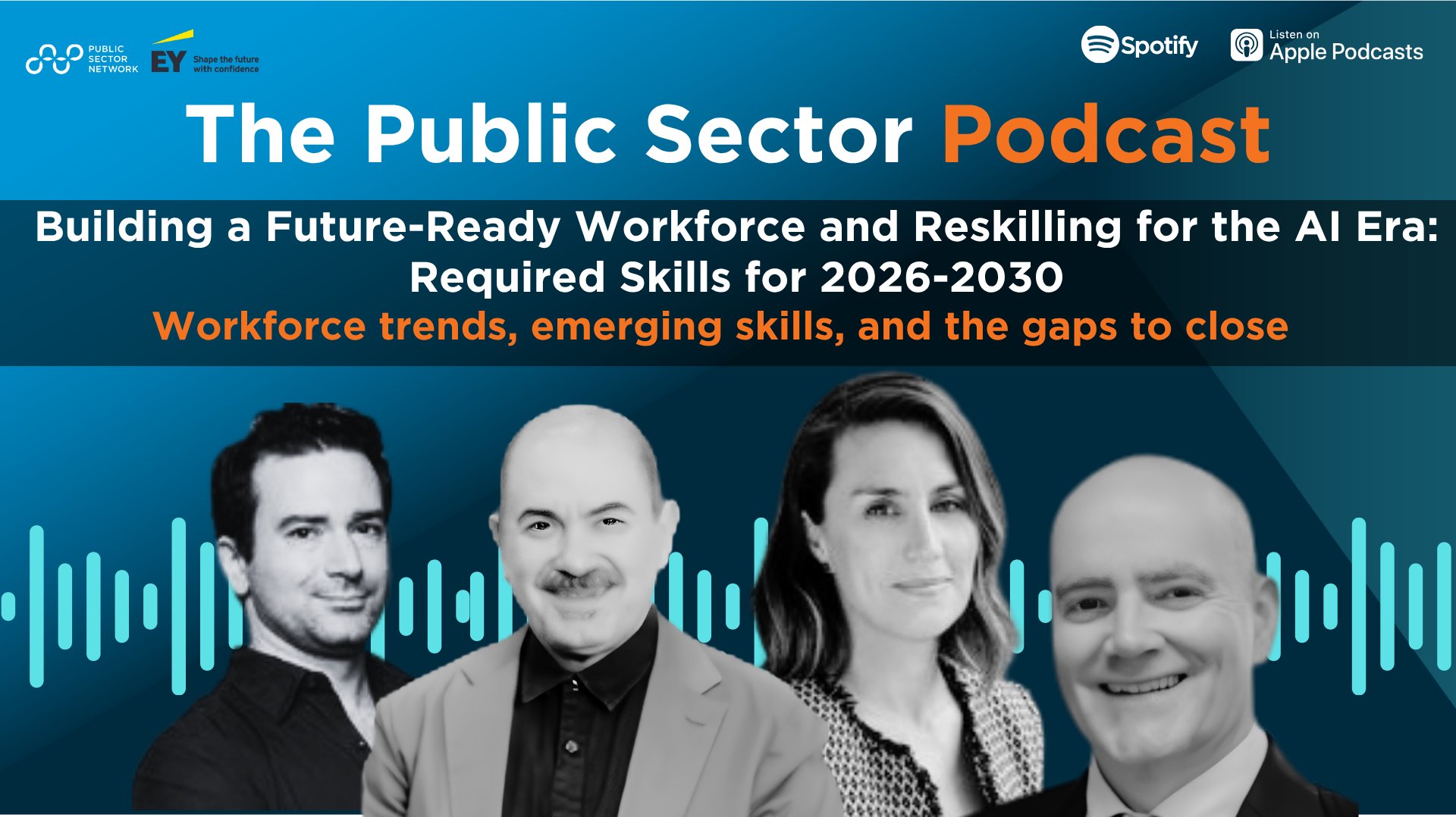
Episode Overview
This episode features Raffaele Marcelino, Executive Director, Learning and Teaching, Tafe NSW, Jane Lin, Executive Director Data, Strategy and Performance, Department of Creative Industries, Tourism, Hospitality and Sport, Andrew Spiegelman, Head of Data & Analytics, Service NSW, facilitated by Dan Bowes, Deputy Chief Operating Officer, TAFE NSW in a lively conversation on what it really means to become AI-ready in the public sector. Rather than treating AI as a simple technology rollout, the speakers argue it’s fundamentally a workforce, culture, and capability challenge — with “shadow AI” as a real-world signal of unmet needs, unclear guardrails, and inconsistent skills.
Across education, regulation, and service delivery contexts, the panel explores how leaders can lift productivity without sacrificing integrity: keeping human judgment at the centre, building practical governance that everyone understands (not just risk teams), and developing the habits and skills that help people use AI well — not just use it.
Key themes
- AI readiness is a people-and-culture shift, not a simple technology rollout — ignoring this drives shadow AI and inconsistent practice.
- Human judgment stays non-negotiable (especially for high-stakes government decisions): AI can assist with analysis and drafting, but accountability remains with the public servant.
- Productivity comes from using AI well, not just using it — which requires clear use cases, practical training, and the right tools/guardrails (not “innovation talk” without action).
- Governance is everyone’s job: staff need baseline literacy in risks like bias, hallucinations, explainability, transparency, and safe data handling — including for procurement and regulation.
- Capability scales through a blend of structured frameworks + communities of practice + peer learning/super users, reinforced by “habits of mind” like critical thinking, curiosity, and resilience.
What You’ll Learn
- Why “AI rollout” is often the wrong starting point — and what changes when you frame AI as a workforce capability program
- How leaders should think about AI’s impact on jobs: shifting tasks to machines while preserving human accountability in high-stakes decisions
- A practical mental model: AI as a “junior team member” that needs direction, review, and responsible sign-off
- How to avoid hollow adoption: aligning AI use to mission outcomes (not using AI for AI’s sake)
- What responsible AI governance looks like at scale — including bias, hallucinations, explainability, transparency, and human-led decisions
- How regulators can use AI for pattern detection while keeping policy and enforcement judgments human
- Effective capability-building approaches: structured frameworks + super users + communities of practice + peer learning
Why You Should Listen
If you’re leading AI adoption in government (or enabling it through policy, risk, HR, digital, data, procurement, or education), this episode offers practical guidance on building capability responsibly. It’s especially useful for leaders trying to balance innovation with integrity — and avoid the twin traps of uncontrolled shadow use and performative “innovation talk” without real support.







Help your peers
Share what you've learned with fellow public servants