

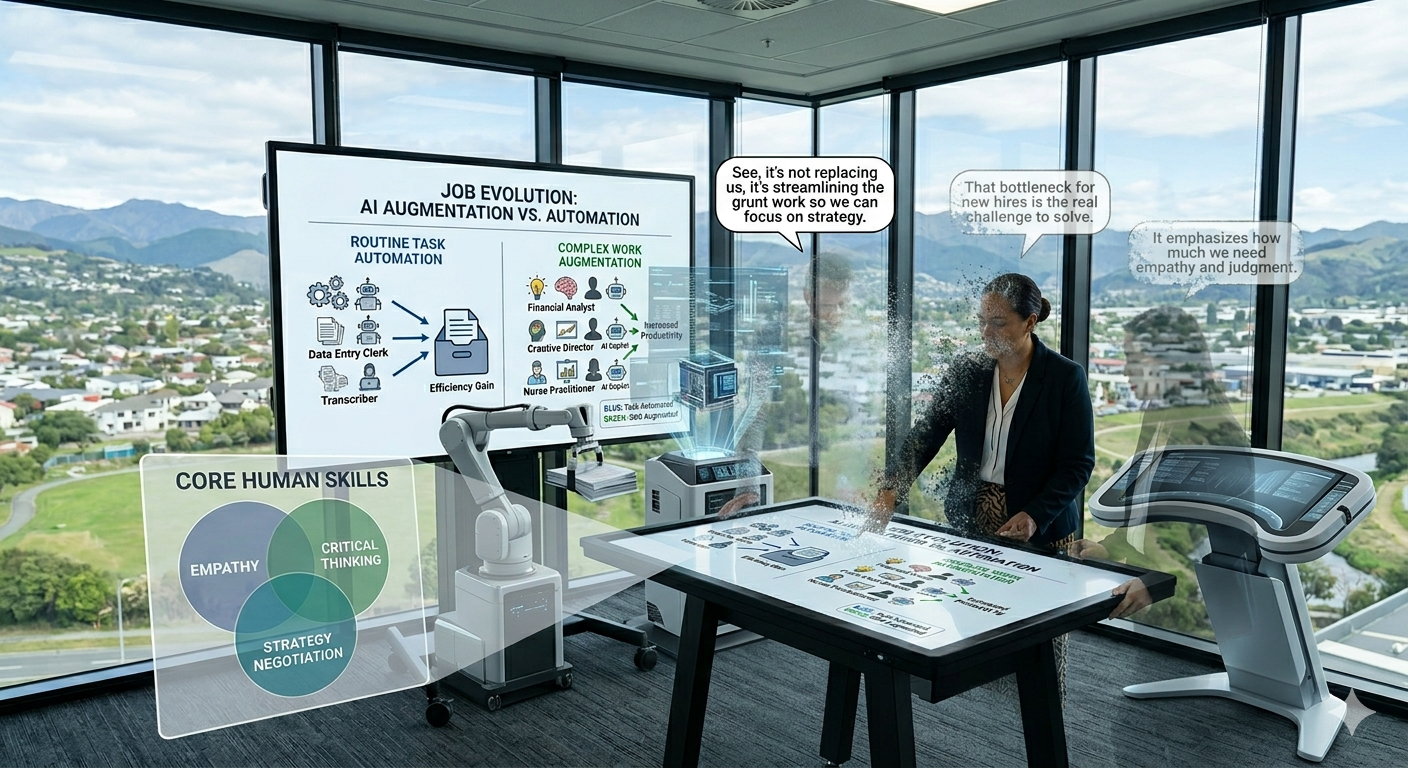
NZ Government plans to cut 9,000 public sector jobs by 2029, merge agencies, and expand AI to fill the gap. We are not alone. The UK, Canada, and the US have all announced the same bet: cut headcount, deploy AI, bank the savings.
So I went looking for a country where this has worked. Here is what I have found so far.
The US cut federal employment by 271,000 in 2025, a 9% decline. Spending did not fall. It rose. Around 25,000 people were rehired as essential, including nuclear security staff brought back within 48 hours. The IRS lost most of its senior tech leadership, including associate chief information officers and cybersecurity experts that were supporting agency's overarching IT modernisation efforts. Federal agencies were also forced to backfill vacant government roles with private contractors, which cost on average 1.83x more than standard federal employee rates, and nearly 3x more for Department of Defence roles.
The UK tied AI to headcount reduction in 2024 and promised billions in savings. By December 2025 the civil service had grown 1.2%.
Estonia, the model everyone cites, never cut headcount through digitisation. Its public sector employment stayed flat and sits above the OECD average today. Estonia transformed service quality, not payroll.
The only documented wins are narrow and task-level. A Swedish municipality automated welfare reapplications and redeployed caseworkers to face-to-face work, which improved public satisfaction levels. The UK built a tool that analysed 50,000 consultation responses in two hours. In both cases, staff time was reallocated, not removed as their time was freed up to deliver more meaningful work.
The pattern is consistent. Countries that invested in foundations first got real but modest gains in productivity. Countries that cut first and expected AI to backfill got rehiring, service degradation, and higher costs at the end of the day.
I have co-led technology simplification inside NZ government. The savings were real. They also took dedicated teams, sustained funding, and time before they appeared.
The goal is achievable. The sequencing decides whether we get Estonia's result or the American one.
Which examples have I missed? I want to know if this has worked somewhere.

Published by
About our partner
Technology Transformation
Technology Transformation is a New Zealand boutique consultancy specialising in change management, project and programme delivery, and digital transformation advisory for government agencies and enterprise organisations.We bring hands-on delivery experience from some of New Zealand's largest public sector technology programmes, including Data & AI, Dynamics 365, Microsoft 365, Power Platform, Docusign, Atlassian and Workday implementations. Our practitioners combine programme delivery leadership with specialist change management expertise. We can lead a programme, design the change approach, and drive adoption, or any combination of the above.Our services span the full transformation lifecycle: programme and project management, change strategy and stakeholder engagement, user adoption, training design, and post-go-live embedding. We also provide specialist expertise in AI change management and Microsoft Evergreen process design.Technology Transformation operates as a small, senior-led practice. Engagements are led directly by experienced consultants. We work across both the public and private sectors, with particular depth in NZ central government digital programmes.
Learn more






Help your peers
Share what you've learned with fellow public servants