

ERP and digital transformation programs are usually judged on the strength of the systems an organisation chooses. Yet in my experience, the biggest threat to getting value from those systems is rarely the systems themselves. It is what happens in the spaces between them.
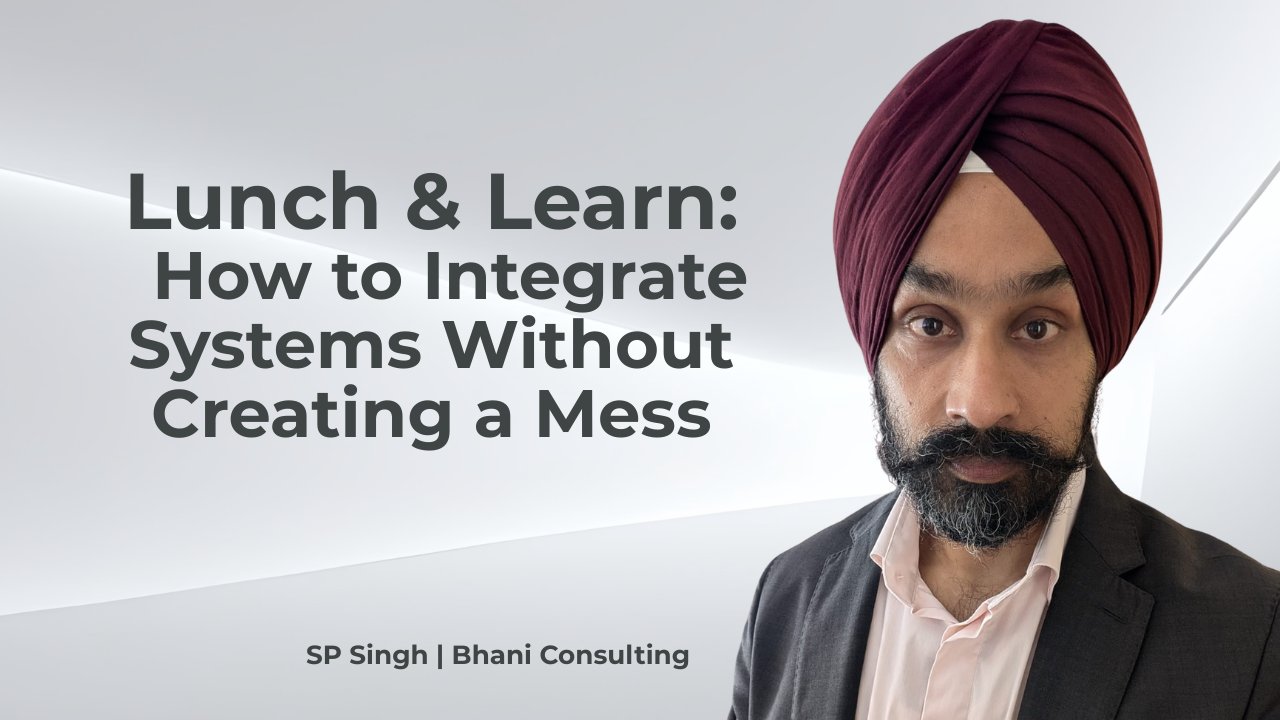
This was the focus of my recent Bhani Consulting Lunch & Learn session, *How to Integrate Systems Without Creating a Mess*.
The session explored a simple but often overlooked idea: poor integration creates chaos. Duplicated data, inconsistent reports, broken workflows and endless reconciliation battles silently drain productivity, trust and budgets. Most organisations underestimate integration until it is too late. Tools are bought and licences deployed, yet the systems don't talk to each other, leaving teams frustrated, executives without a clear view, and projects at risk.
A key theme throughout the discussion was that integration isn't just technical. It is the backbone that determines whether a digital ecosystem actually delivers value. To make this practical, I introduced a Clear Architecture Model that anyone can understand, not only ICT teams, and walked through the three integration styles that actually matter, so leaders can manage SaaS complexity before it derails operations.
The session also introduced the Data Flow Map, a view every organisation needs to keep its data consistent: where information is created, where it moves, and which system holds the truth. Every participant took away a one-page Data Flow Map template to start building their own. This was paired with a discussion of Shadow Systems, the spreadsheets and workarounds that appear when integration fails and quietly create hidden risk, and the Anti-Spaghetti Architecture Rule for keeping an ecosystem clean and manageable as it grows.
The discussion challenged the assumption that integration problems are solved by buying more tools or adding more connectors. In many cases, the greater opportunity lies in a clear, structured approach: one that clarifies dependencies, exposes hidden risks and makes sure systems work together.
For public sector leaders, this perspective is particularly relevant as councils and agencies move deeper into SaaS ecosystems, prepare for ERP decisions and reassess the platforms and integrations they already have. Getting integration right early can protect timelines, budgets and operational confidence, and save months of rework later.
The session reinforced an important message: successful transformation is not simply a matter of choosing the right systems. It is a governance outcome, shaped by how well leaders understand the way their systems and data connect.
As digital ecosystems continue to grow in scale and complexity, the ability to see and manage integration, rather than discover it when something breaks, will become an increasingly important capability for public sector leaders. A clear integration architecture can turn chaos into clarity, and create a foundation for sustainable digital growth.


Published by
About our partner
Bhani Consulting
At Bhani Consulting, we provide 100% independent and software-agnostic consulting services that take a holistic approach to Business system implementations. Our team is with you every step of the way, whether you're starting from scratch or upgrading existing systems. We are trusted partners who lead from the front and provide support throughout the process.Our proven track record of transforming businesses and achieving growth speaks to our success in streamlining processes and improving the customer experience. We understand the challenges of automating business processes, including systems selection and implementation.
Learn more




Help your peers
Share what you've learned with fellow public servants