
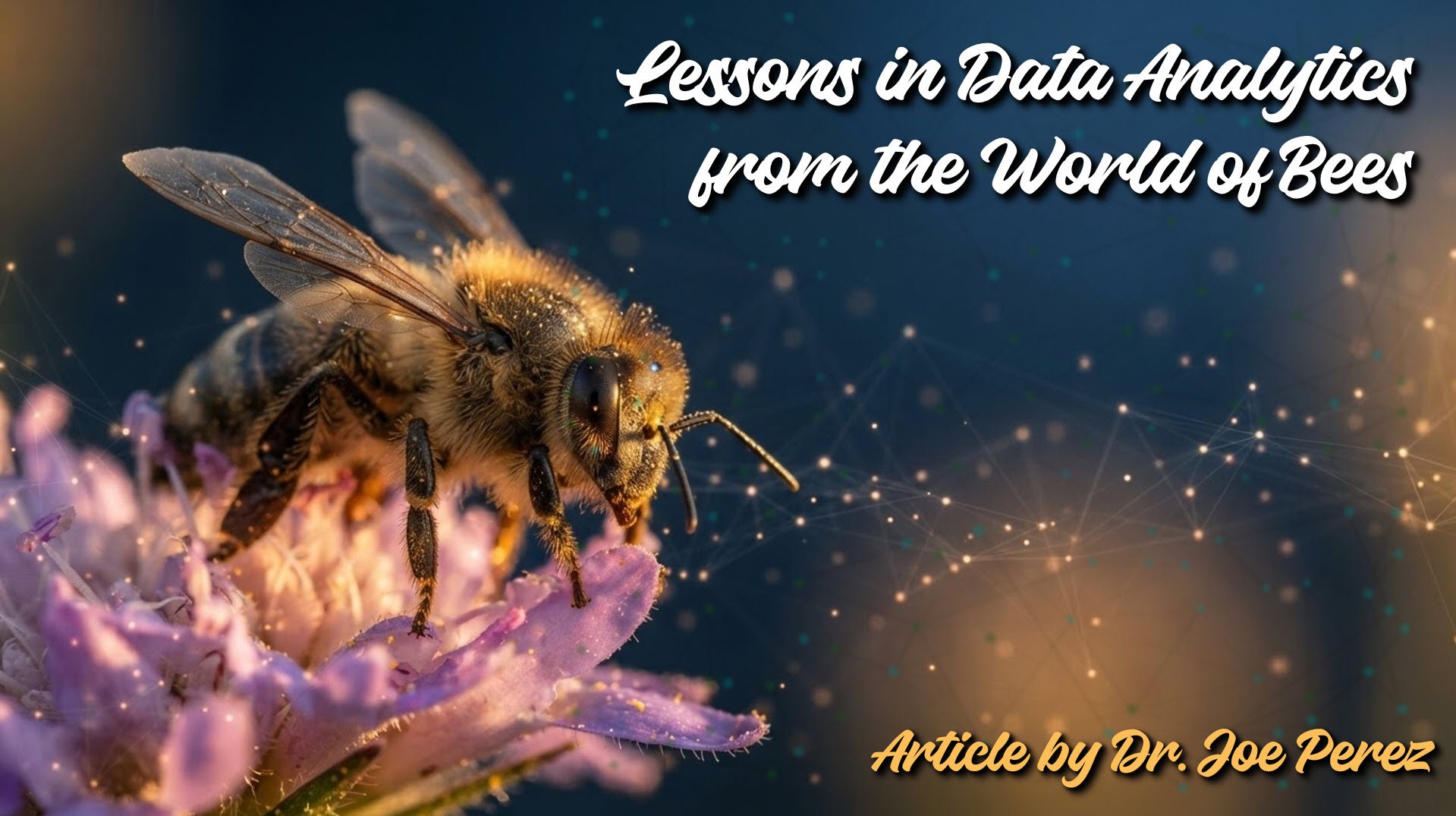
Introduction: From Early Curiosity to Modern Insight
Long before the first spreadsheet or database, humans were already fascinated by the intricate world of bees. Deep within the limestone shelters of Bicorp in what is now eastern Spain, ancient artists etched scenes of people braving heights to gather honey. These images, dating back several thousand years, are records of survival that also showcase humanity's early efforts to observe, understand, and learn from the natural world.
Many centuries later, our curiosity about bees has only deepened. In a striking experiment from the early 2000s, researchers set out to determine whether honey bees could recognize human faces. Using a simple reward system, they trained bees to associate certain faces with a sweet treat. The results were astonishing: despite their tiny brains, bees could distinguish between faces with remarkable accuracy, and even remembered them days later, long after the rewards had stopped.
This is just one example of the bee's extraordinary cognitive abilities. A single honey bee can visit thousands of flowers in a day, making rapid decisions about which blooms are worth the effort. Some species, like the Arctic bumblebee, were designed to survive in some of the planet's harshest climates, emerging from months of hibernation to pollinate the brief summer landscape before retreating again. These fascinating behaviors provide us human observers with crucial insights.
As someone who has spent more than three decades immersed in the world of government data, I see in the story of bees a set of principles that are directly relevant to the challenges we face in public sector analytics and data storytelling. The parallels are striking, and they offer a blueprint for anyone seeking to build analytics systems that are not only powerful, but also sustainable and adaptable.
Four Parallels Between Bee Behavior and Data Analytics
1. Pattern Recognition and Memory Retention
Bees' ability to recognize and remember human faces is a marvel of Divine engineering. With neural hardware that would barely register on a human scale, they can learn, recall, and act on complex visual information. In the 2005 study cited earlier, bees achieved a 90% success rate in distinguishing between faces, and retained this knowledge for days.
In public sector data analytics, pattern recognition is the bedrock of insight.
Machine learning models are designed to sift through vast datasets, identifying relationships and anomalies that would elude even the most diligent human analyst. But recognition alone is not enough. The true test lies in memory retention: can a model maintain its performance when the data changes, or when the incentives for accuracy are removed?
Just as bees internalize patterns and recall them when needed, robust analytics systems must embed learned behaviors into their architecture. This means developing models that not only learn from historical data, but also adapt to new information without constant retraining. It requires a focus on persistence; that is, ensuring that insights are not fleeting, but become part of the agency's institutional knowledge.
Key Finding: The most effective analytics systems are those that, like bees, can recognize patterns quickly and retain useful knowledge over time, even as conditions change.
2. Efficiency with Limited Resources
A bee's brain is a marvel of efficiency. With fewer than a million neurons, it can process information from up to 5,000 flowers in a single day, making rapid decisions about which ones offer the best rewards. These amazing processes reflect a level of optimization that allows bees to thrive in their environments.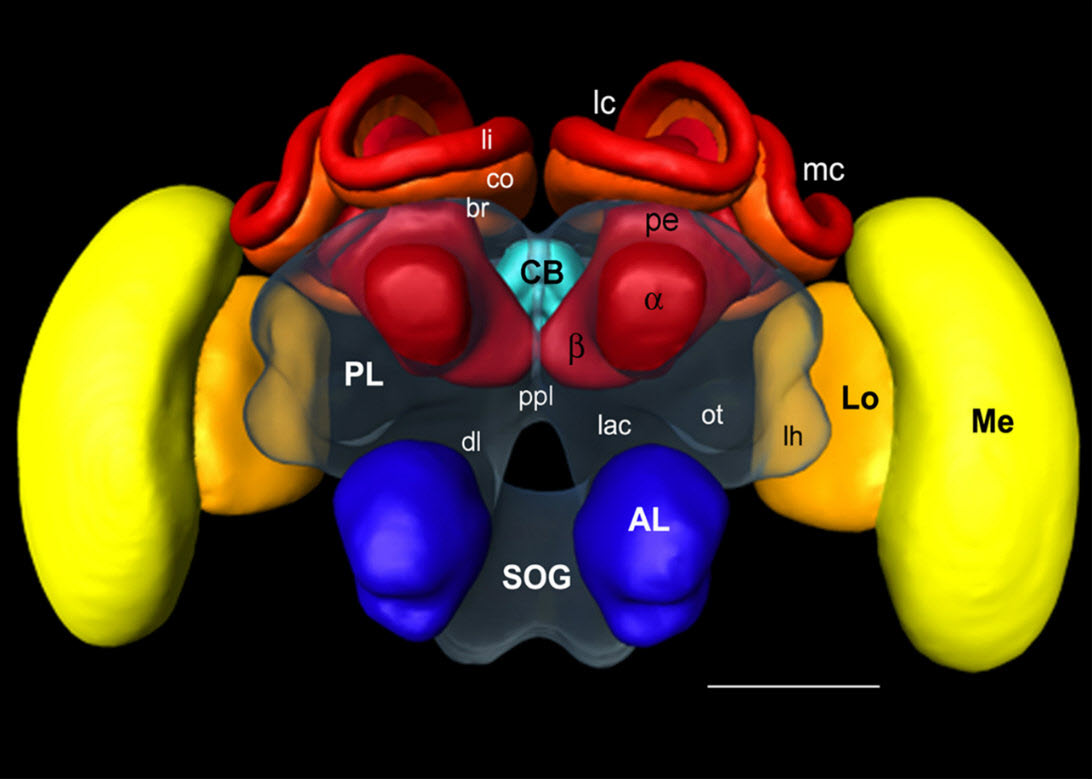
In the world of public sector data, efficiency is often overlooked in the rush for scale.
Agencies frequently assume that bigger datasets and more complex models will yield better results. In reality, the best analytics solutions are those that extract maximum value from minimal resources. This means prioritizing the most informative features, streamlining data pipelines, focusing on models that deliver actionable insights without unnecessary complexity, and ensuring that results are communicated effectively to inform decisions that affect the public they serve.
The lesson from bees is clear: success does not require vast computational power, but rather the ability to make smart decisions with what you have. Lean analytics, where every byte, cycle, and taxpayer dollar is accounted for, often outperforms bloated systems that drown in their own data.
Key Finding: Emulating the bee's efficiency, government analytics teams should focus on doing more with less, optimizing for insight rather than sheer volume.
3. Environmental Adaptation and Resilience
Not all bees are content with temperate meadows. Some, like the Arctic bumblebee, have adapted to survive in environments where most life struggles. These bees emerge from long hibernations, time their activity to the brief northern summer, and have developed physical adaptations (such as thicker fur and the ability to generate heat) to thrive where others cannot.
Analytics systems must also be built for resilience.
Data environments are rarely stable. New sources appear, formats change, mission requirements evolve, government regulations shift. Systems that are rigid or overly specialized quickly become obsolete. The most successful analytics architectures are those that can adapt to new conditions, handle unexpected inputs, recover gracefully from failure, and scale effectively to meet growing demands.
This means designing for flexibility: modular pipelines, automated validation, and self-healing processes that can withstand the inevitable shocks of real-world data. Just as Arctic bees have adapted to make the most of their environment, analytics teams must anticipate change and build systems that can survive, and even thrive, amid uncertainty.
Key Finding: Resilient analytics systems, like Arctic bees, are those that adapt to their environment, evolving new capabilities to meet emerging challenges.
4. Strategic Resource Management
The lifecycle of the Arctic bumblebee queen is a study in strategic planning. After months of solitary hibernation, she emerges with a single goal: to establish a new colony in the narrow window before winter returns. Every action is timed and optimized for survival, from egg-laying to the succession of the next queen.
In government, data governance and resource allocation are the analytics equivalent.
Agencies must decide how to deploy limited analytical resources (such as talent, time, and infrastructure) across competing priorities and mandates. Effective governance goes beyond mere compliance, focusing on ensuring that analytics investments deliver enduring value. This involves planning for succession, documenting processes, and building capabilities that can endure changes in administration and shifting policy landscapes.
The queen bee's approach offers a model: focus on the long-term health of the colony, invest in the next generation, ensure that critical knowledge is preserved and transferred, and adapt strategies to meet changing environmental conditions. In analytics, this means building systems and teams that can outlast any single project, leader, or administration.
Key Finding: Strategic resource management, inspired by the lifecycle of the bee colony, is essential for government analytics programs that aim to deliver lasting impact.
Bringing It All Together: The Persistent Wisdom of Pattern Seekers
The story of bees, from ancient cave art to modern laboratories, is a testament to the enduring power of pattern recognition, resource efficiency, environmental adaptation, and strategic planning. These tiny creatures, with their remarkable abilities and efficient systems, have much to teach us about the art and science of data analytics in government.
As public servants working in data, we are pattern seekers at heart. We strive to recognize meaningful signals amid noise, to build systems that learn and remember, to adapt to changing environments, and to manage resources wisely. Bee research offers practical frameworks for building analytics capabilities that combine robustness with agility, moving beyond mere metaphor.
In my experience, the most successful government analytics programs are those that embrace these principles. They build models that learn and persist, systems that are efficient and resilient, and cultures that value strategic planning and knowledge transfer. They understand that the true value of data lies not in its volume, but in the insights it enables and the outcomes it delivers for the people who depend on it.
So, as you design your next analytics initiative for your agency, consider the wisdom of the bees. Whether you are optimizing a model, architecting a data pipeline, planning for the future of your team, or ensuring the scalability of your solutions, remember that the smallest creatures can offer the biggest lessons. The ancient artists of Bicorp may not have known the term “data storytelling,” but they understood the importance of observing, learning, and sharing what they discovered. In that spirit, let us continue to seek patterns, adapt to our environments, and build systems that endure.
Summary Box:
Pattern Recognition: Bees and analytics systems both excel when they can identify and retain meaningful patterns.
Efficiency: Maximum insight often comes from minimal resources, as demonstrated by the bee's tiny but powerful brain.
Adaptation: Resilience in the face of change is essential, whether in the Arctic tundra or a shifting data landscape.
Strategic Management: Long-term success depends on wise stewardship of resources and planning for succession.
In the end, the story of bees is a story about us. Somewhere along the way, “worker bee” became office shorthand for anyone quietly keeping an institution running, and it turns out the metaphor holds up better than intended. Real worker bees do not chase headlines or year-end bonuses. They recognize patterns, conserve energy, adapt to conditions, and pass on what they know, because no colony was ever built to last a single season. Neither is good government. If a creature with less than a million neurons can turn a million small decisions into decades of survival, we can turn our data into something that outlasts us too.
Sources Consulted:
https://www.adfg.alaska.gov/index.cfm?adfg=wildlifenews.view_article&articles_id=558
https://link.springer.com/article/10.1007/s00359-012-0767-5


Published by







Help your peers
Share what you've learned with fellow public servants