
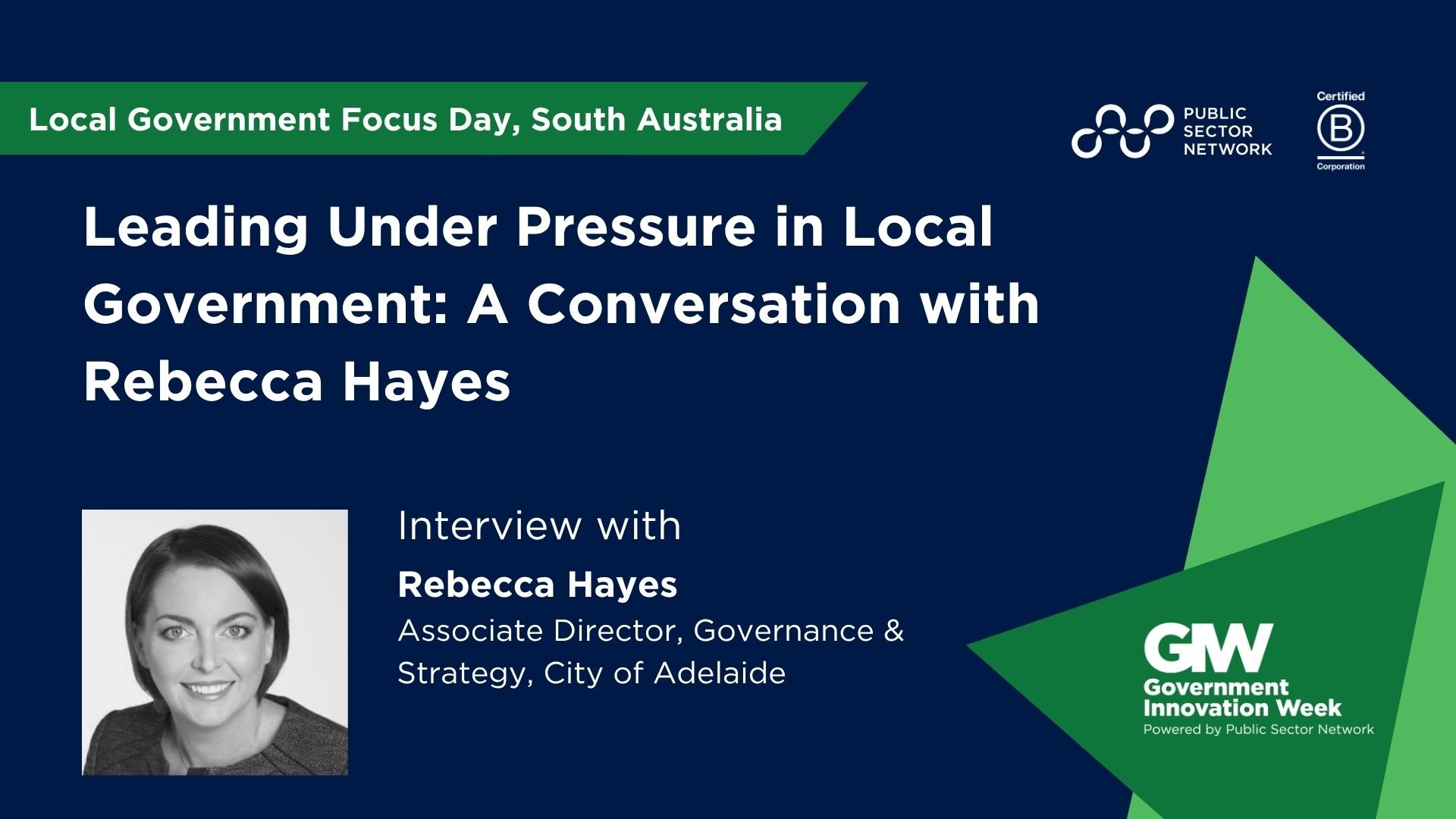
Local government leaders are being asked to manage more complexity, more scrutiny and more community expectation, often with limited time and resources. In this Q&A, Rebecca Hayes, Associate Director, Governance & Strategy, City of Adelaide, reflects on what leading under pressure looks like in practice, from election readiness and governance reform to budget trade-offs, collaboration and long-term decision-making. Ahead of Local Government Focus Day South Australia 2026, Rebecca also shares the practical mindset she hopes attendees will take back to their councils: stay anchored to strategy, communicate decisions clearly, and build the trust that helps teams and communities navigate difficult periods. Rebecca’s session, Leading Under Pressure: Navigating the Challenges of Modern Local Government, will explore how councils can maintain performance, trust and community impact while facing budget constraints, reform pressures and rising expectation
Public Sector Network:
What does “leading under pressure” look like in practice at the City of Adelaide right now, and what has changed most in the past 12 months?
Rebecca Hayes:
Leading under pressure at the moment feels pretty constant and pretty real. A big focus for us is the 2026 Council election. We are implementing a new IT solution, working through new legislative rules, and doing it all as a single council because these requirements only apply to the City of Adelaide.
On top of that, expectations around marketing, communication and engagement have really lifted. Elections are no longer just administrative. They are high-profile, high-scrutiny, and you have to bring the community with you. That is not always easy when you are communicating with a voter base of property owners, investors and businesses about something that is not always seen as exciting.
What has really changed in the last 12 months is the pace and complexity. There is less tolerance for risk, more scrutiny, and an expectation that you will move quickly while still getting governance right. Add social media into the mix, where misinformation spreads fast, and it becomes a very challenging environment to lead in.
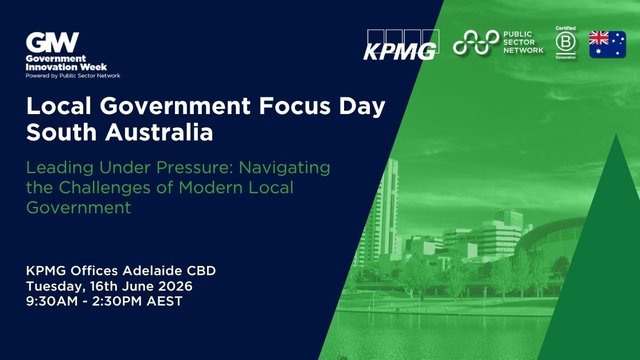
Hear Rebecca Hayes at Local Government Focus Day South Australia 2026 in the panel discussion “Leading Under Pressure: Navigating the Challenges of Modern Local Government.” The session will explore how councils are managing budget constraints, rising community expectations, reform pressures and the challenge of maintaining trust and performance under strain.
Register here: https://psnevents.eventsair.com/local-government-focus-day-south-australia-2026/gov/Site/Register
View the agenda: https://publicsectornetwork.com/events/government-innovation-week-south-australia-adelaide-2026/local-government-focus-day-south-australia-adelaide-2026/agenda/
Public Sector Network:
Councils are being asked to do more with less. What is the smartest way to make budget trade-offs without eroding community trust?
Rebecca Hayes:
For me, it starts with being upfront. Communities understand that there is not an endless pot of money, but they do expect honesty about the trade-offs.
The best approach is to anchor decisions back to strategy and the long-term financial plan. If people can see the bigger picture, whether that is asset renewal, service levels or growth, they are much more likely to understand the why.
Early engagement also matters. If you bring people in before decisions are locked in, it changes the conversation from “you are cutting this” to “here are the choices we need to make.” I have seen this play out particularly in regional areas, where issues like unexpected jetty repairs or coastal inundation can be expensive, urgent and unpopular. But if you explain it properly and bring people along early, you build trust.
At the end of the day, you also have to stay disciplined and focus on core services and risk, especially with ageing infrastructure, because deferring those decisions usually just makes things worse, and more expensive, later.
Public Sector Network:
Community expectations keep rising. How do you decide what to say yes to, and what to say not yet to?
Rebecca Hayes:
You need a clear framework to fall back on, because you cannot say yes to everything.
For me, it comes down to a few key questions: does it align to strategy, can we afford it, what is the risk, and what does it mean long-term? Importantly, do we have a clear plan with actions and timeframes?
Especially in regional councils, there are always competing priorities, from coastal issues and infrastructure to community services, and you are constantly balancing them. The trick is not just what you say, but how you say it. If you can explain that something is a not yet because it is planned, staged or dependent on funding, people are much more likely to stay onside.
Consistency matters too. If decisions are made through a fair and transparent process, people might not always agree, but they will respect it. And the reality is you will not please everyone. You have to make decisions for the long-term, not just the immediate. It is about thinking five, ten and twenty years ahead and not leaving the same problems for the next CEO or Council.
Public Sector Network:
When reform is on the table, what collaboration strategies actually work, and what gets in the way?
Rebecca Hayes:
What works is pretty simple: shared purpose and good relationships. If councils are clear on what they are trying to achieve and there is a genuine benefit for everyone, collaboration can be really powerful.
When I was at Tumby Bay, we had a great group of CEOs across the Eyre Peninsula. There was a real sense of “we are in this together,” and that made a huge difference. We did a lot around shared procurement, joint services and advocacy. Some worked really well, while others were more challenging, especially when it came to shared resources.
It is still hard to attract planners, engineers and environmental services officers into regional areas, so even when you want to collaborate, capacity can be a real barrier. That is probably the biggest challenge overall: time and resourcing. Collaboration takes effort, and when everyone is stretched, it can fall down the priority list. But where it works, it really works. In regional areas especially, it is often about sharing the load and taking an all-in approach to get the best outcome.
Join Rebecca Hayes at Local Government Focus Day South Australia 2026 to hear more practical insights on how councils can lead through constraint, communicate trade-offs, and collaborate effectively when pressure is high. Rebecca will join leaders from local government across South Australia to discuss what it takes to maintain trust, performance and community impact in a more demanding operating environment.
Register here: https://psnevents.eventsair.com/local-government-focus-day-south-australia-2026/gov/Site/Register
Explore the full speaker lineup: https://publicsectornetwork.com/events/government-innovation-week-south-australia-adelaide-2026/local-government-focus-day-south-australia-adelaide-2026/speakers/
Public Sector Network:
What do you want attendees to take away from the event, and what is one practical idea they could trial straight away?
Rebecca Hayes:
The big takeaway for me is that the pressure is not going anywhere, but how we lead through it really matters.
Good governance, clear priorities and disciplined decision-making are what keep things on track. But equally important is looking after your people, both staff and elected members, and building trusted relationships. That is what gets you through the tough periods.
One practical idea is to link every major decision back to strategy, risk and financial sustainability, and make sure everyone understands that connection. With elections coming up, it is a great opportunity to build this into elected member training and governance processes. It does not need to be complicated, but if it is consistent, it builds confidence internally and trust externally, and that is incredibly valuable when you are operating under pressure.




Help your peers
Share what you've learned with fellow public servants