
Episode Overview
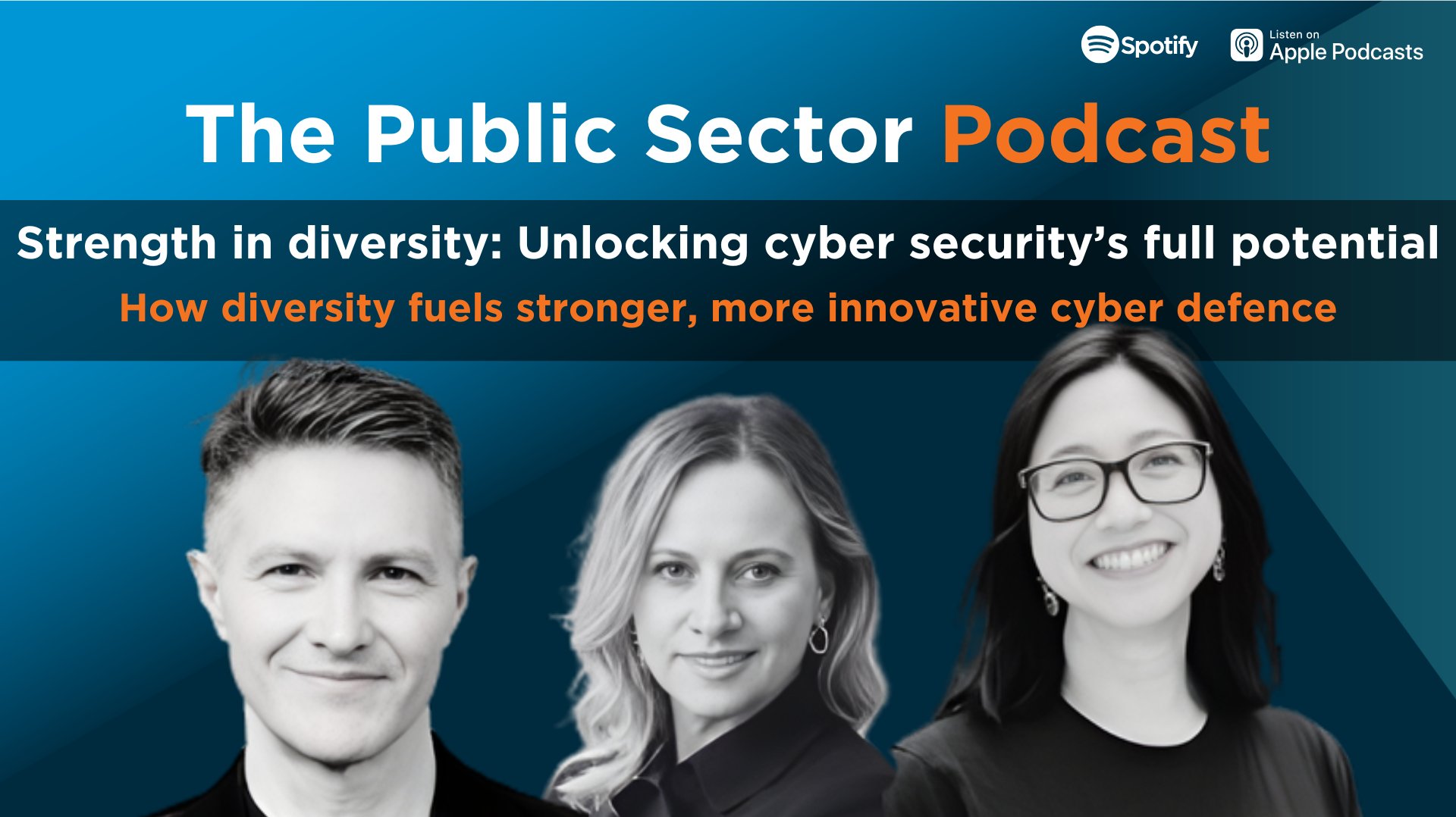
In this thought-provoking episode, The Hon. Victor Dominello, Chief Executive Officer, Future Government Institute, Jacqui Loustau, AWSN Executive Director, Australian Women in Security Network and Shyvone Forster, Director - Cyber Operations, Department of Home Affairs sit down for a powerful conversation on why diversity is essential to strengthening Australia’s cyber resilience. Drawing on real-world experience from government, operations and advocacy, the panel explores how varied skills, life experiences and ways of thinking directly improve our ability to defend against increasingly sophisticated threats — especially as adversaries target critical infrastructure without discrimination. From operational insights to leadership reflections, the discussion highlights why inclusive thinking is not simply beneficial, but foundational to national security.
What You’ll Hear in This Episode
The Consequences of Not Embracing Diversity
The panel examines the real opportunity cost of homogenous teams in cybersecurity. With adversaries coming from diverse backgrounds, motivated by varied mindsets and armed with global threat capabilities, Australia’s defence must reflect—and match—this breadth of thinking. Speakers highlight how a lack of representation limits problem-solving capacity, situational awareness and responsiveness, ultimately weakening national resilience.
Diversity as a Strategic Advantage
Shyvone shares firsthand operational insights from leading a 24/7 cyber defence centre, where a wide age range, varied backgrounds and different problem-solving styles provide richer situational awareness and more persistent, innovative response patterns. Jacqui illustrates how career-changers — including nurses, chefs and administrative staff — bring strengths like triage skills, communication under stress and real-world experience that translate directly into strong incident response capabilities.
Inclusion and Equity in Cybersecurity
Victor discusses the “SPRITE” trust framework — Security, Privacy, Resilience, Inclusion, Transparency, Ethics — and reflects on his own shift from seeing inclusion as an afterthought to embedding it as a design principle. He emphasises that vulnerable Australians bear the greatest impact of cyber disruptions, and inclusive planning must protect those most at risk of falling through the cracks.
Character, Leadership and the Human Element
Jacqui and Shyvone share compelling stories about how character, passion and lived experience contribute to strong cyber talent. Siobhan recounts the journey of a young woman she championed into incident response — demonstrating how belief, opportunity and supportive leadership can unlock remarkable potential.
Victor expands the conversation to leadership qualities, calling for “servant leaders” who operate with humility, curiosity and openness to diverse viewpoints. He also warns against the homogenising effect of AI, arguing that diverse human perspectives are critical to maintaining the nation’s “critical thinking muscle.”
Building Australia’s ‘Human Firewall’
In response to an audience question, the panel reflects on what a “human firewall” really means. They discuss the importance of educating all Australians early, developing broad digital literacy, and fostering collective situational awareness so that everyday citizens — not just experts — can recognise threats and support national security.
Key Takeaways
Diversity isn’t a “nice-to-have”—it is a national security imperative.
Creative thinkers, communicators, problem-solvers and people with lived experience all strengthen cyber capability.
Vulnerable Australians face disproportionate harm from cyber incidents, making inclusive design essential.
Leaders must embrace humility, remain open to challenge and cultivate varied perspectives to counter the homogenising effect of AI.
A strong “human firewall” requires whole-of-nation cyber literacy and shared responsibility.
Call to Action
The panel leaves listeners with a challenge: actively seek out and support people who think differently, come from different backgrounds, and bring unconventional strengths. Build teams that reflect the diversity of the society they protect, and cultivate leaders who value humility and inclusion. In a rapidly changing threat landscape — and an emerging AI-driven world — diversity is not only our defence but our strategic advantage.







Help your peers
Share what you've learned with fellow public servants