
Episode Overview
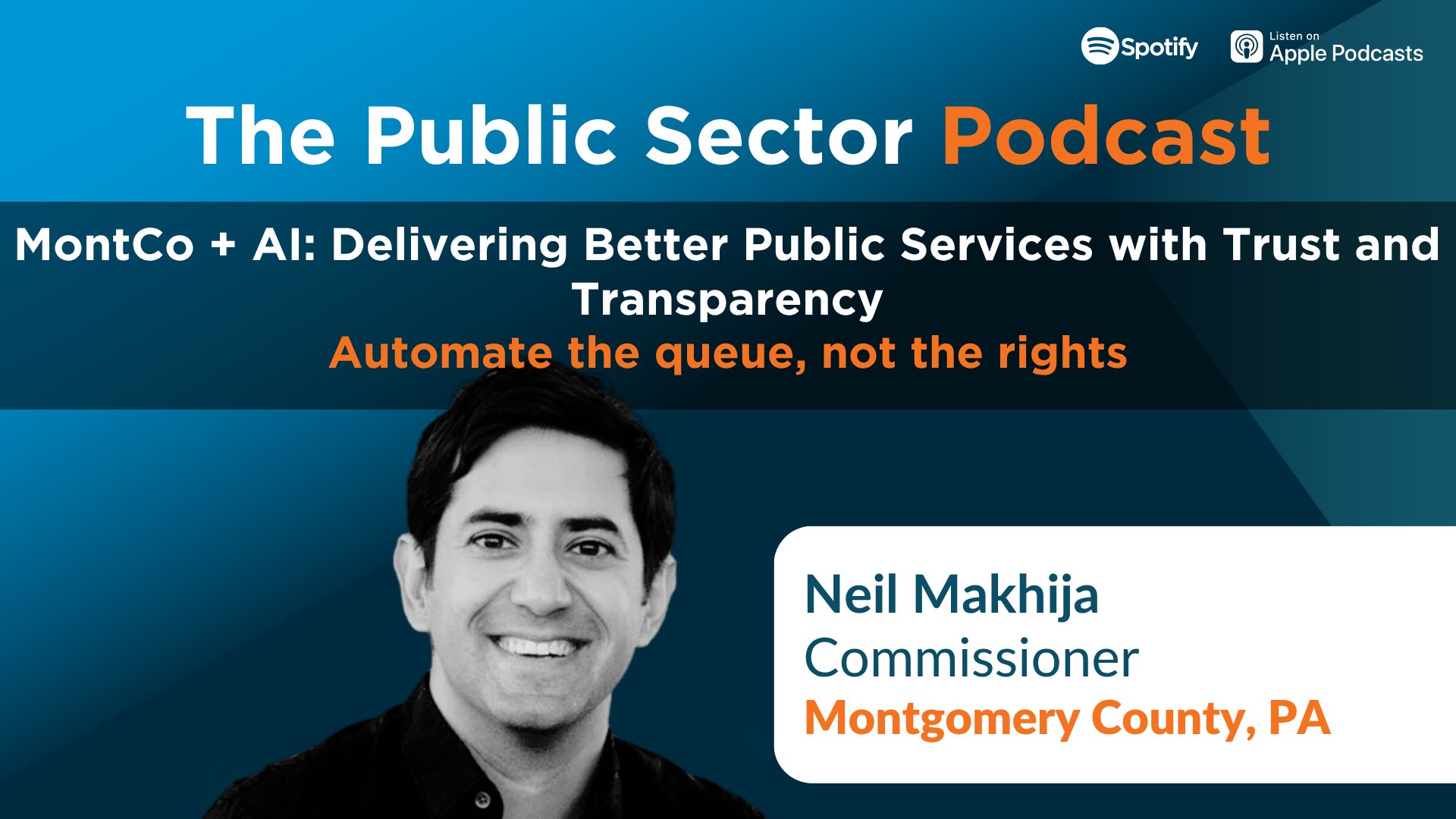
In this episode, Commissioner Neil Makhija of Montgomery County, Pennsylvania shares how Montgomery County is approaching AI from an elected leader’s perspective—balancing innovation with public trust, transparency, and accountability. He explores where AI can improve high-volume services like elections and public safety, and why strong guardrails and security are essential when technology touches people’s rights and wellbeing.
Key Themes
- Public trust + transparency: be clear where AI is used, how it helps, and how errors are handled.
- Rights, safety, and guardrails: decide what can be automated, what must stay human-led, and keep accountability clear.
- Security + resilience: protect AI-enabled services (especially elections and public safety) from misuse, misinformation, and intrusion.
- Workforce and community impact: prepare for economic disruption while using AI to improve resident outcomes.
What You’ll Learn
1) How Local Leaders Should Talk About AI to Constituents
How to communicate benefits and risks in a way that builds public confidence and centres public value.
2) Why Government Must Shape AI for the Public Interest
Why public sector adoption needs to balance innovation with responsibility, trust, and rights.
3) The “Trust AI vs Trust Humans” Test
A practical way of reframing the debate using examples like autonomous vehicles and safety trade-offs.
4) Why Transparency and Evidence Matter
Why governments need to publish outcomes, be honest about errors, and show where AI reduces harm.
5) Public Safety Use Cases (and Where the Line Is)
How tools like gunshot detection, drones, and surveillance-related technologies raise new accountability questions (and why some automation should never be “hands off”).
6) Elections as a High-Trust AI Environment
How AI could reduce call volumes and improve service (e.g., “Where’s my ballot?”) while also creating new attack surfaces for misinformation, prompt/intrusion attempts, and trust erosion.
7) Securing AI Systems Across Service Types
Why “just a chatbot” still needs security controls—especially when it touches identity, voting, or sensitive data.
8) The Economic and Workforce Reality
Why job displacement fears are not hypothetical, and how local government can plan for workforce readiness (skills, community college curriculum, and high-demand pathways).
9) Why Cross-Functional Governance Is Non-Negotiable
How bringing IT/security, operations, legal, and leadership together is essential for safe, rights-protecting deployment.
Key Takeaways
- Local government must show residents how AI makes services better, safer, and more responsive—not just “more automated”
- The key policy question becomes: Is AI safer/better than the human alternative in this context?
- Transparency is required: disclose where AI is used, measure outcomes, and be clear about failures
- High-impact use cases (public safety, elections, rights-based services) demand strong guardrails and human accountability
- AI systems introduce new risks: misinformation, privacy intrusion, security attacks, and trust erosion
- Workforce impacts are already being felt - government must plan for training and transition, not denial
- Public sector leaders are “first movers” in shaping how AI lands in communities
Why You Should Listen
This episode is for local and state government leaders, public sector executives, CIOs and digital teams, policy and risk teams, and anyone deploying AI in public services. It offers a grounded look at what AI adoption means when you’re accountable to residents, responsible for rights-based services, and operating in a high-trust environment like elections and public safety.








Help your peers
Share what you've learned with fellow public servants