
Episode Overview
Deliberately not a talk about AI. This is a talk about leadership, process, and policy - and the argument that those are often what actually unlock digital value for residents.
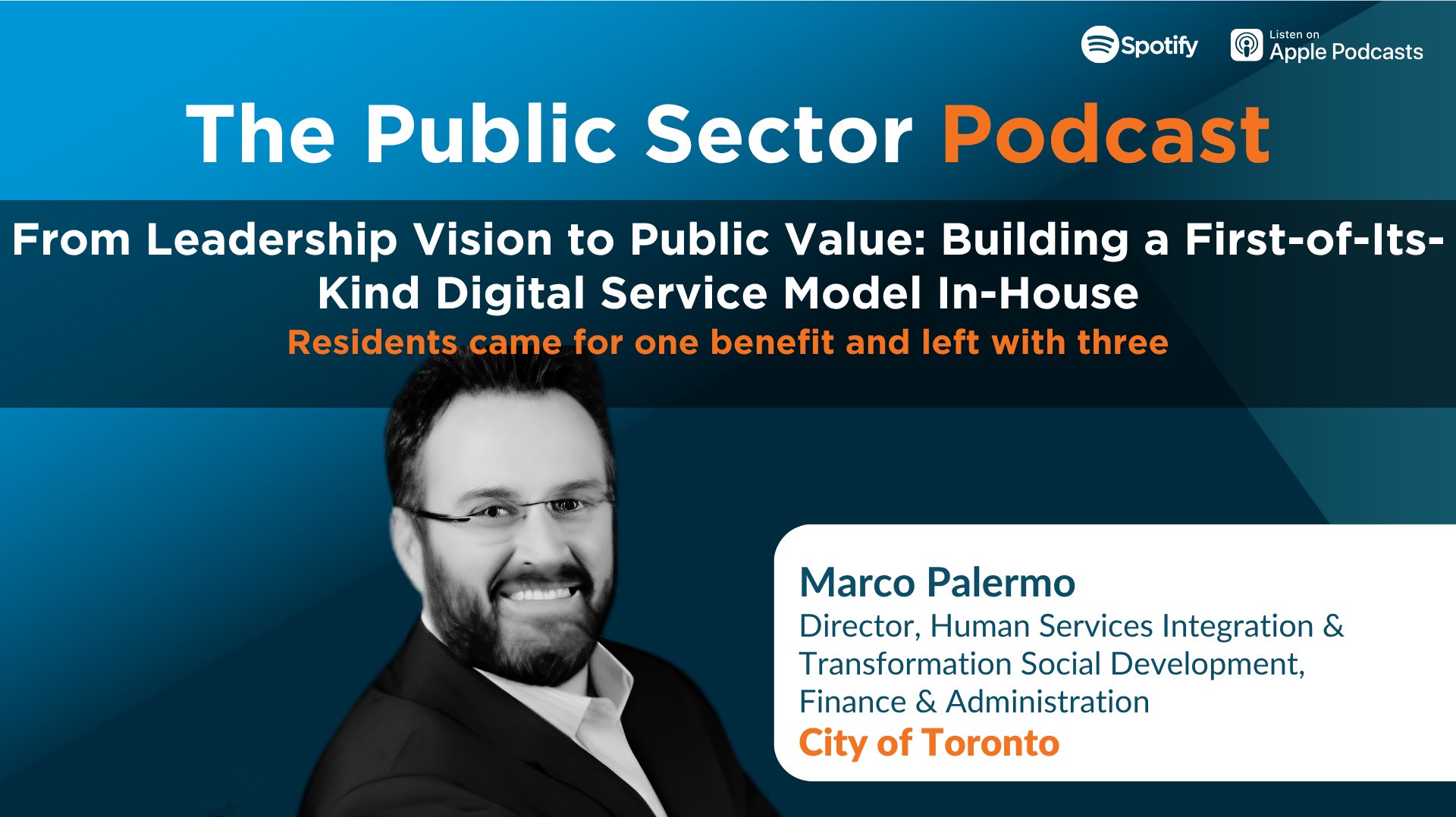
Join Marco Palermo, Director, Human Services Integration & Transformation Social Development, Finance & Administration, City of Toronto as he outlines how Toronto's Human Services Integration Unit delivers social benefits and subsidies to people in genuine need. The old experience: if you knew about Fair Pass, you applied for Fair Pass. If you knew about the Welcome Policy, you applied separately - re-entering the same household, income and residency details. And if you didn't know a subsidy existed, you simply didn't get it. As the speaker puts it, if the public sector is genuinely trying to lift people out of poverty, we shouldn't be hiding services from them.
So the team stopped asking how to make the form sleeker and asked a different question: what if the system worked like e-commerce and proactively told people what they were eligible for? One universal form, one set of questions, and - with consent - a scan across the full catalogue of city programs.
The Results
- 33,000+ applications received since March, with zero marketing outside the air conditioning program
- 27.8% of residents received more than they came for - 9,231 people
- 9,661 received more than one additional benefit
- Steady volume of ~4,000 applications per month across the live programs
- 1,084 resident accounts created in the two weeks after launch
Key Takeaways
- It's okay to move in baby steps. Transformational leaders feel pressure - often political - to deliver something big. The team mapped policies across all subsidies, then deliberately launched with just two where eligibility already aligned. March: Fair Pass and the Welcome Policy. One month later: the air conditioning subsidy, proving the foundation could scale. 31 August: resident accounts for status checks and renewals.
- Old policy is the real roadblock. Programs stood up 30 - 40 years ago carry different policies, procedures and renewal cycles. The Welcome Policy turned out to be 30 years old. The team took it to Parks and Rec who were hesitant. The team won them over by absorbing the workload themselves and actively supporting the changes required. An underrated achievement along the way: getting technology services and legal to agree on a timeline.
- Scaling fast has costs. The air conditioning program drew significant media attention and created a real caseworker backlog. It was cleared, but the honest reflection is that it may have gone out too quickly.
- Self-service drives efficiency. Applications arrived fast, and so did the status-check calls. Resident accounts mean fewer of those, freeing caseworkers for the calls that genuinely need a human.
- This isn't free, and that's the point. Recommending more benefits costs the city money. But if the problem you're solving is poverty, you have to be all in. The same proactive logic could work elsewhere too - 311, for instance, where someone reporting uncollected garbage might also want to report a pothole.
What's Next
Onboarding more programs, starting with long-term care. A richer resident portal, including the ability to update addresses and contact details. And then the internal focus - modernising the backend CRM into "one app," so caseworkers handling phone calls can offer the same recommendations, delivering a genuine no-wrong-door experience.
Why You Should Listen
For anyone leading digital transformation, service design or human services delivery in government - especially if legacy policy and siloed programs are blocking progress. A practical, honest account of what changed, what broke, and what it cost.




Help your peers
Share what you've learned with fellow public servants