

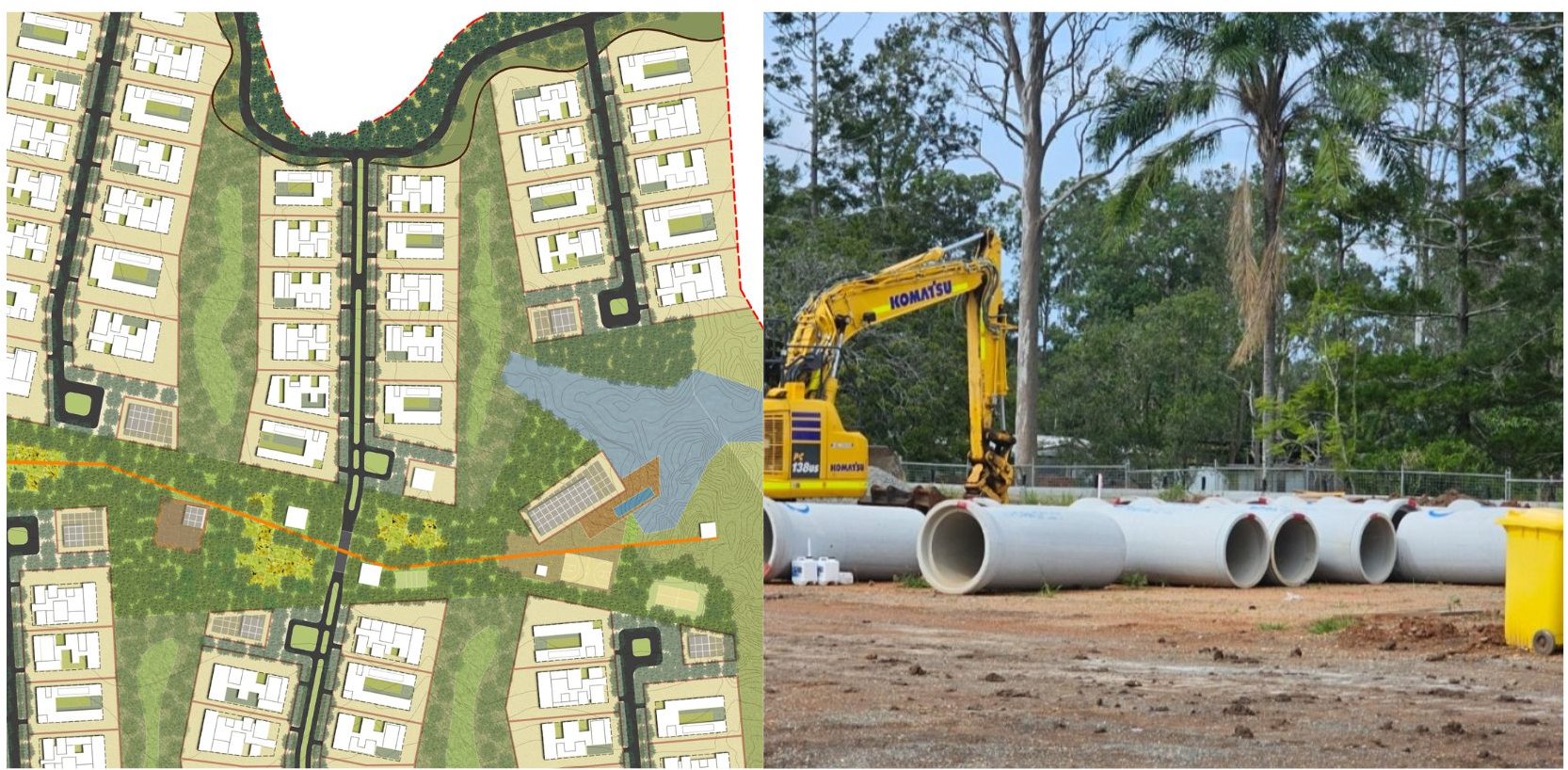
Most Infrastructure Delays Are Locked In Before Construction Starts
Executive Summary
Australia continues to treat infrastructure failure as a delivery problem.
The evidence increasingly suggests otherwise.
Globally, fewer than 10 per cent of major projects are delivered on time and on budget. Bent Flyvbjerg’s database of more than 16,000 projects found that only 8.5 per cent achieved both targets, with average cost overruns approaching 30 per cent.
Olympic Games provide one of the clearest examples. The Oxford Olympics Study 2024 found the last three Summer Games averaged cost overruns of 185 per cent in real terms, with overruns described as “the norm”.
These failures are rarely caused by workers suddenly becoming less competent once construction begins.
The underlying problems are usually embedded much earlier:
fragmented governance
poorly sequenced decisions
disconnected systems
weak escalation pathways
incomplete evidence
operational outcomes ignored during planning
By the time delivery starts, much of the project’s risk profile is already fixed.
This matters because Australia is entering one of the largest infrastructure and housing delivery periods in its history while simultaneously facing:
workforce shortages
infrastructure backlogs
rising construction costs
increasing climate obligations
tighter fiscal conditions
public distrust following repeated overruns
Yet many organisations still respond by adding:
more reporting
more consultants
more software
more governance layers
without fixing the underlying decision architecture.
The problem is not simply whether projects are delivered efficiently.
It is whether the right decisions were made before financial and operational exposure became locked in.
This distinction is critical.
A project can appear “green” in reporting dashboards while carrying embedded delivery risks that only emerge years later through:
claims
redesigns
scope disputes
operational failures
escalating lifecycle costs
delayed benefits realisation
The issue is particularly relevant for councils, infrastructure agencies, and growth regions now dealing with housing pressure, asset renewal, and Brisbane 2032-related investment expectations.
Digital tools alone will not solve this.
BIM, digital twins, workflow systems, and dashboards can improve visibility, but only when integrated into governance structures that align:
accountability
escalation
contractual obligations
operational outcomes
lifecycle value
Without that integration, digital systems often increase complexity rather than reduce it.
The challenge is therefore not primarily technological.
It is governance and decision sequencing.
Infrastructure projects do not usually fail during delivery.
Most failures are already forming before construction begins.
The Problem Definition
Most infrastructure organisations still assume delays and cost overruns occur during construction.
That assumption is comforting because it localises failure:
contractors
supply chains
labour shortages
weather
inflation
These factors matter, but they are often secondary accelerants rather than root causes.
The more difficult reality is that projects frequently enter delivery carrying unresolved structural problems:
incomplete scope definition
weak operational requirements
fragmented accountability
unclear escalation pathways
disconnected digital environments
unrealistic assumptions
political timing pressures
When this occurs, delivery teams inherit risks they did not create but are expected to absorb.
The consequences then appear later as:
claims
redesigns
disputes
approvals bottlenecks
procurement churn
rework
operational inefficiency
At that point organisations often describe the outcome as “unexpected”.
In reality, many of these failures were structurally predictable.
Flyvbjerg describes this pattern as the “Iron Law of Megaprojects”:
over budget, over time, under benefits, over and over again.
This is not confined to megaprojects.
The same logic appears across:
housing
hospitals
transport
utilities
local government
schools
digital transformation programs
The scale changes.
The pattern does not.
The Evidence Base
Global project performance remains structurally poor
Flyvbjerg’s global database covering more than 16,000 projects found:
only 8.5% achieved cost and schedule targets
only 0.5% achieved cost, schedule, and benefit targets simultaneously
That is not random variance.
It is systemic failure.
Olympic Games demonstrate the pattern clearly
The Oxford Olympics Study 2024 found:
the last three Summer Olympics cost a combined USD $51 billion
average cost overruns reached 185% in real terms
The study concluded:
“Cost overruns are the norm for the Games, past, present and future.”
This matters for Brisbane 2032 because Olympic programs compress existing governance weaknesses into fixed deadlines and public accountability environments.
The Games do not create governance problems.
They expose them.
Construction productivity remains stagnant
Australia’s infrastructure challenge is compounded by weak productivity growth.
Your own XD Thinking™ working paper summarises Infrastructure Australia findings showing construction productivity has remained effectively flat since the mid-1990s.
At the same time:
infrastructure demand is increasing
asset complexity is increasing
compliance obligations are increasing
coordination requirements are increasing
Yet delivery systems remain heavily fragmented.
Why Current Reform Efforts Often Fail
Most reform programs focus on symptoms rather than structural causes.
Examples include:
new software platforms
additional reporting layers
digital dashboards
workflow tools
governance committees
isolated BIM mandates
These can improve local efficiency while failing to improve system performance.
Why?
Because they often sit outside enforceable decision structures.
Your XD Thinking™ paper identifies this directly:
“technology, contracts, and policy have been pursued in parallel rather than as integrated governance.”
This is a critical distinction.
Digital systems do not automatically improve delivery outcomes if:
incentives remain misaligned
escalation occurs too late
operational teams are excluded early
lifecycle obligations are weak
accountability is fragmented
In some organisations, additional systems actually increase coordination overhead.
Teams spend more time:
reconciling information
managing approvals
translating between systems
preparing reports
escalating issues manually
while delivery confidence continues to decline.
The Governance Problem
Infrastructure projects are fundamentally decision systems.
Every major outcome is shaped by:
who decides
when decisions occur
what evidence is required
how risk is escalated
whether operational impacts are considered early
how accountability is enforced
Poor sequencing creates embedded exposure.
For example:
approving projects before operational requirements are resolved
locking budgets before scope maturity exists
committing to timelines before utility coordination is complete
separating digital delivery from operational governance
treating lifecycle outcomes as post-project considerations
These are governance failures before they become delivery failures.
This is why many projects appear manageable early and deteriorate later.
The underlying risk already existed.
It simply had not surfaced yet.
The Implications for Councils and Infrastructure Agencies
This issue is becoming more significant across Australia because organisations are now operating under simultaneous pressure from:
housing targets
ageing assets
climate obligations
rising community expectations
fiscal constraints
workforce shortages
infrastructure sequencing challenges
Councils and delivery agencies are increasingly expected to deliver:
faster approvals
more housing
better infrastructure coordination
stronger transparency
improved lifecycle outcomes
using governance models often designed decades earlier.
The result is organisational friction.
Symptoms typically include:
repeated audit findings
fragmented evidence
duplicated coordination effort
delayed escalation
unclear ownership
growing operational exposure
poor transition from CAPEX to OPEX
These are rarely isolated failures.
They are indicators of systemic governance strain.
Pathway to Improvement
Shift focus from delivery reporting to decision quality
Most reporting occurs after exposure already exists.
Organisations need earlier visibility into:
governance gaps
sequencing failures
operational risk
evidence maturity
escalation delays
Integrate digital systems into governance structures
Digital tools should support enforceable operational outcomes, not exist as isolated technical environments.
Without governance integration, fragmentation simply becomes digital fragmentation.
Involve operational and lifecycle stakeholders earlier
Projects optimised only for delivery frequently create long-term operational inefficiency.
Facilities, asset management, maintenance, and operational teams need involvement before commitments are locked in.
Strengthen escalation pathways
Many delivery failures worsen because issues surface too late or move through fragmented decision chains.
Clear escalation structures reduce embedded exposure.
Treat infrastructure as a system, not isolated projects
Transport, housing, utilities, approvals, workforce capacity, and operations are interconnected systems.
Managing them independently creates compounding coordination failure.
Conclusion
Australia does not primarily have a construction problem.
It has a governance and decision sequencing problem.
The evidence is now overwhelming:
cost overruns are persistent
delays are systemic
productivity remains weak
fragmented reforms continue to underperform
Most importantly, many of these outcomes are forming long before delivery begins.
Projects rarely fail suddenly.
Risk accumulates gradually through:
poor sequencing
fragmented accountability
disconnected evidence
weak governance integration
By the time delivery teams encounter the consequences, many critical decisions have already been locked in.
The question for councils, infrastructure agencies, and delivery leaders is no longer whether these patterns exist.
The question is whether current governance structures are capable of identifying and correcting them early enough to matter.
Because once delivery starts, the window for low-cost correction rapidly closes.

Published by
About our partner
UrbanTech Plus
UrbanTech Plus helps councils, infrastructure agencies, and delivery partners reduce the governance failures that drive delays, cost escalation, fragmented systems, and poor operational outcomes.We focus on the decisions made before delivery problems become locked in.Our work combines governance reform, digital integration, workflow automation, and lifecycle thinking to improve how infrastructure, planning, housing, and public services are delivered and operated.Core capability areas include:• Governance diagnostics and delivery assuranceAssessing where decision bottlenecks, escalation risks, fragmented accountability, and operational exposure are forming across projects and portfolios.• Planning, approvals, and workflow transformationUsing platforms such as Flowingly and Urban Compass to streamline development assessment, RTI, procurement, compliance, and operational workflows.• Digital engineering and asset intelligenceSupporting BIM, digital twin, and legacy asset digitisation initiatives through platforms including WiseBIM and Nexus Twin.• Lifecycle and operational integrationAligning planning, delivery, facilities management, and asset operations through standards-based approaches linked to ISO 19650, ISO 41001, and ISO 55000 principles.• XD Thinking™A governance-first framework that connects contracts, data, systems, operations, risk, and lifecycle outcomes into a single delivery logic.UrbanTech Plus works across local government, infrastructure, utilities, property, and major programs including growth corridor planning, housing delivery, asset management, and Brisbane 2032-related opportunities.Our approach is practical, evidence-based, and focused on operational outcomes rather than technology hype.Website: www.urbantechplus.comContact: [email protected]
Learn more







Help your peers
Share what you've learned with fellow public servants