

Key takeaways:
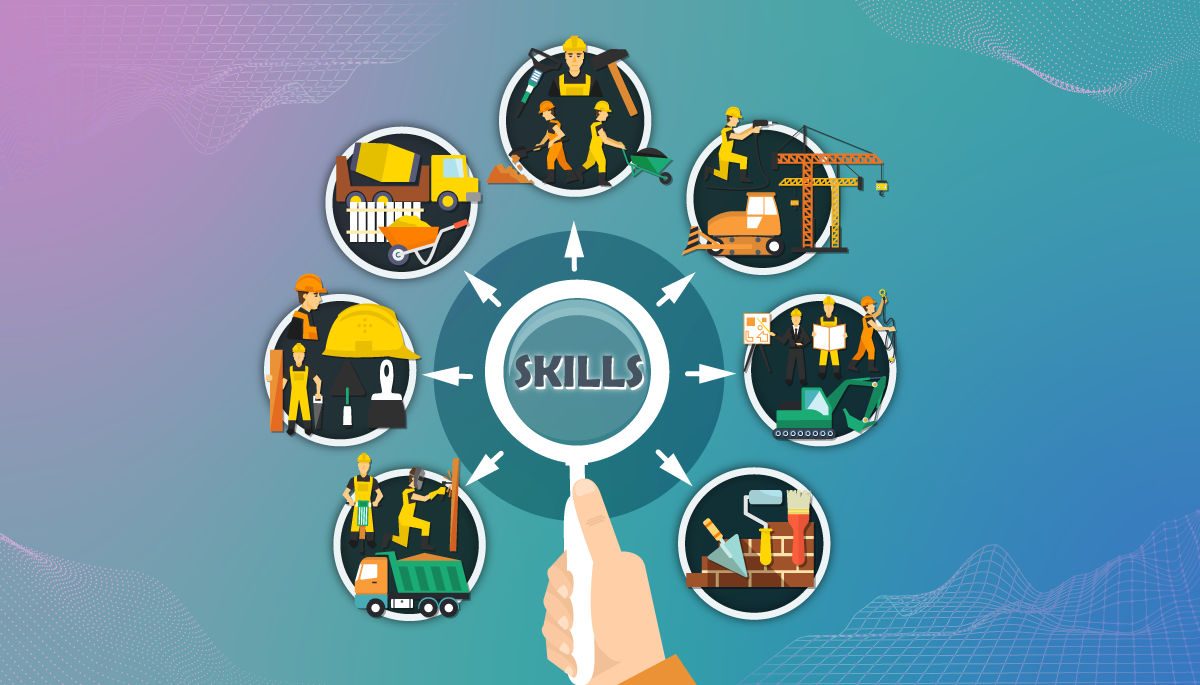
- Imminent Loss of Skilled Trades Expertise: A significant number of highly experienced tradespeople are nearing retirement and are not taking on apprentices, leading to a critical loss of invaluable on-the-job skills that are not being passed on to the next generation.
- Opportunity in New RTO Standards: The updated RTO Standards (commencing July 1, 2025) create an opening for Registered Training Organisations to utilise industry experts without formal teaching qualifications, under the guidance of qualified trainers, to address the VET teacher shortage.
- AI-Powered Solution for Bridging the Gap: Tools like SkillsAware can help experienced industry professionals, who may lack formal qualifications or easily accessible documentation, create a verifiable digital record of their expertise. This allows RTOs to demonstrate compliance with the new standards and leverage these experts for training and assessment, ultimately helping to scale skills delivery and ensure the sustainability of trades.
I am a serial house renovator and this often requires upgrading the things that you don’t see. These are usually things where it is essential to employ skilled trades; I’m talking plumbing, electrical, stonework, etc. On our current project, we have had some outstanding tradespeople, all with a number of common characteristics. They are all in their fifties, they work alone, and they are no longer taking on apprentices for several reasons. These reasons include:
- they found it too time-consuming to train an apprentice;
- apprentices are a cost, not a revenue opportunity for several years; and
- the time spent training an apprentice is time that the tradesperson is not directly earning income from their own labour and they still need to have enough hours to earn income at the levels required to run the business.
Additionally, they all recognised that their ability to keep “working on the tools” as such was declining because of their own physical limitations, and saw themselves having to retire in the next five or so years.
It is inconceivable that all of the extraordinary skills that these tradespeople have from many years of experience in the industry and that could be used to train the next generation of trades “on-the-job” are just going to be lost. These people don’t want to teach in a traditional classroom setting, but their capacity in retirement to teach and support new entrants to their trades would be phenomenal.
Connecting to Address the VET Teacher Shortage
We know we have a VET teaching workforce shortage, and the new RTO Standards, which commenced 1 July 2025, do provide some clarity on the use of industry experts. The new Standards require the expert to have relevant industry competencies, skills and knowledge and specialised industry or subject matter expertise. At the same time, the expert works at the direction of the RTO’s TAE qualified trainer and assessor, and if they have any role in assessment, the RTO trainer and assessor is involved and responsible for judgement and decisions including ensuring quality of training and assessment.
The new Standards provide RTOs with the opportunity to rethink their business model and look to use industry experts who have many years of experience working in the field, and at the same time leverage their expert trainers and assessors to deliver where they have industry experts, instead of being confined to where their trainers and assessors are located. Think about it: former tradies, retired farmers, Indigenous elders, all whose expertise is not being utilised… This presents a true delivery and co-assessment model where those involved are focused on what their expertise is; industry expertise and pedagogical training and assessment.
The challenge is that many of the experts I am referring to, may have no formal qualifications. Or perhaps they completed a qualification at a time where the certificate they may have been issued with is well and truly superseded, and a hard copy has long disappeared or can’t be found. They may struggle to provide evidence for the purpose of meeting the Standards. This is problematic from an RTO’s viewpoint, as they are responsible for providing that evidence to ASQA – how can the RTO document the expert’s skills and experience and link it to the current qualifications on which they will be held to account for the Standards?
AI-Powered Tools Can Help Bridge the Gap
This is where SkillsAware can help. By engaging with SkillsAware, the industry expert can upload evidence from their life-wide experience to an AI agent. It will support them in developing a digital evidence record that can be mapped to the relevant units of competency of their industry sector. In some cases, it may lead to the RTO being able to issue a full qualification via Recognition of Prior Learning (RPL). At the very least the RTO will be able to demonstrate why the industry expert meets the requirements of clause 1.13 of the new RTO Standards.
If we are to meet the overwhelming skills challenges we have in so many of our sectors, we need to change the business model of training. We need to be able to leverage the wealth of expertise that exists in the form of people who have extensive expertise, but are not going to take on the qualification required to be a trainer or assessor. In leveraging their expertise, it will enable RTOs to scale delivery, particularly across regional Australia, and potentially lead to a separation of on-the-job delivery (with structured guidance) and assessment. This would be a win for the sustainability of RTOs, the matching of skills needs in place, rather than centralised online delivery, and harness the extensive experience that already exists in the market.
Join us and let’s harness the untapped potential of our seasoned experts and ensure their invaluable skills are passed on to the next generation. This will allow the industry to optimise the skills of their trainers and assessors to focus on what they do best. We need to do things differently if we are to create a sustainable future for our trades and industries.
Contact Us today to learn more about how you can be part of this transformative journey.
FAQs:
Why are experienced tradespeople not taking on apprentices?
Experienced tradespeople often find training apprentices too time-consuming, a cost rather than an immediate revenue source, and a diversion from their direct income-earning labor, making it challenging to balance training with business profitability.
How do the new RTO Standards (commencing July 1, 2025) impact the use of industry experts?
The new Standards allow RTOs to utilise industry experts who possess relevant competencies, skills, and knowledge, even if they don’t have a TAE qualification. These experts work under the direction of a TAE-qualified trainer and assessor, who remains responsible for assessment judgments and overall training quality.
What is the main challenge in using experienced industry experts for training under the new RTO Standards?
A key challenge is that many highly experienced experts may not possess formal qualifications or readily available documentation of their past certifications, making it difficult for RTOs to provide the necessary evidence to ASQA to meet the Standards.
How can AI-powered tools like SkillsAware help address this challenge?
SkillsAware enables industry experts to upload evidence from their diverse work experience, which an AI agent then helps to develop into a digital evidence record mapped to current units of competency. This record can help RTOs demonstrate that the expert meets the requirements of the new RTO Standards, and in some cases, may even lead to a full RPL qualification.
What is the broader benefit of leveraging these seasoned experts for skills training?
By leveraging the expertise of experienced but often uncredentialed professionals, RTOs can scale their training delivery, particularly in regional areas, and better match skills needs locally. This approach separates on-the-job delivery from traditional assessment, optimises the roles of existing trainers, and contributes to the long-term sustainability of trades and industries.

Published by
About our partner
SkillsAware
SkillsAware is the foundational skills infrastructure layer that solves the visibility crisis in the modern workforce by making 100% of human capability auditable and actionable.It reveals the hidden talent legacy systems miss, providing a verified record of capability that allows organisations to deploy people with precision while giving individuals a portable Skills IQ to validate their true worth.We empower your current systems with evidence-based visibility into real-world capabilityUsing AI, SkillsAware captures evidence of people’s life-wide skills and issues a shareable skills reportThis isn’t a resume; it’s an auditable profile that provides a probability score of what an individual can actually doProblems We SolveThe cost of recognition - Manual RPL is slow and prohibitively expensive. We use AI to automate evidence collection and mapping, reducing assessment time from days to hours.Hidden talent - Systems only see the last job title, leaving 80% of skills undiscovered. Our guided AI conversation uncovers and catalogues a lifetime of diverse, life-wide capabilitiesWasted training - Employees complete redundant training because existing skills are invisible. We can identify existing capabilities so organisations can target specific gaps saving time and money.Skills-shortage gap - 87% of executives lack data to know if needed skills already exist internally. We surface hidden talent by mapping all individual evidence against industry or corporate standards.Inclusion barriers - Traditional hiring relies on biased proxies like qualifications or previous roles. We level the field by focusing purely on evidence of what a person can actually do.Crisis mobilisation - Agencies cannot rapidly verify skills of available volunteers during disasters. We provide a rapid method to deply the right people to the right roles.Learn more at skillsaware.com
Learn more





Help your peers
Share what you've learned with fellow public servants