
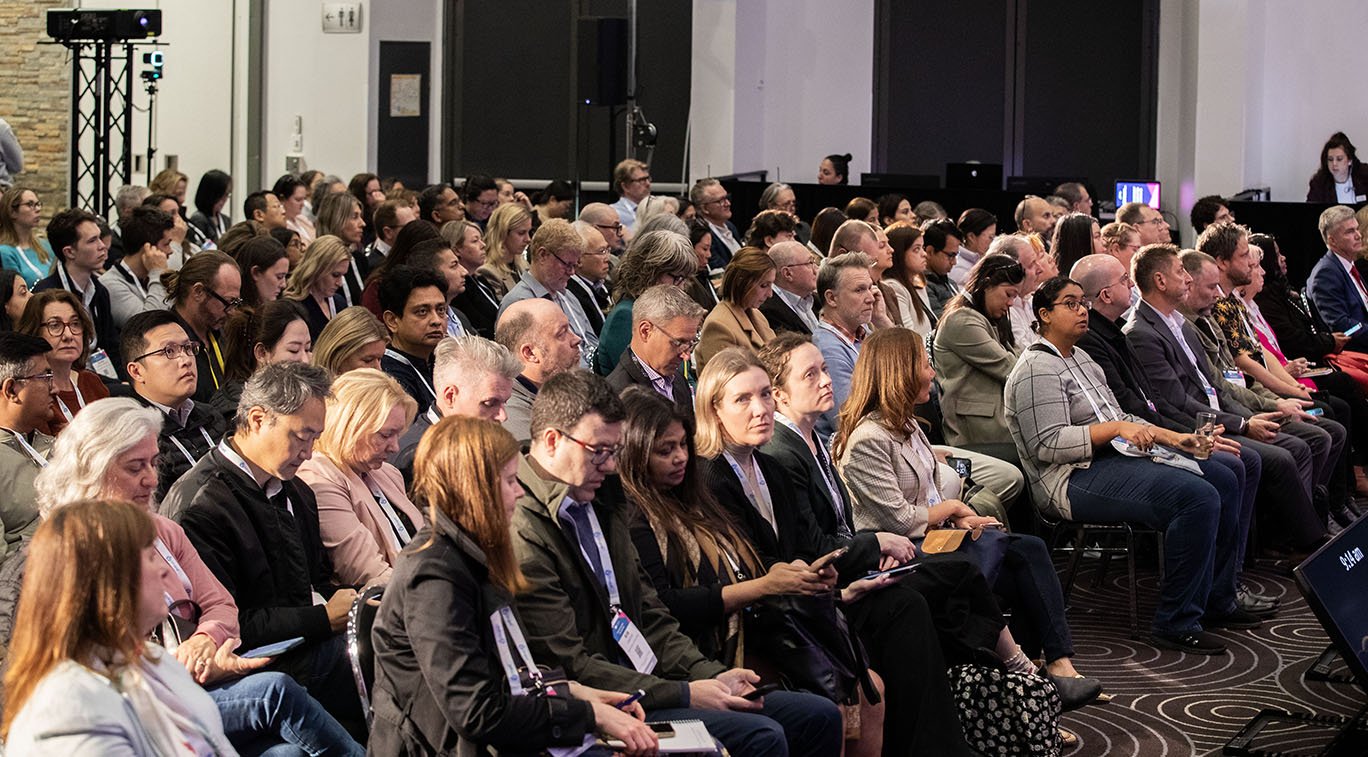
Welcome & How to Make the Most of Today
Jennifer Arnold, Public Sector Network
- NSW agencies are moving from digital ambition to measurable delivery, with stronger foundations, responsible scaling and trusted services now central to the Government 3.0 discussion.
- The day’s agenda positioned AI, data, cyber resilience, workforce capability and people-centred design as connected priorities rather than separate transformation streams.
- Audience participation, polling and practical examples were framed as key inputs for understanding AI readiness, value and the support agencies need to move from pilots to delivery.
Ministerial Address
Honourable Steven Whan MP, NSW Government
- Skills, TAFE and tertiary education were positioned as core infrastructure for digital and AI adoption, not a parallel workforce issue.
- The address reinforced that AI opportunity needs to be matched with equitable access to training, micro-credentials and applied learning pathways.
- Government’s role is to support both policy direction and practical capability, so the benefits of AI and digital change reach people across NSW.
Solving the Innovation Paradox: Hard-Won Lessons from the Arizona Desert
Josh Wagner, State of Arizona
- Arizona’s “freedom within fences” model showed how clear governance can create room for frontline innovation rather than restricting it.
- Data readiness, maturity assessment and heat maps help agencies see where they can move faster and where the foundations need work first.
- Innovation at scale depends on managers acting as coaches, frontline teams owning problems and governance being designed to support improvement.
Innovation Under Pressure: How Governments Modernise Without Losing Control
Neville Pinto, Splunk / Cisco
- Public services may feel simple to the user, but each request depends on complex systems across identity, policy, data, service teams and suppliers.
- Modernisation needs to account for services “in the wild”, where resilience, observability and institutional coherence matter as much as front-end design.
- Digital trust depends on government being able to see, understand and manage whole outcomes across fragmented systems.
Thinking Ahead to Prioritise Now: Championing a Responsible, Reliable and Future Ready NSW Public Service
Chris Hanger, Department of Climate Change, Energy, the Environment and Water
Josh Wagner, State of Arizona
Jennifer Arnold, Public Sector Network
- The panel moved the AI discussion from “why” to “how”, with investment, workforce capability and operational efficiency now the practical questions for FY27.
- Data readiness, governance, oversight and return on investment remain critical if agencies want to shift from experimentation to responsible use at scale.
- AI should augment public servants and improve decision support, but human judgement, clear accountability and sustainable infrastructure remain essential.
Sovereign AI in Motion: Governing Systems That Keep Changing
Asanga Lokusooriya, IBM
- Sovereign AI is less about owning every technology layer and more about understanding control, reversibility and dependency risk.
- Agencies need to own their context and data while being deliberate about where they rent intelligence from the market.
- Measuring outcomes, planning for model drift and designing for graceful degradation will matter as much as choosing any single model provider.
Welcome from Track Chair, Technology, Data and AI Integration
Tristan Cox, Workato
- Enterprise AI is not mainly about access to language models. The harder work is governance, security, integration, identity and control.
- Personal productivity tools can help individuals, but scalable value comes when AI is connected safely to systems of record and business workflows.
- Agencies should be selective about where AI is used, with governed integration and traceability shaping the next phase of public sector adoption.
From Policy to Practice: Enabling Safe, Scalable AI Innovation Across NSW Government
Dan Roelink, Office for AI, Digital NSW, NSW Department of Customer Service
- AI scale is an organisational challenge, not just a technology challenge, requiring leadership, authorised environments and practical assurance pathways.
- Governance should act as an enabler by giving teams clear risk thresholds, feedback loops and permission to move faster on lower-risk use cases.
- Agencies need to shift from process thinking to outcome thinking, while identifying what must remain human and what can be safely assisted or automated.
Industry Insights: One Source of Truth
Todd Whaley, Hummingbird Solutions
Ash Marwah, Planview
- Delivery acceleration depends on visibility. Agencies cannot manage major programs effectively when risk, funding, milestones and dependencies sit in disconnected spreadsheets.
- A whole-of-department portfolio view can help leaders connect ministerial priorities to delivery status, resource capacity and governance decisions.
- Right-sized governance should reduce manual reporting burden while giving executives better real-time insight into what is on track, blocked or at risk.
Integrating and Upholding Secure, Responsible and Resilient Data and AI Systems
Sonia Minutillo, Information and Privacy Commission NSW
Dr Liming Zhu, CSIRO
Anne McDonald, Transport for NSW
Blake Lawrence, Agile Insights
Tristan Cox, Workato
- Trustworthy AI depends on privacy by design, data stewardship, identity, audit trails and clear accountability from the start.
- Agencies should avoid placing AI over poorly governed data. Accuracy, consistency, provenance and interrogability are prerequisites for responsible use.
- The risk of not innovating is real, but innovation must be intentional, transparent and matched to safeguards that protect public trust.
Agentic Government Re-Imagining the Future of Public Service
Ben Taylor, Salesforce
Danielle Mansfield, Salesforce
Lance Carden, Homes NSW
- Agentic government raises expectations for personalised, proactive and contextual service, but it also increases the need for governance, AI assurance and explainability.
- Homes NSW showed why connected data matters: customer needs, housing demand and asset supply need to speak to each other if services are to match real community needs.
- The My Housing Repairs Portal demonstrated that better digital design can shift more transactions to self-service while freeing staff for higher-value community-facing work.
From Pilot to Payoff: A Working Session on Scaling AI in Customer Experience
Russell Murphy, Lightning + Thunder Executive Coaching & Consulting
- Many AI efforts stall because of governance debt, unclear ownership and weak operating models, not because the technology is unavailable.
- Leaders need to map stakeholders, define credible opponents and set pilot scope, owners and measures before scaling.
- AI adoption should move through practical maturity stages, with clearer accountability for when teams should sit, stand, walk or run.
Building a Strategy for an AI-First Government
Gavin Diamond, Box
Murtaza Masood, Box
- Unstructured content is a major AI readiness challenge because files, records, contracts and evidence often hold the information agencies need most.
- AI-first government requires content governance, metadata, retention, security and integration, not just a tool placed on top of unmanaged repositories.
- A single governed content corpus can support safer automation, better records management and stronger confidence in how sensitive information is used.
Smarter Services, Better Outcomes: Advancing Service and Digital Innovation Across NSW Government
Kristin Bamford, Department of Customer Service
David Ranasinghe, Revenue NSW
Julia Topliss, Drupal
Cat Metcalfe, NSW Telco Authority / Department of Customer Service
- Shared platforms create value when they reduce duplication and help agencies design around user needs rather than agency structures.
- Trust, fairness and ease matter in high-volume services, especially where people are dealing with fines, hardship, debt or vulnerable circumstances.
- Content, data and information should be treated as infrastructure, with design and maintainability considered from the start.
From Access to Confidence: Creating Trusted and Inclusive Public Services
Amith Shetty, NSW Ministry of Health
Kylie De Courteney, NSW Telco Authority
- Digital inclusion remains fundamental as agencies accelerate AI and digital service delivery. Digital-first cannot mean digital-only.
- Device access, connectivity, cybersecurity awareness, easy-read material and multilingual support are practical enablers of service confidence.
- Health and telco examples showed that inclusive design needs postcode-level insight, cultural awareness and clear human fallback pathways.
Tackling Busy, Burdensome Tasks: AI in Daily Government Operations
Dan Hart, University of Sydney
- The University of Sydney AI Hub shows how automation and AI can release staff time without framing productivity as headcount reduction.
- Staff-led use cases help teams identify real operational pain points, then apply AI, RPA or engineering support where it fits.
- Measuring released value helps leaders make the case for reinvesting time into higher-value service and decision work.
AI and Enhanced Productivity in Government: Giving Employees Back Their Best Hours
Chandra Thapa, CSIRO
- Productivity should be understood as more than speed. AI should help public servants spend more of their best hours on judgement, communication and complex work.
- Agentic AI introduces new risks, including privacy leakage, hallucination, bias, security and over-automation, which require clear controls.
- The CLEAR AI checklist gives teams a practical way to assess context, limits, evidence, accountability and review before adoption.
Building a Future-Ready Workforce and Reskilling for the AI Era
Raffaele Marcelino, TAFE NSW
Jane Lin, Department of Creative Industries, Tourism, Hospitality and Sport
Andrew Spiegelman, Service NSW
Dan Bowes, TAFE NSW
- AI should be treated as a workforce and capability challenge, not only a technology deployment.
- Public servants need the skills to supervise AI, question outputs, protect intellectual property and maintain accountability for decisions.
- Leaders should model safe use, create sandboxes and focus AI adoption on mission outcomes rather than task automation alone.
Culture, Skills and Change: Why Technology Alone Doesn’t Deliver Productivity Gains
Deon Taylor, NSW Education Standards Authority
Dan Bowes, TAFE NSW
- AI literacy is essential in regulated settings where staff remain accountable for outputs, decisions and the quality of service.
- Clinical and education examples showed the risk of skill erosion if people use AI before building the expertise needed to verify its work.
- Culture change requires training, clear standards, transparency, professional judgement and non-digital alternatives where people opt out or systems fail.



Help your peers
Share what you've learned with fellow public servants