
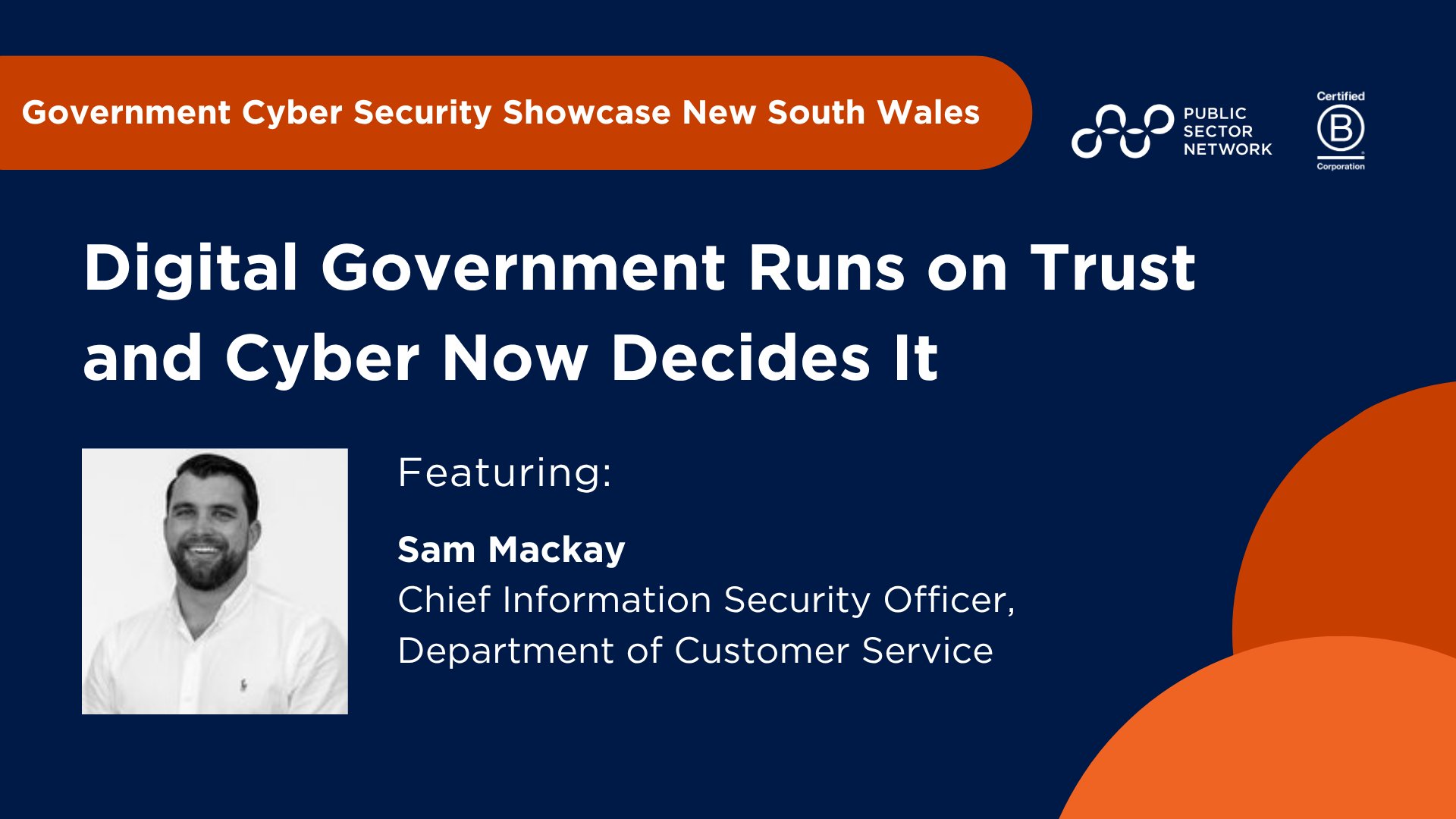
Benji Crooks, Marketing Director at Public Sector Network, spoke with Sam Mackay, Chief Information Security Officer at the NSW Department of Customer Service, about why trust is now the foundation of digital service delivery, what cyber resilience really means in plain terms, and how governments can communicate transparently without increasing risk. Sam will unpack these themes at Government Cyber Security Showcase New South Wales as part of Government Innovation Week New South Wales on Thursday, 30 July 2026, during "Digital Government Runs on Trust and Cyber Now Decides It".
Benji Crooks: Why do you think “trust” has become the real foundation of digital government, not just speed or convenience?
Sam Mackay: Because without trust, people don’t engage, no matter how fast or how well designed the service is. Government now delivers licensing, payments, identity and regulation almost entirely through digital systems. If people don’t trust those systems to work reliably and protect their information, confidence drops quickly and participation falls away. Speed and convenience matter, but trust is what makes digital government sustainable.
Benji Crooks: What does “cyber resilience” mean in plain terms for a department like DCS?
Sam Mackay: Cyber resilience means essential government services keep running, even when things go wrong. Incidents are no longer rare or unexpected. Resilience is about being prepared, detecting issues early, limiting impacts and recovering quickly so disruption doesn’t cascade across multiple services. From a public point of view, resilience is simply confidence that government can cope under continued and sustained pressure.
Benji Crooks: When a cyber incident happens, what do citizens expect to hear from government, and how quickly?
Sam Mackay: They expect honesty, clarity and leadership—and they want it early. People want to know if services are still safe to use, whether their information might be affected, and what government is doing about it. They don’t expect every answer immediately, but they do expect acknowledgement. Silence or delay damages trust faster than the incident itself.
Benji Crooks: How do you balance transparency with security when you’re sharing details about a breach or disruption?
Sam Mackay: By being open about impact and accountable for decisions, without increasing risk. Good transparency explains what’s affected, what the implications are for people, and how government is responding. It avoids technical detail that could enable further harm. Calm, factual communication reassures the public that the situation is being managed responsibly.
Benji Crooks: What’s the best way to rebuild public trust after an incident, beyond just getting systems back online?
Sam Mackay: By showing that lessons have been learned and acted on. Getting systems back online is essential, but trust only returns when people see stronger protections, sustained investment and real improvement. Communities regain confidence when they believe the same issue won’t happen again in the same way—not just that it’s been patched up or fixed. A repeat incident under the same circumstances is an absolute killer for public trust and confidence.
Benji Crooks: For the Government Cyber Security Showcase NSW 2026, what’s the one message you most want leaders to take away about trust and cyber, and what do you hope they’ll do differently after today?
Sam Mackay: Public trust is now as critical as the systems themselves, and cyber security is what protects it. Every digital decision is also a trust decision. Standing still or delaying investment increases exposure to disruption, reputational damage and loss of confidence.
What I hope leaders take away is the need to invest early, lead visibly, and treat cyber resilience as core and foundational to all forms of service delivery—not an afterthought, or something optional. Public trust underpins government, and digital systems are now how services are delivered. Cyber security is what ensures those services remain safe, reliable and dependable. When cyber is overlooked, public trust and confidence in government is what erodes first.
Hear Sam Mackay at Government Cyber Security Showcase New South Wales as part of Government Innovation Week New South Wales on Thursday, 30 July 2026. Their panel will explore how cyber resilience underpins public legitimacy in digital government, including expectations for transparency and how to rebuild trust after disruption.









Help your peers
Share what you've learned with fellow public servants