

Gov3.0 Roundtables

Digital Leadership Series

A quarterly series supported by leading universities, convening senior public servants, academics, and trusted industry partners to accelerate practical progress toward Government 3.0.

Government 3.0 is connected government: designed around people and places, coordinated across organisational boundaries, and engineered for trust.

Partner with the series (Industry)
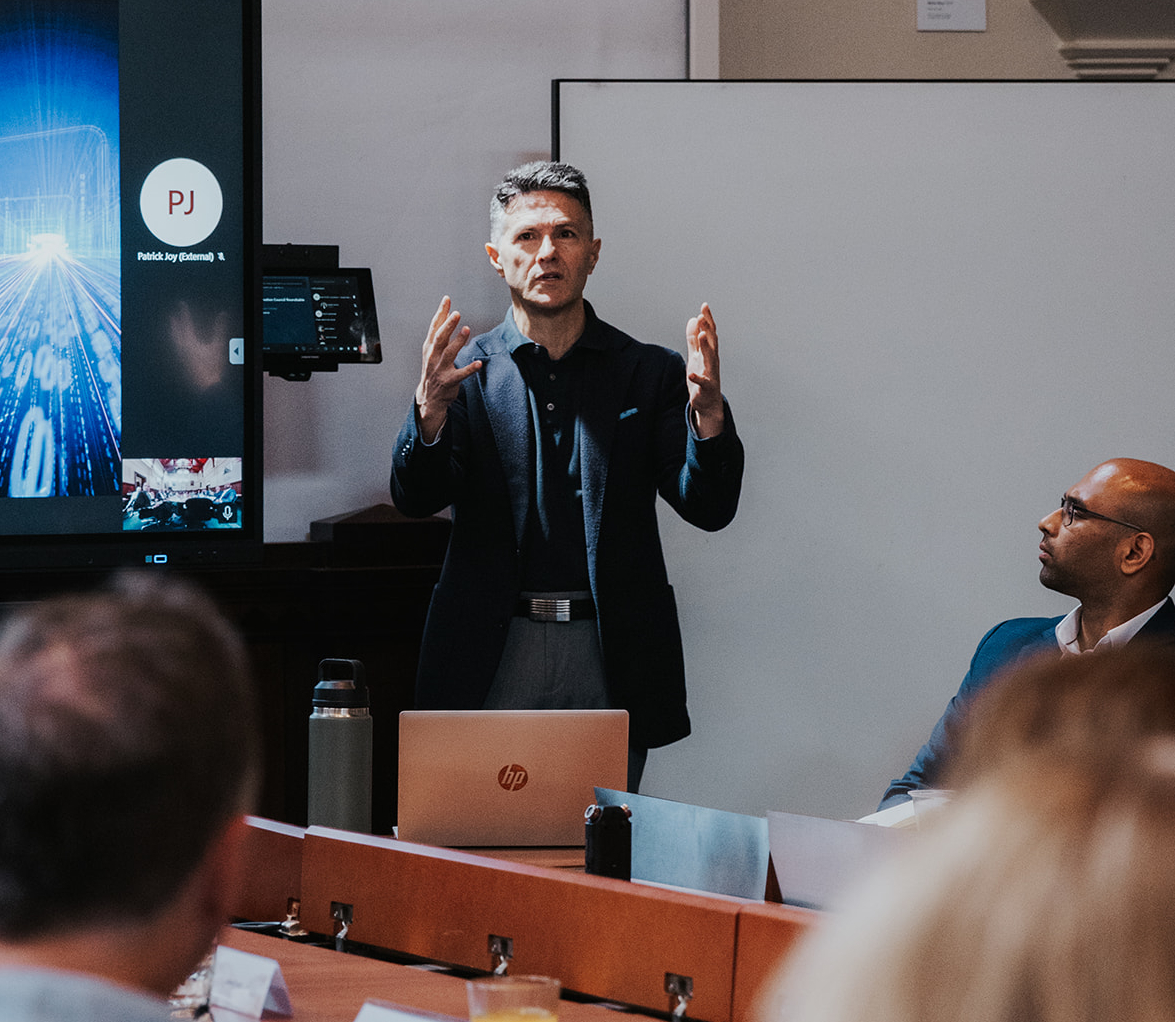
Executive roundtable discussion

Supported by leading universities and trusted partners.

What and why?

Expectations for joined-up outcomes are rising across jurisdictions. Governments are being asked to modernise essential systems safely, adopt AI responsibly, and show results transparently. The challenge is not ideas. The challenge is shared execution: the ability to collaborate across boundaries, deliver continuously, and build trust at scale.

This can't be done in isolation. It takes collaboration across agencies and co-creation of tangible solutions with industry. These sessions provide the platform for meaningful and measurable progress.

Public Sector Network logo × Future Government Institute logo
Government 3.0 roundtable discussion
The Advantage

Why this series works

High-trust peer exchange

A discussion-led executive environment designed for practical, candid exchange.

Shared Government 3.0 language

A consistent frame across Leadership, Human Experience, and Trust (SPRITE).

Quarter-ready focus

Leave with a short, credible next-quarter focus rather than a long to-do list.

Evidence + exemplars

Curated by FGI and strengthened with university partners.

Audience

Who it is for

A consistent cross-functional audience designed for candid exchange and shared progress.

Government

Senior leaders shaping strategy, delivery, and trust across the public sector.

Deputy Secretaries (and equivalents), Deputy Directors-General, agency heads, executive directors
Chief Digital Officers, CIOs, CDOs, enterprise architects / platform leaders
CISOs, privacy, risk, assurance, governance leaders
Service owners, product leaders, CX, service design, digital delivery leaders
Portfolio, investment, performance, operating model, transformation office leaders
Workforce, people, capability, learning leaders
Data, analytics, AI, automation leaders
Policy, regulatory, integrity leaders

Academic

University partners and researchers who ground the series in evidence and bring global perspective.

Academic partners and researchers from leading universities
Public policy, governance, and digital government scholars
Applied research leads bridging theory and practice

Industry

Selected partners aligned to capability building, not product pitching.

Technology and advisory partners supporting Government 3.0 outcomes
Solution providers contributing to practical delivery and capability uplift
Partners committed to evidence-based collaboration over sales
Format

How the series works

Three pillars + Digital Leadership Day

Leadership, Human Experience, and Trust roundtables each year, plus a cross-pillar Digital Leadership Day.

Discussion-led

Executive peer exchange, not a workshop. Each pillar session is designed for candid, practical dialogue.

90–120 minutes

Hosted at the university partner in each location. Focused and respectful of your time.

Government 3.0 Framework

Government 3.0 is built on three pillars

Leadership

Setting a clear strategy with measurable KPIs, agile funding, empowered governance, workforce planning, partner ecosystems, and ethical, trusted AI.

Human Experience

Journey-led design and delivery, digital-by-default that remains inclusive, proactive services, interoperability by design, and transparent performance.

Trust (SPRITE)

Security, Privacy, Resilience, Inclusion, Transparency, and Ethics engineered into delivery and operations.

For Government Executives

What government executives get

A high-trust peer environment

Compare what is working across jurisdictions in a confidential, discussion-led setting.

Shared language

A consistent Government 3.0 frame across leadership, service delivery, and trust.

Practical clarity

Know what to do next quarter without turning the session into a delivery stand-up.

Access to evidence and exemplars

Curated by FGI and university partners.

Relationships that help delivery

Cross-functional connections across service, data, technology, policy, and trust.

Experience signals

  • Discussion-led, not presentation-led
  • Cross-functional by design
  • Practical and respectful (no sales pitches)

Session briefs (one per pillar)

Session 1 — Leadership

Theme: Collaboration that delivers

Why: Everyone is collaborating. Fewer are doing it in a way that reliably ships outcomes across divisions, agencies, and sectors.

Discussion prompts & takeaways

Discussion prompts

  • Where does collaboration break down most often in this jurisdiction?
  • What governance enables speed, and what is theatre?
  • What does agile funding look like in a public accountability context?
  • What does “pause when safeguards fail” mean for AI and automation?

What participants leave with

  • A shared definition of “collaboration that delivers”
  • Quarter-ready commitments and measures

Session 2 — Human Experience

Theme: From transactions to journeys (measurable and inclusive)

Why: Government 3.0 is felt in the lived experience of residents.

Discussion prompts & takeaways

Discussion prompts

  • Which journeys create the biggest avoidable burden right now?
  • What does digital-by-default mean without excluding people?
  • Where could proactive services start, and what guardrails are required?
  • What should be on a public dashboard if we are serious about performance?

What participants leave with

  • Top experience patterns that scale across agencies
  • Quarter-ready commitments and measures

Session 3 — Trust (SPRITE)

Theme: Trust-by-design that enables speed

Why: Trust is the condition for scale.

Discussion prompts & takeaways

Discussion prompts

  • What is the minimum trust bar before a system should scale?
  • Where are assurance decisions happening too late?
  • What does meaningful contestability look like for automated decisions?
  • What are your pause conditions for AI and automation?

What participants leave with

  • A shared “minimum trust bar” aligned to SPRITE
  • Quarter-ready commitments and measures

The process

Inputs

5–7 minute prep

A short pre-session check-in completed before each roundtable.

Organisation check-in

Current position and target for next quarter.

Personal commitments

One capability to strengthen and one action to take this quarter.

Outputs

Headline insights

Three key findings from each pillar session.

Tangible commitments

Quarter-ready actions agreed by participants.

Tools & templates

Pillar toolkits synthesised into a Government 3.0 Toolkit shared back to government for free.

Upcoming roundtables

Roundtable dates will be announced soon.

Fellowship

Want to get more involved?

If you would like to contribute more actively to the work (toolkits, thought pieces, research, mentoring, or peer exchange), register interest in the Fellowship.

For Industry

Industry partners: how this works

Industry participation is designed to support capability building and accelerate Government 3.0 outcomes. These roundtables are not sales forums.

What industry partners get

Participation in the local series to understand jurisdiction priorities and capability gaps

A structured way to assess how solutions support Government 3.0 outcomes

An assessment included as part of investment (per state)

Want to deepen involvement?

Expanded Industry Partnership tiers can include higher-touch collaboration, content contribution, or deeper engagement.

Partners help government move up the Government 3.0 capability curve by supporting practical delivery, not by pushing product.

Ready to discuss participation, investment options, or a tailored involvement plan?

Frequently asked questions

  • Chatham House-style discussion — Share lessons freely, attribute thoughtfully.
  • Evidence over assertion — Bring examples, artefacts, and measures when possible.
  • Capability-building focus — Not brand or product pitching.